You open your inbox before a client meeting and find a FINRA Rule 8210 request waiting. It asks for emails, account records, communications, and an explanation of a transaction. Or perhaps the first warning came through a customer complaint or a Form U5 disclosure from a former firm. Nothing has been formally charged, but your employment, professional record, and ability to keep working in the industry may already feel exposed.
That reaction is understandable. FINRA disciplinary actions don't begin with a sanction. They often begin with a question, a referral, or a document request. The response you give at that early stage can shape whether the matter ends with no formal action, moves toward an Acceptance, Waiver and Consent agreement, commonly called an AWC, or becomes a contested disciplinary proceeding.
This guide explains the process in practical terms. It covers what FINRA disciplinary actions are, what commonly triggers them, how an investigation progresses, what sanctions can follow, and what an advisor should do when scrutiny arrives. The focus is escalation management. A regulatory inquiry is not merely a test of whether FINRA believes misconduct occurred. It's also a test of how accurately, promptly, and credibly the advisor and firm respond.
Introduction When a FINRA Inquiry Lands on Your Desk
The first mistake many advisors make is treating a FINRA inquiry like an ordinary business email. They read the request, gather whatever documents seem easy to find, and send a quick explanation before speaking with anyone. That approach can create problems because an incomplete answer, an inaccurate timeline, or a casual statement may become part of the record long before the advisor understands the issue being investigated.
A better response starts with controlled triage. Identify the precise request, preserve relevant records, calendar every deadline, and determine whether the matter involves customer harm, a disclosure issue, supervision, outside activity, trading authority, communications, or another regulatory concern. A Rule 8210 request may focus on a narrow event, but FINRA may compare the response with firm records, customer statements, emails, transaction data, and employment disclosures.
Practical rule: Treat the first request as the beginning of the defense record, not as an administrative inconvenience.
The stakes extend beyond a possible fine. A matter may affect your current position, future employment, Form U4 or Form U5 disclosures, public regulatory history, and professional designations. A customer complaint that appears isolated can become more serious if the response reveals a recurring practice or a supervisory gap. A Form U5 statement can also create a separate dispute about the accuracy or context of the disclosure.
The useful question isn't, “Will FINRA punish me?” The more immediate questions are: What does FINRA believe happened? What evidence supports that belief? What can be corrected now? Which facts need protection or clarification? Early legal and compliance review can help separate a genuine issue from an overbroad assumption and can prevent an avoidable escalation.
The sections that follow move from the basic mechanics to the practical response. You'll see why case counts can mislead, why supervision and documentation matter so much, and where early engagement may create an opportunity to contain the matter before formal charges or an AWC.
What FINRA Disciplinary Actions Are and How They Work
FINRA operates as a self-regulatory organization for member broker-dealers and associated persons. Under Section 15A of the Securities Exchange Act of 1934 and FINRA Rule 8310, FINRA can impose fines, suspensions, bars, expulsions, and other fitting sanctions through its enforcement process. The FINRA Code of Procedure overview helps place those powers within the procedural framework governing disciplinary matters.
A useful analogy is a traffic system. An inquiry is like an officer asking questions after seeing something unusual. A Rule 8210 request is a formal demand for information. A complaint is an accusation that may lead to charges. An AWC is a negotiated resolution in which the respondent accepts sanctions without litigating the allegations through a full hearing. A Minor Rule Violation may resolve through a more efficient process for conduct covered by the applicable rules.
These stages aren't interchangeable. A request for information isn't itself a finding of misconduct, and a customer complaint isn't automatically a formal disciplinary action. FINRA may investigate a matter and close it with no action or informal discipline. FINRA's published statistics exclude matters resolved through no action or informal discipline, so the headline disciplinary count doesn't represent every inquiry or concern reviewed by FINRA.
FINRA's 2025 regulatory statistics show 625 new disciplinary actions filed, $99.6 million in fines and disgorgement ordered, $17.1 million in restitution, 187 individual bar sanctions, and 235 individual suspension sanctions (FINRA's disciplinary action statistics). The footnote says the action count includes formal complaints, non-summary proceedings, AWCs, and Minor Rule Violations, while excluding matters resolved through no action or informal discipline. That means year-over-year comparisons must account for the mix of proceeding types rather than treating the headline count as a pure count of every case investigated.
Who can face a FINRA disciplinary action
FINRA can pursue associated persons, including registered representatives and other individuals associated with member firms. It can also pursue the firms themselves when supervisory systems, books and records, financial controls, communications, or other compliance functions fail.
The central question is usually not just whether a rule was technically violated. FINRA also examines the surrounding facts, including intent, customer impact, cooperation, duration, recurrence, supervision, remediation, and whether the respondent created or concealed inaccurate records. Those factors help determine whether a matter remains an inquiry, becomes a formal action, or results in significant sanctions.
Common Causes That Trigger FINRA Disciplinary Actions
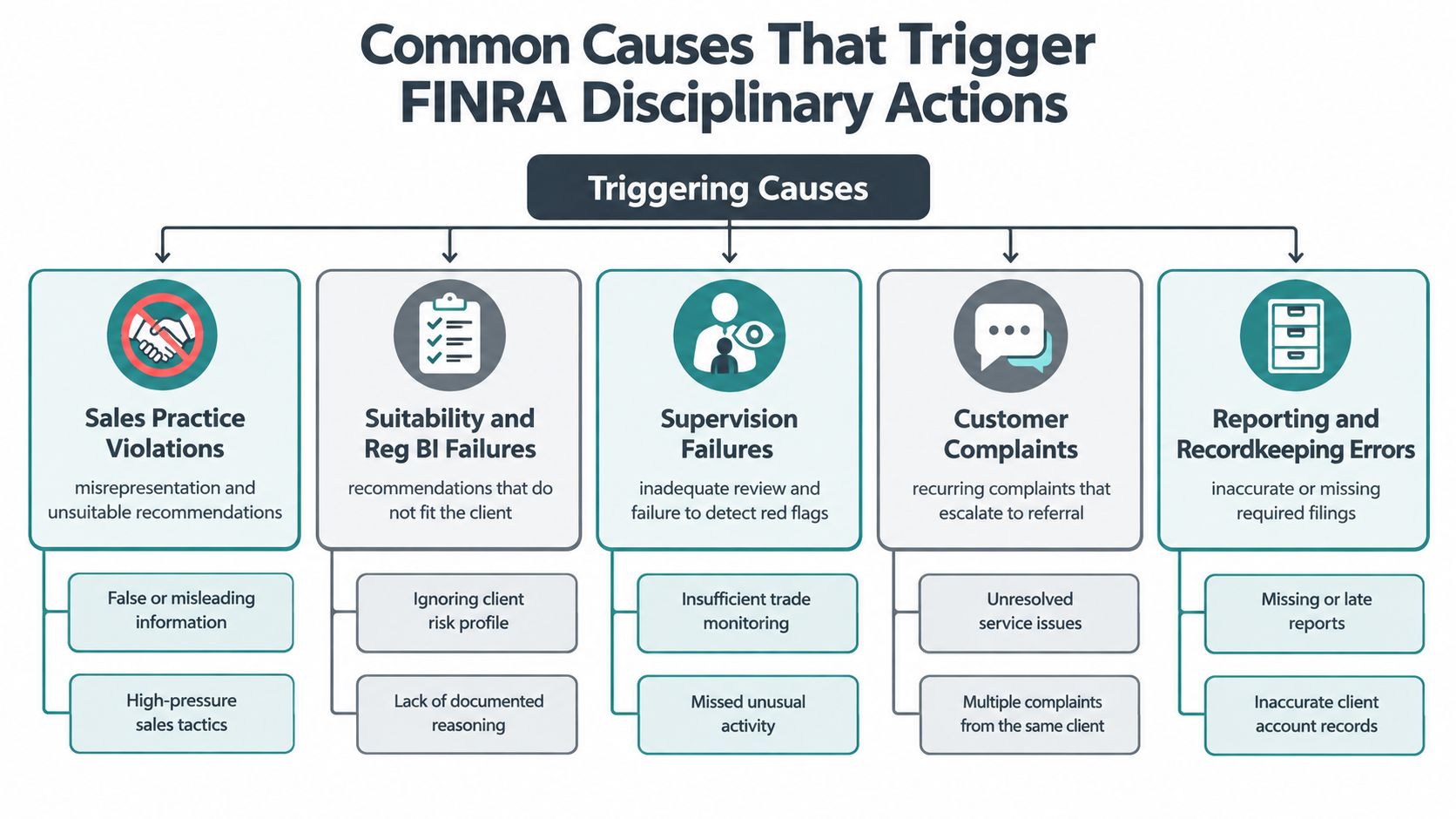
FINRA disciplinary actions commonly arise from a mismatch between what an advisor did and what the firm's supervisory system was designed to detect. The conduct may involve a recommendation, a communication, a trade, a disclosure, or a record. The escalation often occurs because the firm can't explain who reviewed the activity, what information was available, or how red flags were addressed.
Customer complaints are an obvious starting point, but they aren't the only one. FINRA can receive referrals from examinations, firms, other regulators, transaction surveillance, or internal reviews. A single complaint may remain isolated. A pattern of similar complaints, inconsistent records, or unexplained transactions can draw broader attention.
The risk categories advisors should recognize
Sales practice and Reg BI concerns involve recommendations that don't fit the customer's profile or that fail to account for risk, liquidity, concentration, investment objectives, or other relevant circumstances. The practical defense question is often what information the advisor had before making the recommendation and whether the file shows a reasoned basis for the advice.
Supervision failures create a second layer of exposure. A firm may face scrutiny because written supervisory procedures were too general, because reviews occurred only after the fact, or because available data couldn't identify recurring activity. An individual advisor may become part of the matter even when the firm's system was the primary weakness. For a focused discussion of this category, see failure to supervise in FINRA practice.
Communications and recordkeeping problems can turn ordinary business activity into a regulatory issue. Missing emails, inaccurate order records, incomplete disclosures, unapproved social media, or communications that don't match the client file can undermine credibility. Advisors should preserve communications from approved and unapproved channels, including text messages and personal devices where business communications may exist.
AML and financial control concerns can involve transaction monitoring, suspicious activity escalation, net capital, investor funds, or deficient internal controls. These matters often require the firm to reconstruct processes, identify responsible personnel, and show what changed after the issue was discovered.
Outside business activities and conflicts create risk when an advisor receives compensation, acts in a fiduciary or management role, promotes a product, or operates another business without proper notice and approval. Even an activity that appears unrelated to securities can matter if it creates a conflict, uses the advisor's professional status, or should have been disclosed under firm procedures.
Insider trading and other conduct allegations receive close attention because they may involve intent, access to information, and integrity concerns. The record often includes communications, trading chronology, account relationships, and the explanation offered when the activity first comes under review.
FINRA's 2025 oversight materials describe changes involving earlier communication, 90-day status updates, and opportunities for firms to engage before formal action, including pre-request outreach and self-reporting-style remediation paths (FINRA's 2025 annual regulatory oversight report). Those developments make process management important. The advisor who identifies the actual issue, preserves evidence, and presents credible remediation may have more influence over escalation than the advisor who waits until formal charges arrive.
How the FINRA Enforcement Process Unfolds Step by Step
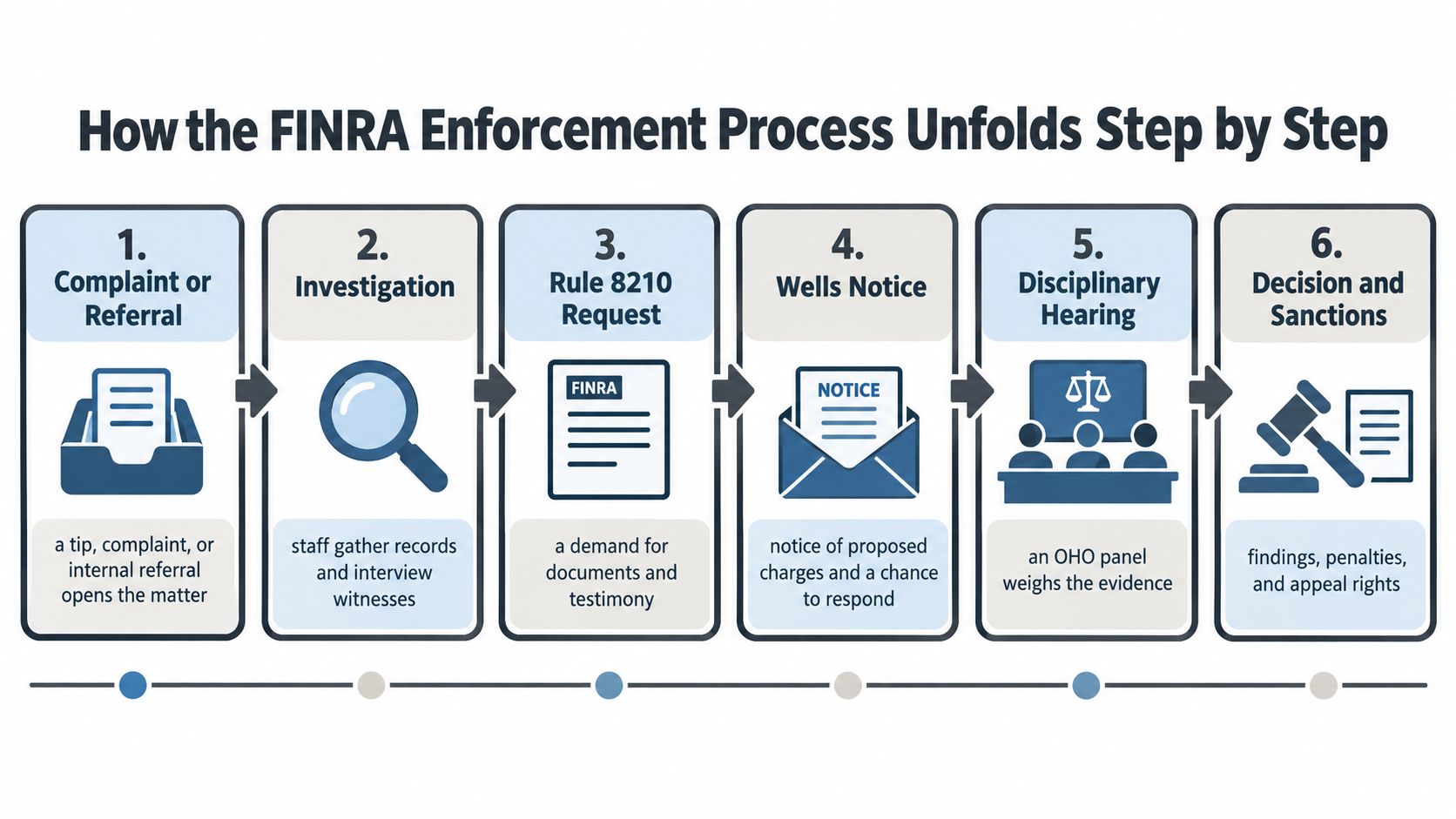
The process often begins without fanfare. A complaint, referral, or surveillance alert leads to information requests, and the matter can escalate through interviews, pre-filing communications, formal charges, adjudication, and review. Each handoff changes the advisor's task. Some matters resolve before a formal complaint, so early decisions can affect whether the issue becomes an AWC, suspension, or bar.
From referral to investigation
FINRA may open a matter after receiving a customer complaint, identifying a surveillance concern, reviewing a firm examination, or receiving information from another source. Staff may request account documents, emails, supervisory records, communications, and explanations from the firm or associated person.
A Rule 8210 request deserves prompt, deliberate attention because an inadequate response can create a separate issue. Read each request closely, define the records it covers, preserve responsive material, and address unclear terms through appropriate channels. Guessing at the scope is like answering only part of a question, it can leave the central concern unresolved while creating a new one.
The early resolution window
Earlier communication and status updates can create room to address a matter before formal charges. Pre-request outreach may help a firm understand the concern and correct a control weakness. Self-reporting-style remediation may fit some situations, but it should follow an assessment of the facts, legal duties, customer impact, and whether the proposed correction is complete.
A Wells notice or similar pre-filing communication indicates that FINRA staff may be considering charges. The response should present exculpatory evidence, correct factual assumptions, explain the advisor's role, and document remediation. A focused submission supported by records is more effective than a broad denial that overlooks unfavorable facts.
Early intervention is escalation management. Counsel and the advisor should identify what the record proves, what it does not prove, and which corrective steps can be completed before staff decides how to characterize the conduct.
Formal proceedings and review
If FINRA files a complaint, the matter may proceed before the Office of Hearing Officers. The parties address the allegations, evidence, defenses, and proposed sanctions. A decision can impose sanctions, and the respondent may have appeal rights through the National Adjudicatory Council and, where applicable, further review by the Securities and Exchange Commission.
The advisor's objective changes at each stage. Investigation responses must be accurate and complete. Pre-filing submissions should confront the evidence and legal theory. Settlement discussions should compare the proposed sanction with litigation risk and the lasting effect of an admitted or settled record.
The strongest intervention point is often before a sanction is proposed, while the facts can still be clarified and the firm or regulator is deciding how to describe the conduct.
Sanctions and Collateral Consequences You Should Expect
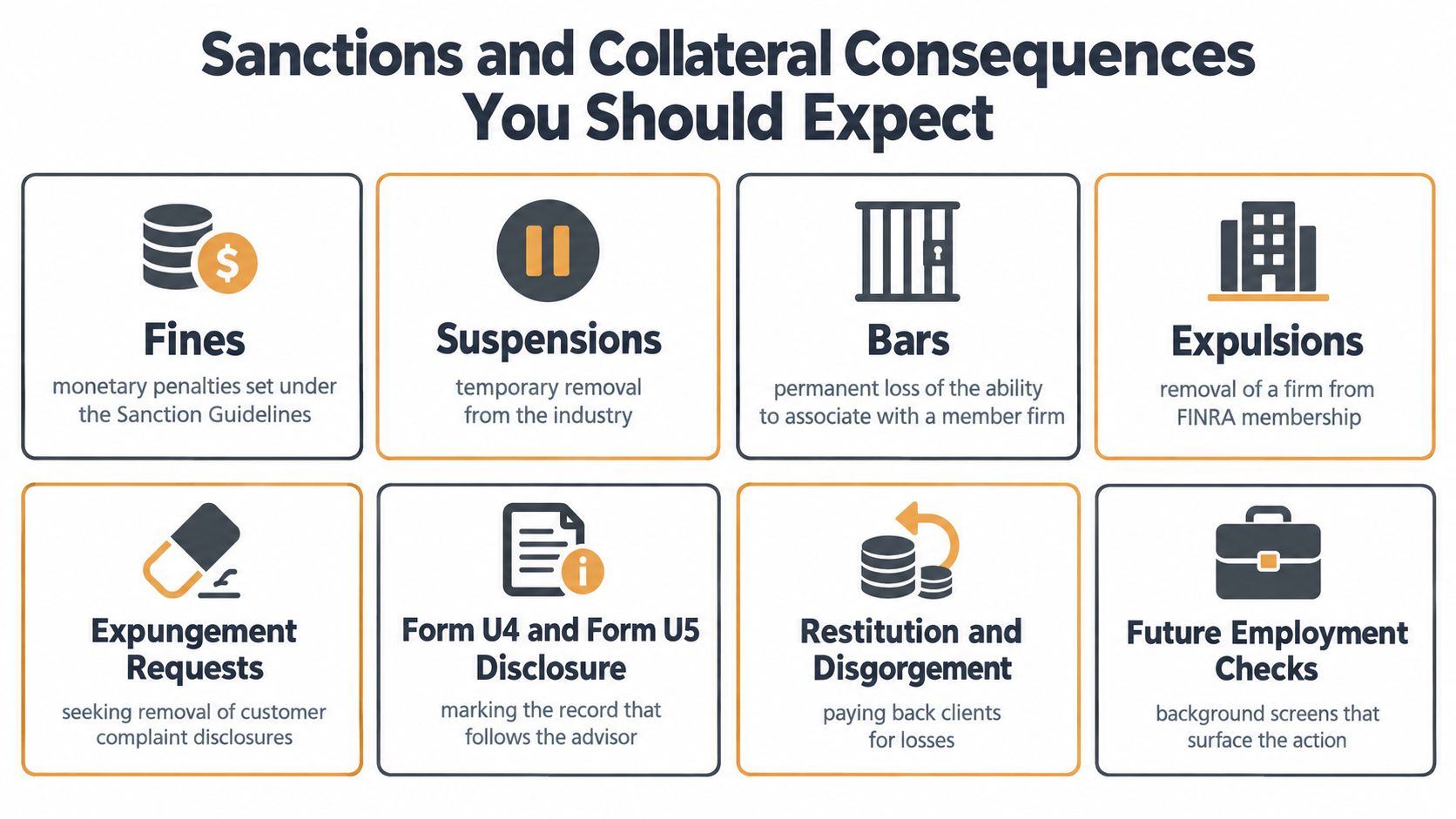
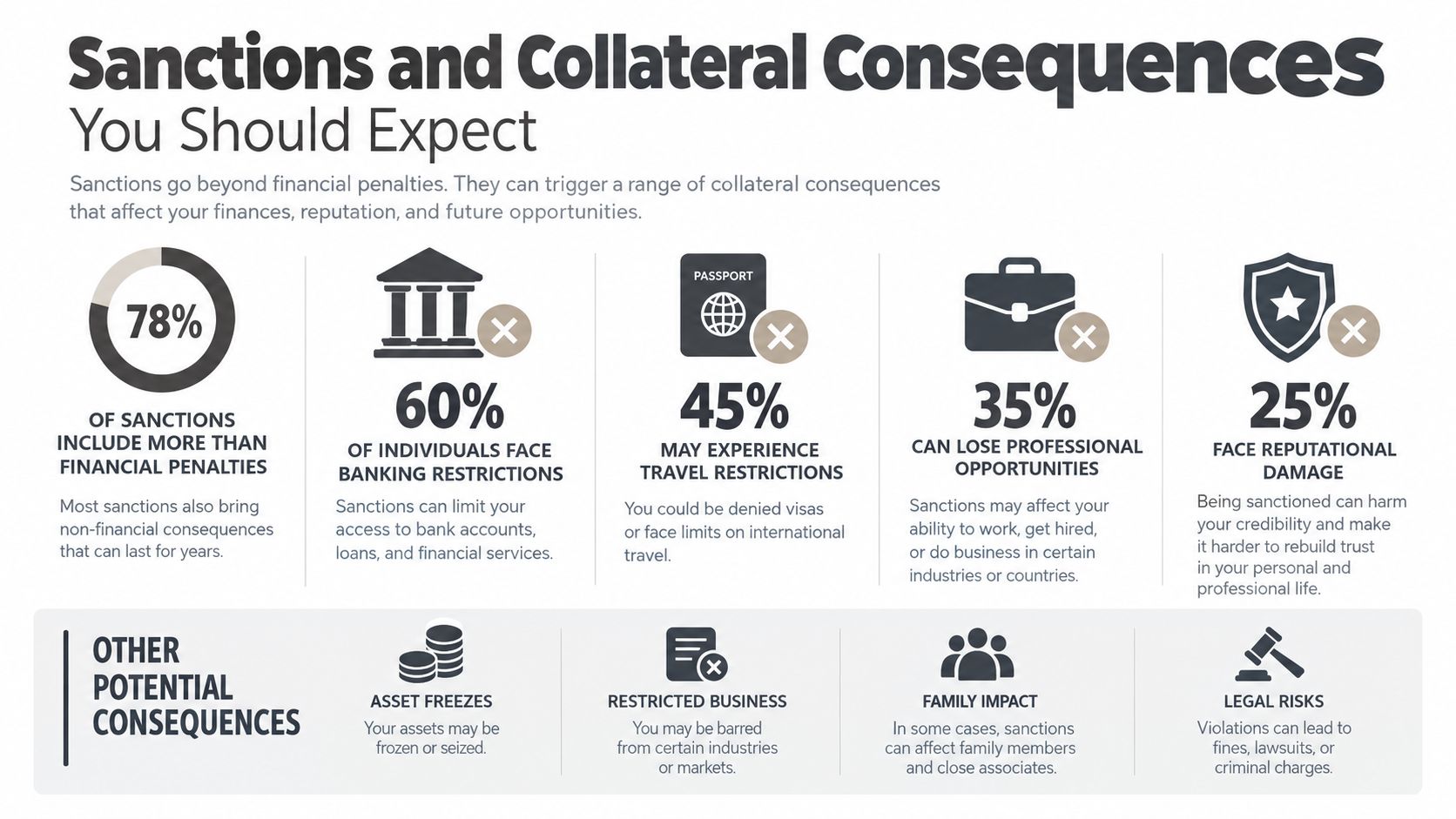
A sanction can affect more than the disciplinary order. FINRA Rule 8310 and the FINRA Sanction Guidelines permit fines, suspensions, bars, expulsions, and other fitting sanctions, depending on the respondent, rule, facts, and aggravating or mitigating circumstances. The order is one part of the outcome. The professional record and practical restrictions may last longer.
An individual suspension can interrupt employment and income. A bar can prevent association with a FINRA member firm, while a firm's expulsion can end its FINRA membership. Restitution and disgorgement may create obligations beyond a fine. Undertakings can require revised supervisory procedures, certifications, testing, or management oversight. These conditions can shape daily work long after the original conduct is resolved.
Why case volume doesn't tell the whole story
FINRA's regulatory statistics show that new disciplinary actions fell from 782 in 2021 to 625 in 2025, while fines and disgorgement ordered increased from $97.9 million to $99.6 million (FINRA's regulatory statistics). Individual bar sanctions fell from 269 to 187, and individual suspension sanctions fell from 386 to 235.
Those figures do not measure an advisor's personal exposure. A year with fewer filings can still contain serious cases, substantial financial obligations, or sanctions that limit a person's ability to work. The outcome turns on the violation, customer impact, cooperation, records, and aggravating facts. Early intervention during an 8210 request or pre-complaint outreach can help clarify those facts before staff settles on a theory or proposes an AWC, suspension, or bar.
The March 2024 Guidelines identify a $10,000 to $250,000 fine range in one major category and state that aggravating factors can support a suspension of up to two years or expulsion. Those ranges do not predict an individual result. They show why the record should be addressed before the proposed sanction becomes the center of the discussion.
The record follows you
A Form U5 disclosure may affect future employment and should be reviewed for accuracy and completeness. Public regulatory records, employment checks, customer disclosures, and professional licensing issues may continue after a matter closes. An inaccurate or retaliatory employment disclosure can create separate concerns, including the broader legal context of retaliation.
For a focused review, see Form U5 and FINRA disclosure issues. A sound response addresses both the sanction under consideration and the description that will remain in the advisor's record.
Immediate Response Actions When You Face an Investigation
A FINRA inquiry can begin with a narrow Rule 8210 request and develop into a broader examination of conduct, supervision, records, and cooperation. Your first response can influence that trajectory. Treat the request like the opening boundary of a case. What you preserve, say, and clarify at this stage may affect whether staff views the matter as a contained issue or as grounds for an AWC, suspension, or bar.
Preserve the original record before trying to explain it. Do not delete, edit, rename, or reorganize emails, text messages, calendars, notes, account documents, trade records, supervisory reviews, or communications with the firm or customer in a way that changes their context. Keep relevant material in its existing form, and document any collection process so you can later explain what was gathered and why.
A practical first-response checklist
-
Read the request line by line. Identify each information category, defined term, time period, required format, and deadline. Prepare a response to the questions FINRA asked. Do not expand the response casually, but do not withhold responsive material because it creates discomfort.
-
Notify compliance and counsel promptly. Inform the appropriate compliance contact and regulatory counsel. If the inquiry involves your firm, another advisor, or a former employer, avoid discussing the substance with coworkers or customers until you understand who should communicate and what may be disclosed.
-
Create a source-based chronology. Build a dated timeline from account records, emails, messages, order tickets, supervisory reviews, and other contemporaneous materials. Note who acted, who knew, which system captured the event, and when anyone discovered or corrected the issue. Memory can fill gaps with assumptions, so label uncertain dates instead of presenting them as facts.
-
Separate evidence from characterization. “The communication was sent on this date” describes an event. “The recommendation was suitable” states a legal or compliance conclusion. Preserve the underlying evidence first, then assess how the facts fit the applicable rule.
-
Review possible Form U5 issues early. If a former firm has made, or may make, a disclosure, examine the wording, supporting documents, timing, and relationship to any employment dispute. Regulatory counsel and employment counsel may need to coordinate because the accuracy of the disclosure and the circumstances surrounding it can raise different legal questions.
-
Assess remediation before taking action. A corrected procedure, customer reimbursement where appropriate, improved supervision, or preserved evidence may address risk. A rushed self-report, incomplete correction, or unsupported statement can create inconsistencies that staff later treats as evidence of poor cooperation.
A Rule 8210 response must be truthful, complete, and timely. If the request is unclear or the deadline cannot be met, raise the issue before the due date and seek a documented agreement about clarification or additional time. Silence leaves the file without your explanation, while an unsupported answer can create a separate problem concerning cooperation.
Early intervention is a form of escalation control. Counsel can help identify the facts that need correction, distinguish a document gap from an alleged violation, and present remediation without making admissions that have not been evaluated. That work does not guarantee a particular result, but it gives FINRA a more accurate record before staff decides whether to pursue an AWC, suspension, or bar.
Building Your Defense Strategy and Protecting Your Record
A sound defense strategy begins by separating three questions: Did the conduct occur? Was it a rule violation? What sanction is proportionate? An advisor may have a strong factual defense but still need to address a recordkeeping weakness. Conversely, a technical violation may be manageable if the advisor can demonstrate prompt correction, customer protection, reliable records, and meaningful cooperation.
The choice between negotiating an AWC and contesting charges requires a realistic assessment of evidence, admissions, proposed sanctions, collateral consequences, and hearing risk. An AWC may provide certainty and avoid a longer proceeding, but its admissions and disclosures can affect employment and future registration. Contesting a matter may preserve important defenses, yet it requires a developed factual record and a willingness to bear procedural and financial burdens.
Defense planning should account for tomorrow's employer, regulator, customer, and licensing reviewer, not only today's proposed fine.
Remediation should be specific. Identify the failed control, explain why it failed, assign responsibility, preserve proof of the correction, and test whether the new process works. General statements that the firm “takes compliance seriously” carry less weight than a documented procedure, training record, review protocol, and evidence that the process addresses the actual risk.
FINRA enforcement has become a lower-volume program compared with its historical peak. The Committee on Capital Markets Regulation reported a decline from 1,147 enforcement actions in 2015 to 544 total enforcement actions in 2024, while the 2024 total was up 27.7% from 2023's 426 actions (the Committee's annual enforcement data report). A lower-volume environment doesn't eliminate risk. It reinforces the need to understand the specific facts and escalation path in each matter.
Kons Law represents advisors and financial professionals in FINRA investigations, Rule 8210 responses, disciplinary matters, Form U5 disputes, and related business and employment issues. If you want to discuss your business law matter, contact Kons Law at (860) 920-5181.
If you're facing a FINRA inquiry, Rule 8210 request, disciplinary complaint, or Form U5 issue, Kons Law can help organize the deadlines, evidence, response strategy, and related advisor dispute. Contact Kons Law at (860) 920-5181 to discuss your business law matter before an early inquiry becomes a formal disciplinary action.
