
While people often use the terms interchangeably, business law and corporate law are actually two very different things. It's a critical distinction for any business owner to understand.
Think of it this way: corporate law is about building your company from the inside out—the structure, the ownership, the internal rulebook. Business law, on the other hand, governs how your company interacts with the outside world—your customers, vendors, and competitors.
Getting both right is non-negotiable for long-term success and legal protection.

Corporate Law: The Company’s Internal Blueprint
Corporate law is all about the corporation itself. It’s the legal framework that defines how your business is born, structured, and managed internally. This area is highly specific to the type of legal entity you choose, whether that’s an S-Corp, C-Corp, or LLC.
Essentially, corporate law provides the instruction manual for your organization. It covers the foundational elements that keep your company running smoothly from within.
Key areas include:
- Entity Formation: The official, legal process of creating your company, establishing it as an entity separate from its owners.
- Corporate Governance: The internal rules and procedures for managing the company. This defines the roles and responsibilities of directors, officers, and shareholders.
- Shareholder Rights: The legally protected rights of the company's owners, like voting on major decisions or receiving dividends.
- Mergers & Acquisitions (M&A): The complex legal processes for when companies combine or one buys another.
Without a solid corporate law foundation, a business is vulnerable to internal disputes, governance failures, and personal liability for its owners.
Business Law: The Rules of the Road
If corporate law is the internal blueprint, business law covers everything external. Sometimes called commercial law, this incredibly broad field governs all the legal requirements for engaging in commerce.
Unlike corporate law, which focuses on the corporate form, business law applies to all types of businesses—from a sole proprietorship to a massive corporation. You can learn more about the critical differences between corporate law and business law in our related article.
Business law handles the thousands of interactions a company has every day, such as:
- Contracts: Drafting, negotiating, and enforcing legally sound agreements with customers, suppliers, employees, and partners.
- Employment Law: The web of rules governing the employer-employee relationship, from hiring and wages to termination.
- Intellectual Property: Protecting your most valuable intangible assets, including trademarks, patents, and copyrights.
- Litigation: Managing and resolving legal disputes that inevitably pop up during business operations.
These laws create a stable, predictable environment for everyone to operate in. A firm grasp of business law allows you to navigate the marketplace with confidence, knowing your agreements are enforceable and your risks are managed.
If you want to discuss your business law matter, contact Kons Law at (860) 920-5181.
The Three Pillars of Corporate Law
If you think of corporate law as the owner's manual for your company, then its engine is powered by three core pillars: Formation, Governance, and Transactions. Each pillar builds on the last, creating a stable and legally sound structure that lets your business grow while shielding its owners from personal risk.
Getting these concepts right is essential to moving from a simple idea to a resilient enterprise. It's what separates a professionally managed company from a high-risk venture.
The market reflects just how critical this expertise has become. The U.S. corporate law firms industry is on track to hit $193.6 billion in revenue by 2025, a clear sign of consistent growth. This expansion shows just how seriously successful businesses take proper legal structuring and guidance. You can find more data on this trend over at IBISWorld.
Pillar One: Formation and Entity Selection
Your very first decision—how to legally structure your company—will have consequences that ripple through the entire life of your business. This isn't just about filing paperwork; it's the architectural blueprint for everything that follows. The entity you choose, whether it's a Limited Liability Company (LLC), an S-Corporation, or a C-Corporation, directly shapes everything from your tax obligations to your personal liability.
It's like choosing the foundation for a house. A shaky foundation will lead to cracks and instability down the road, no matter how well you build the rest of it.
-
Limited Liability Company (LLC): A favorite for small businesses for good reason. An LLC creates a crucial shield, separating your personal assets from the business's debts. If the company gets sued, your personal savings and property are generally safe. It also offers "pass-through" taxation, so profits are taxed on the owners' personal returns, which neatly avoids the "double taxation" problem.
-
S-Corporation (S-Corp): Much like an LLC, an S-Corp also provides pass-through taxation. It comes with stricter rules, though, like limits on the number and type of shareholders you can have. Its main advantage can be potential savings on self-employment taxes for the owners.
-
C-Corporation (C-Corp): This is the classic structure you see with most large, publicly-traded companies. It offers the most flexibility for raising capital from investors, but it’s subject to double taxation. The corporation pays taxes on its profits, and then shareholders pay taxes again on any dividends they receive.
Choosing the right entity from day one is your first and most powerful line of defense against future legal and financial headaches.
Pillar Two: Governance and Internal Rules
Once your company is officially formed, the next pillar is governance. Think of this as the internal rulebook that dictates how your company is managed and controlled. Strong governance isn't about creating bureaucracy; it’s about establishing clarity and preventing the internal disputes that can tear a business apart from the inside.
A company without clear governance is like a ship without a captain or a map. Decisions become chaotic, responsibilities are unclear, and conflicts are almost inevitable, often leading to costly litigation or even business failure.
A well-defined governance plan establishes clear roles for directors and officers, spells out shareholder rights, and creates a process for making major decisions. It ensures everyone is accountable and provides a predictable framework for resolving disagreements before they escalate into something much worse. You can learn more about corporate governance and its importance in our detailed guide.
Pillar Three: Transactions and Major Milestones
The third pillar, transactions, covers the major legal events that mark a company's lifecycle. These are the milestone moments—the big moves that define a company's growth, evolution, or even its conclusion. Every one of them requires careful legal navigation to ensure compliance and protect the interests of all stakeholders.
Key corporate transactions include things like:
- Mergers and Acquisitions (M&A): The legal process of combining with or buying another company.
- Capital Raises: Securing funding by selling equity (stock) to investors.
- Asset Sales: Selling off significant company assets outside the normal course of business.
- Dissolution: The formal, legal process of winding down and closing the company for good.
Each of these events involves a maze of complex contracts, regulatory filings, and shareholder approvals. A single misstep can invalidate the entire transaction or create massive liabilities. A solid corporate law foundation ensures these pivotal moments are handled correctly, setting the stage for whatever comes next for your business.
If you want to discuss your business law matter, contact Kons Law at (860) 920-5181.
If corporate law is the owner's manual for your company's internal engine, then business law is the set of traffic laws you follow every time you take it out on the road. It governs how your business interacts with the outside world—every customer, vendor, employee, and competitor.
This isn't just about reacting when something goes wrong. Business law is the framework for all the day-to-day decisions, agreements, and relationships that keep your company moving forward. It’s about proactively managing your place in the market to protect your revenue, your brand, and your professional relationships.
The Power of Well-Drafted Contracts
So much of business still runs on a handshake. While that feels efficient in the moment, a simple verbal agreement with a client or supplier is often a recipe for a future headache. Memories get fuzzy, expectations differ, and what seemed clear at first can quickly devolve into a costly dispute.
A well-drafted contract is your first and best line of defense. It’s not about mistrust; it’s about clarity. A good contract acts as a legally enforceable roadmap, clearly defining who is responsible for what, the scope of the work, how and when payments will be made, and what happens if someone doesn't hold up their end of the bargain.
Think about the common situations where a formal contract is a must-have:
- Vendor and Supplier Agreements: These lock in quality standards, delivery dates, and payment terms, keeping your supply chain predictable and reliable.
- Client Service Agreements: A detailed scope of work prevents "scope creep" and ensures you get paid for every bit of work you do.
- Employment Contracts: To run a smooth operation, knowing how to create employment contracts is crucial for clarifying roles, compensation, and confidentiality rules from day one.
Protecting Your Most Valuable Assets
Your most valuable assets often aren't the things you can touch, like inventory or equipment. They're intangible—your brand name, your logo, your unique processes, and your hard-won client lists. Business law gives you the tools to protect these core assets from being copied or stolen.
You have to be proactive here. This means registering trademarks to own your brand identity, using copyrights to protect your creative work, and having solid non-disclosure agreements (NDAs) in place when sharing sensitive information with employees or partners. If you don't take these steps, you're leaving your best assets exposed for competitors to grab.
Resolving Disputes Before They Escalate
Disagreements are just a part of doing business, even when you have great contracts. A partner might drop the ball, a client could refuse to pay an invoice, or a competitor might start playing dirty. This is where commercial litigation comes in.
A good business lawyer does more than just represent you in a courtroom. Their first goal is often to resolve the issue as quickly and cost-effectively as possible. Many times, a sharply written demand letter or a skilled negotiation is all it takes to get the right result without the expense of a lawsuit. But when a fight is unavoidable, you need an experienced attorney in your corner to protect your rights and your bottom line. For a closer look at these essential protections, our small business compliance checklist is a great resource.
Navigating these external rules is a constant process. From the moment you form your company to every transaction you make, having a solid legal framework is what allows you to operate with confidence.
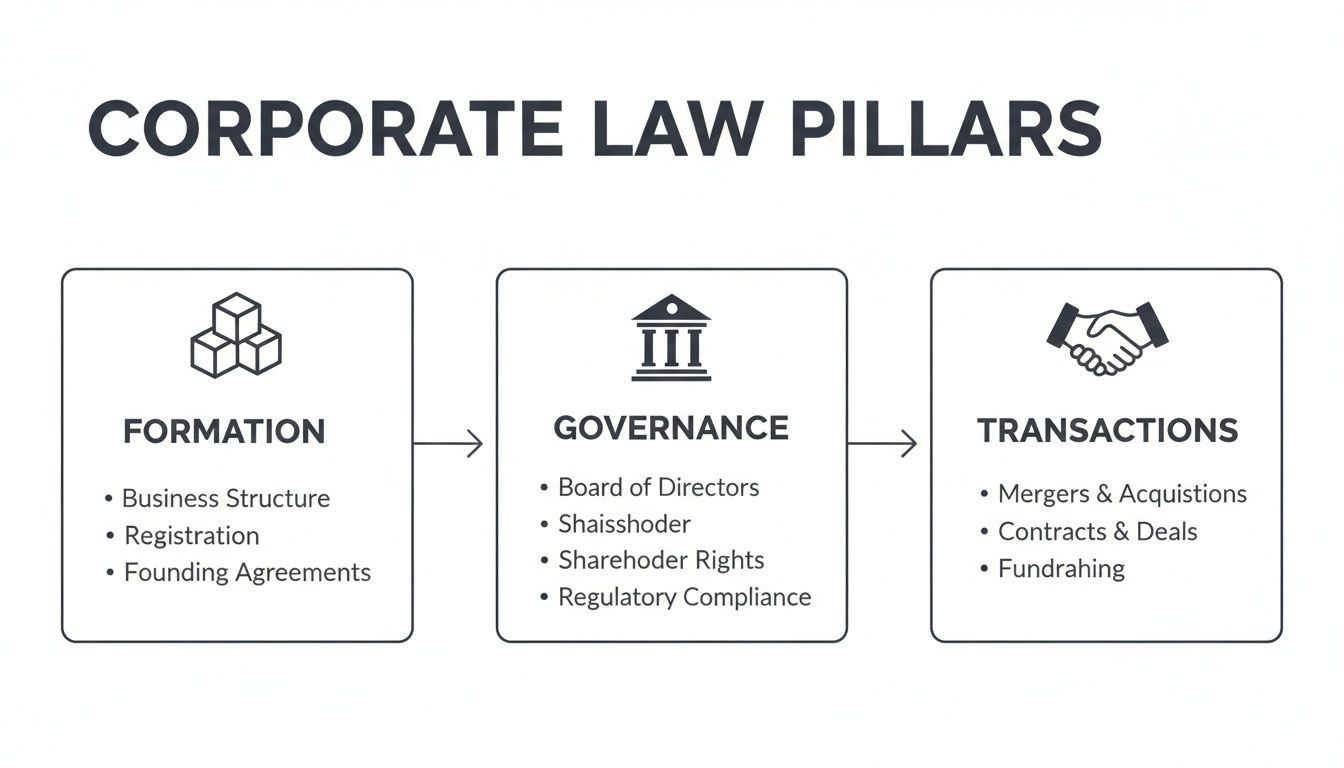
As you can see, the core pillars of corporate law—Formation, Governance, and Transactions—create the stable internal structure your business needs to successfully navigate the external world governed by business law.
Key Moments to Call Your Business Lawyer
One of the costliest mistakes a business owner can make is waiting for a legal fire to erupt before calling for help. Treating legal counsel as a reactive expense, rather than a proactive investment, is a gamble. Engaging a lawyer at the right moments is a strategic move that protects your assets and stops small problems from spiraling into massive liabilities.
Recognizing these critical junctures is key. When you start thinking of a business and corporate law professional as a strategic partner instead of just an emergency contact, you fundamentally change how you manage risk and plan for growth.

During Formation and Structuring
Your very first decisions have legal and financial ripple effects that can last for years. It's tempting to use a template from an online service—it seems fast and cheap. But those one-size-fits-all solutions rarely account for your specific goals, industry, or the unique dynamics between partners.
An experienced lawyer helps you choose the right entity—be it an LLC, S-Corp, or C-Corp—to optimize your tax situation and shield you from personal liability. More importantly, they'll draft a custom operating or shareholder agreement that anticipates future challenges, clearly defining roles, responsibilities, and even exit strategies to prevent messy internal disputes down the road.
When Hiring and Managing Employees
Bringing on your first employee is a fantastic milestone. It also throws you into a complex web of state and federal employment laws. From wage and hour rules to discrimination and proper termination procedures, the risks of getting it wrong are huge.
Before you make that first hire, a lawyer can help you:
- Draft Compliant Employment Agreements: Make sure your contracts are solid, covering essential terms like compensation, confidentiality, and non-solicitation clauses.
- Develop an Employee Handbook: Create clear, legally sound policies that set expectations from day one and protect the company.
- Navigate Termination: Get guidance on how to handle departures correctly and minimize the risk of a wrongful termination lawsuit.
When Negotiating Significant Contracts
Any agreement involving a substantial amount of money, a long-term commitment, or your critical intellectual property needs an attorney's review. This isn't just for major client deals; it includes commercial leases, key vendor agreements, and partnership arrangements.
A lawyer's role in contract negotiation is to protect you from what's not in the agreement as much as what is. They identify unfavorable terms, ambiguous language, and potential loopholes that could expose your business to unnecessary risk.
They ensure the scope of work, payment terms, liability limits, and dispute resolution clauses are all clearly defined and, wherever possible, tilted in your favor. This one step can save you tens of thousands of dollars in future litigation.
Before Raising Capital or Selling the Business
When you decide to bring on investors, merge with another company, or plan your exit strategy, the legal stakes are at their highest. These transactions are intense, involving deep due diligence, complex valuations, and a mountain of regulatory paperwork. Expert legal counsel is non-negotiable here.
An attorney will structure the deal to protect your interests, negotiate fiercely on your behalf with investors or buyers, and ensure the entire process is compliant with securities laws.
Navigating these key moments with professional guidance is what separates businesses that thrive from those that stumble over avoidable legal hurdles. To get a better feel for everything a legal partner can handle, you might want to read our guide on what a business lawyer does.
If you want to discuss your business law matter, contact Kons Law at (860) 920-5181.
Adapting to the Modern Legal Landscape
The rulebook for business isn't written in stone; it's constantly being updated. To stay compliant and manage risk today, you have to look beyond traditional contracts and into a new wave of legal challenges driven by technology, social expectations, and global regulations. For any modern business, adapting is the key to survival and growth.
This isn't some abstract problem for multinational corporations. Global corporate law is undergoing a massive shift, and the evolving compliance requirements directly impact how companies of all sizes operate. You can learn more about how global corporate law trends are changing on globallawexperts.com.
The Rise of ESG and Data Privacy
Two of the most powerful forces reshaping business and corporate law are the intense focus on Environmental, Social, and Governance (ESG) criteria and the explosion of data privacy regulations. What were once niche concerns have moved front and center in corporate strategy.
-
Environmental, Social, and Governance (ESG): Investors, customers, and regulators are all demanding that companies operate more sustainably and ethically. This pressure creates very real legal risks, from shareholder lawsuits over weak climate disclosures to consumer protection actions for "greenwashing." Companies now have to actively manage and report on their ESG performance, weaving it into their core governance.
-
Data Privacy and Security: Laws like Europe's GDPR and similar regulations right here in Connecticut have created a complex web of compliance duties. If your business collects, stores, or processes personal data, you're facing strict rules on consent, usage, and security. A single data breach can lead to crippling fines, reputational ruin, and costly litigation, making proactive data governance an absolute must.
The Impact of Artificial Intelligence
Artificial intelligence (AI) is no longer sci-fi; it's a business tool that brings a host of new legal questions. From AI-powered contract analysis to algorithmic decision-making in hiring, integrating AI creates both incredible efficiencies and brand-new liabilities.
The legal framework is still playing catch-up with the pace of AI development. This creates an environment of ambiguity where businesses have to tread carefully. Having legal counsel who understands both the tech and the emerging regulatory standards is critical to avoiding unforeseen risks.
Companies now have to grapple with complex issues like data bias in AI models, intellectual property rights for AI-generated content, and liability when an AI system makes a costly mistake. These aren't just technical problems—they are legal ones with serious financial consequences. As the legal world adapts, even things like using specialized legal transcription services have become crucial for efficiently handling the growing volume of digital legal proceedings.
Proactive legal counsel isn't just about reviewing today's contracts; it's about anticipating tomorrow's challenges. A forward-thinking approach prepares your business not just for the laws on the books now, but for the regulatory environment that is just around the corner.
If you want to discuss your business law matter, contact Kons Law at (860) 920-5181.
Your Partner in Connecticut Business Law
Understanding the difference between business and corporate law is one thing; putting that knowledge to work to protect and grow your company is another. The real difference-maker is having the right legal partner to turn theory into practice. An experienced attorney doesn't just explain the rules—they build the strategies that secure your company's future.
At Kons Law, we offer Connecticut businesses just that: dedicated, comprehensive legal counsel for every stage of your company’s life. Our job is to translate complex legal jargon into clear, actionable advice designed to hit your specific business goals.
Our Core Legal Services
We built our firm to handle the real-world challenges Connecticut businesses run into every day. We provide focused expertise across the critical areas that matter most, from getting started to resolving disputes.
Here’s where we can help:
- Entity Formation and Governance: We'll help you pick the right legal structure for your goals and set up the internal rules to prevent conflicts down the road and protect your personal assets.
- Commercial Transactions: Our team is meticulous when it comes to drafting and negotiating the contracts that drive your revenue and define your business relationships.
- Litigation and Dispute Resolution: When things go wrong, we're in your corner. We fiercely advocate for you in contract disputes, partnership disagreements, and other commercial conflicts.
- Securities Representation: We represent investors and financial professionals in securities arbitration and defend advisors facing regulatory inquiries.
Our approach is built on a simple premise: your success is our success. We know that smart legal counsel isn't just about avoiding problems. It's about creating opportunities and building a resilient foundation so your business can thrive for years to come.
If you’re ready to discuss your business law needs, contact Kons Law at (860) 920-5181 and get the expert guidance your company deserves.
Frequently Asked Questions
When you're running a business, legal questions pop up all the time. Whether you're a startup founder or the leader of an established company, you need clear, practical answers. This section cuts through the noise to address the most common things we get asked, helping you understand when and why getting the right lawyer on your side is such a powerful move.
Getting a handle on these points will help you make smarter decisions, sidestep preventable risks, and give your business the solid legal footing it needs to grow.
Can I Just Use an Online Legal Service Instead of a Lawyer?
While those online template services might seem like a quick, cheap fix for business formation, they're a classic "one-size-fits-all" trap. They can't possibly account for the specific nuances of your business goals, your unique tax situation, or the dynamics of your partnership structure.
A real lawyer, on the other hand, gives you advice tailored to you. We draft custom operating agreements designed to head off future disputes and help you pick the business entity that truly delivers the best liability protection and tax benefits. It’s an upfront investment that pays for itself by helping you dodge incredibly expensive problems down the road.
Do I Really Need a Formal Contract for Every Little Thing?
Look, not every handshake deal needs a 20-page document. But if the agreement involves a significant amount of money, services, or your intellectual property, you absolutely need it in writing. Verbal agreements are notoriously hard to enforce and are a breeding ground for misunderstandings that can sour a good relationship.
A well-written contract isn't about planning for a lawsuit; it's about creating clarity. It lays out everyone's responsibilities and provides a clear roadmap for what to do if things go sideways.
A common misconception is that contracts are only for preventing lawsuits. In reality, their primary purpose is to create clarity and alignment, which is the best way to preserve a positive business relationship by ensuring everyone understands their obligations from the start.
Your attorney can even create simple, effective templates for your recurring deals, making the whole process both straightforward and secure. This is just smart, proactive business practice.
What's the Difference Between a Litigator and a Transactional Lawyer?
Knowing the difference here is key to using legal services effectively. Think of it this way: they're two sides of the same coin, both essential for protecting your business.
A transactional lawyer is the architect. Their job is to be proactive—they build things. They structure your deals, form your companies, and draft your contracts with an eye toward preventing problems before they ever start. They’re your partners in growth.
A business litigator, in contrast, is the problem-solver who steps in when a dispute has already ignited. They represent you in lawsuits, arbitration, or tough negotiations to resolve conflicts like a breach of contract.
A comprehensive firm like Kons Law has deep expertise in both, offering seamless support no matter what stage your business is in. Having a team that understands both sides of business and corporate law means you always have the right expert for the job, whether you're building a new venture or defending what you've already built.
If you want to discuss your business law matter, contact Kons Law at (860) 920-5181.
