You're a financial advisor who was terminated on Friday. By Monday, your system access is gone, your firm email is unavailable, clients are asking questions, and a new employer wants to know what will appear on your regulatory record. You may also be trying to determine whether the termination followed a discrimination complaint, a compliance report, or another protected activity. The employment dispute and the regulatory consequences are moving at the same time.
For advisors, learning how to report wrongful termination requires more than filing an employment complaint. You need to preserve evidence, identify the correct agency, protect the accuracy of your Form U5, and avoid statements that create problems in a later EEOC charge, FINRA proceeding, arbitration, or regulatory inquiry.
The Dual-Track Problem Financial Advisors Face After Termination
A Friday termination can create two separate disputes before you've had time to process what happened. The first concerns the employment decision itself. The second concerns how the former firm describes that decision to the industry.
Suppose a broker-dealer tells an advisor that the relationship is ending because of “performance concerns.” The advisor had recently complained about discriminatory treatment and questioned a supervisory response to a compliance issue. Access disappears, colleagues stop responding, and the firm prepares its Form U5 narrative. The advisor may now need to challenge the termination through the EEOC or a state fair employment agency while also evaluating whether the regulatory disclosure is accurate, complete, and fair.
Those tracks overlap, but they aren't interchangeable. An EEOC charge addresses alleged discrimination or retaliation under applicable employment law. FINRA-related proceedings concern the advisor's regulatory record, industry disclosures, and the firm's characterization of the separation. Filing one does not automatically resolve the other.
Why ordinary employment advice falls short
Generic wrongful-termination guidance often assumes that the employee's main task is to report the firing to an employment agency. That advice misses the professional consequences of a U5 narrative. A damaging disclosure can affect recruiting, compliance reviews, supervisory decisions, and future explanations to prospective firms even when the advisor disputes the employer's account.
The sequence matters. Statements made in an EEOC intake, a severance negotiation, a FINRA arbitration, and a response to a prospective employer must remain factually consistent. An advisor who describes the termination one way in an employment filing and another way in a regulatory response may give the former firm an argument about credibility.
Practical rule: Treat the termination as an employment matter and a regulatory-record matter from the first day.
Reputation concerns can intensify the pressure. Advisors dealing with public-facing fallout may find a resource on reputation management for wealth advisors useful, but reputation work can't replace legal action or correct a regulatory filing. The legal dispute itself may involve employment claims, contract provisions, compensation, and securities arbitration. A review of investment dispute resolution options can help frame the arbitration issues separately from an agency charge.
The most dangerous assumption is that time spent negotiating severance is harmless. Federal discrimination claims generally have short administrative deadlines, and the regulatory record may begin affecting career opportunities while negotiations continue. Preserve the record, calculate deadlines, and obtain advice on both tracks before signing documents or adopting the firm's terminology.
Preserving Evidence Before You Lose Access
Evidence preservation starts before you argue about legal theories. Once the firm disables your email, customer relationship management system, shared drive, messaging platform, or compliance portal, you may no longer be able to confirm what happened without relying on memory.
Begin with a private chronology. Record the date of the termination communication, who delivered it, the stated reason, earlier performance discussions, complaints you made, compliance concerns you raised, and changes in treatment that preceded the firing. Use personal records and devices for your notes. Don't copy confidential client information merely because it may be relevant.
Build a clean personal record
Prioritize documents that show performance, timing, motive, and treatment:
- Employment history: Keep your offer letter, employment agreement, compensation plan, policies, performance reviews, disciplinary notices, and severance proposal.
- Production evidence: Preserve lawful copies of production reports, compensation statements, account assignments, and recognition showing how the firm evaluated your work.
- Compliance communications: Identify emails or messages concerning supervision, suitability, customer complaints, books and records, conflicts, reporting failures, or escalation requests.
- Protected activity: Save your own copies of complaints involving discrimination, harassment, retaliation, unsafe practices, legal violations, or cooperation with an investigation.
- Witness information: Write down the names of people who attended meetings or observed different treatment, along with what each person personally saw or heard.
Don't create a new evidentiary problem while trying to preserve an old one. Client account data, nonpublic personal information, trade information, internal investigation materials, and firm-owned records may be subject to confidentiality obligations, privacy rules, protective orders, or firm policies. Downloading an entire CRM, forwarding client emails to a personal account, or taking documents unrelated to your claim can create regulatory and contractual exposure.
Preserve without altering
Keep original messages where possible. Don't edit screenshots, annotate source files, delete unfavorable material, or change timestamps. If you need to summarize a conversation, preserve the original communication separately and label your summary as a later recollection.
A practical record might include the termination letter, calendar invitations, your personal notes, compensation statements, and messages showing when a complaint was made. Your lawyer can help distinguish material that supports the claim from material that the firm may argue you improperly possessed.
For a broader framework on organizing timing, witnesses, protected activity, and inconsistent treatment, review this guide on how to prove wrongful termination. The point isn't to assemble a trial-ready file before seeking help. It's to prevent the loss of the basic facts that allow counsel to assess what happened and where the claim belongs.
Determining Which Agency Handles Your Claim
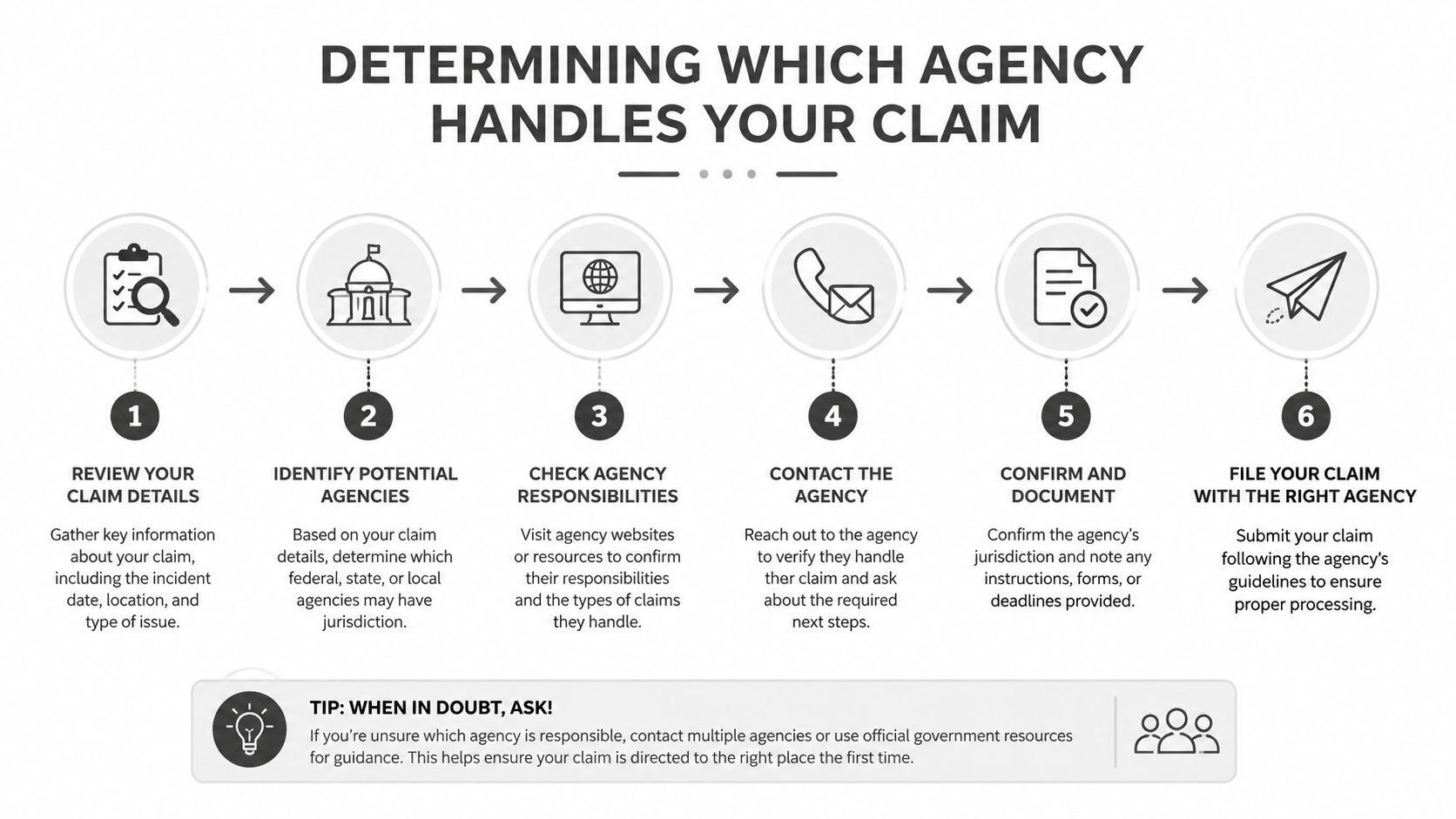
There isn't one universal wrongful-termination filing. The right forum depends on the conduct you reported, the legal protection involved, and the relief you need. A financial advisor may have an employment claim, a whistleblower issue, a labor claim, and a regulatory-record dispute arising from the same separation.
Start with the protected conduct
If the alleged reason involves race, sex, disability, religion, national origin, or another federally protected characteristic, the employment discrimination route generally begins with the EEOC, or with a state or local fair employment agency where that agency enforces a parallel law. The U.S. government identifies the EEOC as the proper first reporting step when a worker believes the firing was discriminatory, as explained in its wrongful-termination guidance.
If the termination followed a report about an unsafe workplace, OSHA may be the relevant agency. The question isn't whether the employer called the issue “compliance” or “operations.” The question is what the advisor reported, which statute may protect that report, and whether the agency has authority over it.
A collective-action or union-related retaliation theory may belong with the NLRB. That can arise when an employee acted with coworkers concerning workplace conditions or engaged in protected concerted activity. A complaint about an individual client matter, by itself, doesn't automatically become an NLRB case.
Add the FINRA track
FINRA isn't a substitute for an EEOC filing. FINRA-related procedures address the advisor's regulatory record, the Form U5, and disputes that may be subject to arbitration or other industry processes. The advisor may need to pursue that track while an employment agency evaluates discrimination or retaliation.
Consider these examples:
| Situation | Possible primary route | Separate concern |
|---|---|---|
| Termination after a complaint about discriminatory treatment | EEOC or state fair employment agency | Form U5 accuracy and recruiting impact |
| Termination after reporting a workplace safety issue | OSHA, depending on the statute | Employment agreement and regulatory disclosure |
| Termination after acting with coworkers about workplace conditions | NLRB, depending on the facts | Firm policies and U5 narrative |
| Dispute over the firm's termination characterization or contractual obligations | FINRA arbitration or another contract forum, depending on the agreement | Avoid inconsistent factual statements |
These routes can operate simultaneously. A single intake submission won't preserve every possible claim, and a FINRA dispute won't necessarily satisfy an employment-agency prerequisite. For a focused explanation of the legal theory behind reporting-related retaliation, see what whistleblower retaliation means.
The agency choice should follow the facts, not the label supplied by the employer. Preserve the chronology, identify the protected activity or characteristic, and ask counsel to map each issue to its forum before assuming that one filing covers everything.
Filing Your EEOC Charge Within the Deadline
The EEOC process is more mechanical than many terminated employees expect. The agency needs enough information to identify the parties, the adverse action, the timing, and the alleged discrimination basis. You don't need a complete litigation package at the first contact, but a vague accusation may not preserve the facts you need.
The federal default is 180 calendar days from the discriminatory act. That period generally extends to 300 calendar days when a state or local fair employment agency enforces a law prohibiting the same discrimination on the same basis. The EEOC time-limit guidance explains the basic rule, while the EEOC's jurisdictional guidance shows that deadlines can vary by location, with some claims or jurisdictions permitting different periods and others remaining subject to the shorter period.
Calculate from the termination event
For a termination claim, the clock typically begins when the employer communicates the final decision. It generally doesn't wait until you later understand why the decision may have been unlawful. The EEOC treats termination as a discrete adverse action, so waiting for a later conversation, internal appeal, or severance negotiation can consume the filing period.
Take these steps promptly:
- Identify the parties. Provide your contact information, the employer's name and contact details, and the employer's headcount if known.
- Describe the action. State that you were terminated, identify the decision date, and describe what the employer communicated.
- State the basis. Identify the protected characteristic or protected activity you believe played a role.
- Connect the facts. Use dates, names, communications, and sequence. Explain what happened before the firing without turning the submission into speculation.
- Sign and submit. The EEOC requires a signature and permits filing in person, by mail, by phone, or through its public portal, as described in its charge-filing instructions.
Retaliation deserves particular attention. In fiscal year 2024, the EEOC received 88,531 discrimination charges, a 9% increase from the prior year. Retaliation appeared in 42,301 charges, or 47.8% of all charges, compared with 56.8% in fiscal year 2023, and it remained the most frequently filed allegation for 17 consecutive years, according to this FY 2024 EEOC enforcement summary.
Filing advice: Write the charge around what happened and when. Legal conclusions matter, but dates and protected conduct give the agency a workable record.
Don't wait for a lawyer to create a perfect package. An initial inquiry or letter may begin the process, but it must still provide enough detail to identify the employer, adverse action, timing, and alleged motive. The EEOC also warns that some complaints must be reported within only 180 days, making early deadline review essential, as explained in its timeliness guidance for workers.
Managing the Form U5 and FINRA Implications
A favorable employment outcome won't automatically repair a damaging Form U5. That is the assumption financial advisors must reject.
The Form U5 records the reason a registered representative leaves a firm and can become part of the advisor's professional history. If the firm describes the separation as a termination for misconduct, a compliance violation, or another adverse reason, the advisor may need to address that statement with prospective firms and regulators. The disclosure can also complicate an employment claim if the firm later relies on the same narrative as its justification.
Review the record before responding
Start by obtaining and reviewing the firm's filing through BrokerCheck and by asking counsel to assess the exact wording, supporting facts, and timing. Separate an unpleasant but accurate statement from one that is false, misleading, incomplete, or unsupported. A disagreement with the firm isn't automatically proof that the U5 is defamatory or improper.
The advisor should preserve the termination notice, the firm's stated reason, communications about the filing, and any related investigation material that can lawfully be retained. Don't respond emotionally to a prospective employer or publish accusations online. Public statements may be difficult to retract and can create unnecessary issues in a parallel dispute.
Potential remedies depend on the facts and the applicable procedure. An advisor may seek correction, amendment, or relief through FINRA arbitration where the dispute qualifies, but the process is separate from an EEOC charge. Review the specific procedural and strategic considerations in this discussion of Form U5 and FINRA issues.
Keep the narratives aligned
Your EEOC filing may say the firm used performance concerns as a pretext for discrimination or retaliation. Your FINRA position may challenge the firm's description of those same performance concerns. Those positions can coexist, but only if they are factually precise.
An employment lawyer may focus on discrimination, retaliation, severance, and damages. Securities counsel may focus on FINRA procedure, disclosure obligations, arbitration, and regulatory defense. Some lawyers handle both; others coordinate with separate counsel. That coordination matters because an admission made to resolve one track can affect the other.
The U5 issue requires proactive attention. Even if the EEOC accepts your charge or the employment dispute resolves, the regulatory record may remain unless the appropriate correction or arbitration process addresses it.
Building a Coordinated Strategy With Legal Counsel
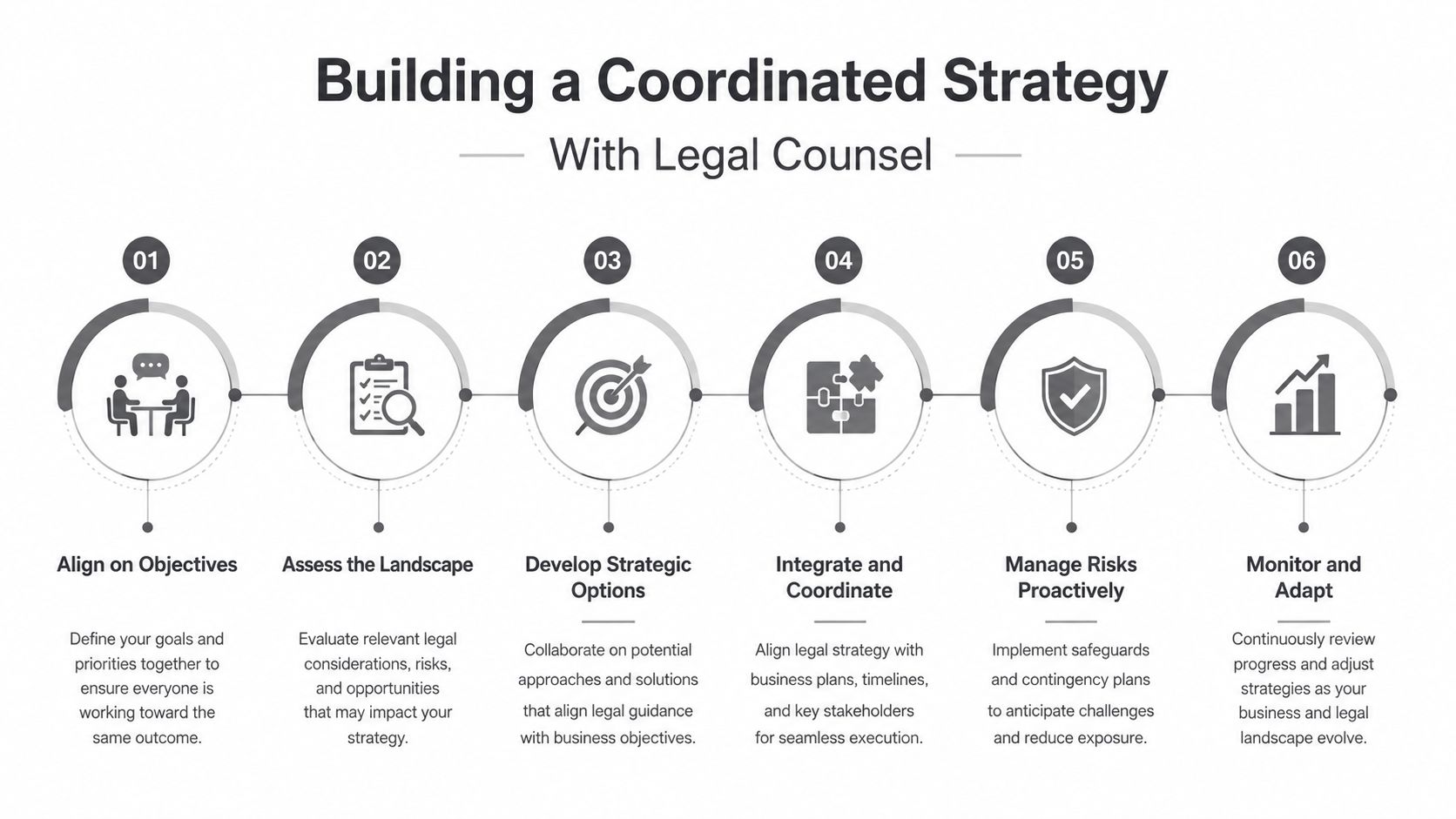
The first month after termination should produce a controlled record, not a stream of improvised responses. Put every deadline, filing, communication, and regulatory development on one chronology. Then separate the issues into employment discrimination, retaliation or whistleblower protection, contract and compensation, and FINRA record management.
A practical first-month sequence
- Immediately: Preserve lawful evidence, write the chronology, identify witnesses, and calculate the potential EEOC deadline from the termination date.
- Early in the process: Review the employment agreement, arbitration clause, release, confidentiality terms, compensation provisions, and any repayment obligations before signing severance papers.
- Before submitting statements: Coordinate the factual description of the termination across the EEOC, FINRA, prospective employers, and any regulatory response.
- After filing: Track new conduct, including negative references, threats, pressure, altered disclosures, or other adverse treatment that follows protected activity.
- Throughout: Keep client information confidential and avoid taking or sharing firm records beyond what counsel determines is lawful and necessary.
What works: A dated chronology, preserved source documents, disciplined communications, and counsel who understands both employment law and the securities industry.
An EEOC charge and a FINRA arbitration serve different purposes. The EEOC process concerns an agency's assessment of an employment discrimination claim. FINRA arbitration may address contract issues, compensation, the regulatory record, or other disputes within the applicable arbitration framework. Neither process guarantees a particular outcome or automatically produces reinstatement, back pay, front pay, compensatory damages, or punitive damages. Available relief depends on the claim, proof, governing law, and forum.
Legal counsel should also examine whether a severance agreement includes a release, arbitration provision, cooperation obligation, confidentiality term, or language affecting regulatory disclosures. Signing quickly may provide short-term certainty while limiting later options. Refusing to engage may also sacrifice negotiating position. The right decision depends on the document and the evidence, not a generic rule.
Kons Law handles business disputes, securities arbitration, regulatory matters, and Form U5 issues for financial professionals, while employment counsel may be needed for agency claims and related workplace protections. If you want to discuss your business law matter, contact Kons Law at (860) 920-5181.
If your termination involves discrimination, retaliation, compensation, or a disputed Form U5, Kons Law can help evaluate the business and securities-law issues affecting your next move. Contact Kons Law at (860) 920-5181 to discuss the facts, preserve your options, and coordinate a strategy that protects both your legal claim and your professional record.
