You're usually not reading FINRA arbitration rules out of curiosity. You're reading them because a customer complaint just landed, a promissory note fight is brewing, a Form U5 issue is expanding into a broader employment dispute, or your firm needs to decide whether to file first instead of waiting to be sued. At that point, the rules stop looking academic and start controlling your position.
In practice, most FINRA cases turn on a few procedural choices made early. How the claim is framed affects panel size. How documents are preserved affects credibility. How discovery is sequenced affects whether the hearing becomes a focused presentation or a scramble over missing records. The lawyers and parties who treat FINRA as “court, but simpler” usually learn the hard way that the forum has its own rhythm, deadlines, and traps.
What FINRA Arbitration Rules Actually Govern
A case file can look strong on the facts and still start in a hole if counsel misreads what FINRA's rules control. The Code governs the forum mechanics that shape outcome pressure early: who gets named, where the case belongs, how arbitrators are selected, what gets produced, when motions are worth filing, how hearings are run, and what an award must say. The merits still come from somewhere else, usually contract law, state common-law claims, federal or state securities statutes, fiduciary-duty theories, or employment law.
That distinction is more than academic. In practice, I see parties blur procedure and merits when they assume a good claim will carry a weak filing package. It rarely works that way in FINRA. A sound suitability case, promissory-note claim, or wrongful termination theory can lose ground fast if the pleading leaves out a necessary party, the arbitration clause is not lined up with the claim structure, or the initial document hold starts late.
Practical rule: Treat FINRA's Code as the operating manual for the case. Treat the substantive law as the argument you run through that process.
For member firms and registered representatives, FINRA arbitration often becomes the controlling forum because the obligation comes from several places at once: customer agreements, employment contracts, Form U4 commitments, membership rules, and the nature of the dispute itself. That usually captures customer claims, compensation disputes, note cases, some branch breakaway fights once the court pieces are separated out, and many firm-versus-representative matters. It does not capture every employment claim. Some discrimination and statutory workplace claims stay outside mandatory FINRA arbitration depending on the agreement, the parties, and how the claim is pleaded.
The procedural rules also set the pressure points that decide settlement value. Panel composition affects risk. Discovery limits affect what can be proved cleanly. Hearing deadlines affect whether a respondent can turn a disorganized record into a credibility problem for the claimant, or vice versa. Those are case-file decisions, not abstract rulebook questions.
Courts still matter at the edges. They may decide whether arbitration can be compelled, handle temporary injunctive applications in limited settings, and later hear confirmation or vacatur proceedings on a very narrow record. Once the dispute is in FINRA, though, the Code controls the route the case will take.
FINRA remains a high-volume forum. From January 1, 2021 through December 31, 2025, parties filed 14,023 new arbitration cases and 16,343 cases were closed. Of those new filings, 8,707 were customer disputes and 5,316 were intra-industry disputes, according to FINRA Dispute Resolution Services statistics. Volume matters because repeat participants tend to understand where the procedural pressure builds first, and inexperienced parties often spend time on the wrong fights.
Operational discipline shows up here too. Firms that already maintain tighter controls around books and records, cybersecurity, and data protection for businesses are usually better positioned when arbitration demands hit custodians, text messages, and supervisory files. Related public-record issues can also overlap with the allegations in the case, especially where the underlying conduct touches matters discussed in FINRA disciplinary actions.
Filing a Case and the Procedural Lifecycle
At 4:45 p.m. on the filing deadline, the client is still debating whether to ask for rescission, punitive damages, or a number they cannot yet defend. That is how weak cases start. Under FINRA rules, the opening filing is not a placeholder. It sets the panel path, frames discovery fights, and can create avoidable problems before the first conference is even on calendar.
A FINRA arbitration should be built like a case file from day one, not like a complaint that will be cleaned up later.
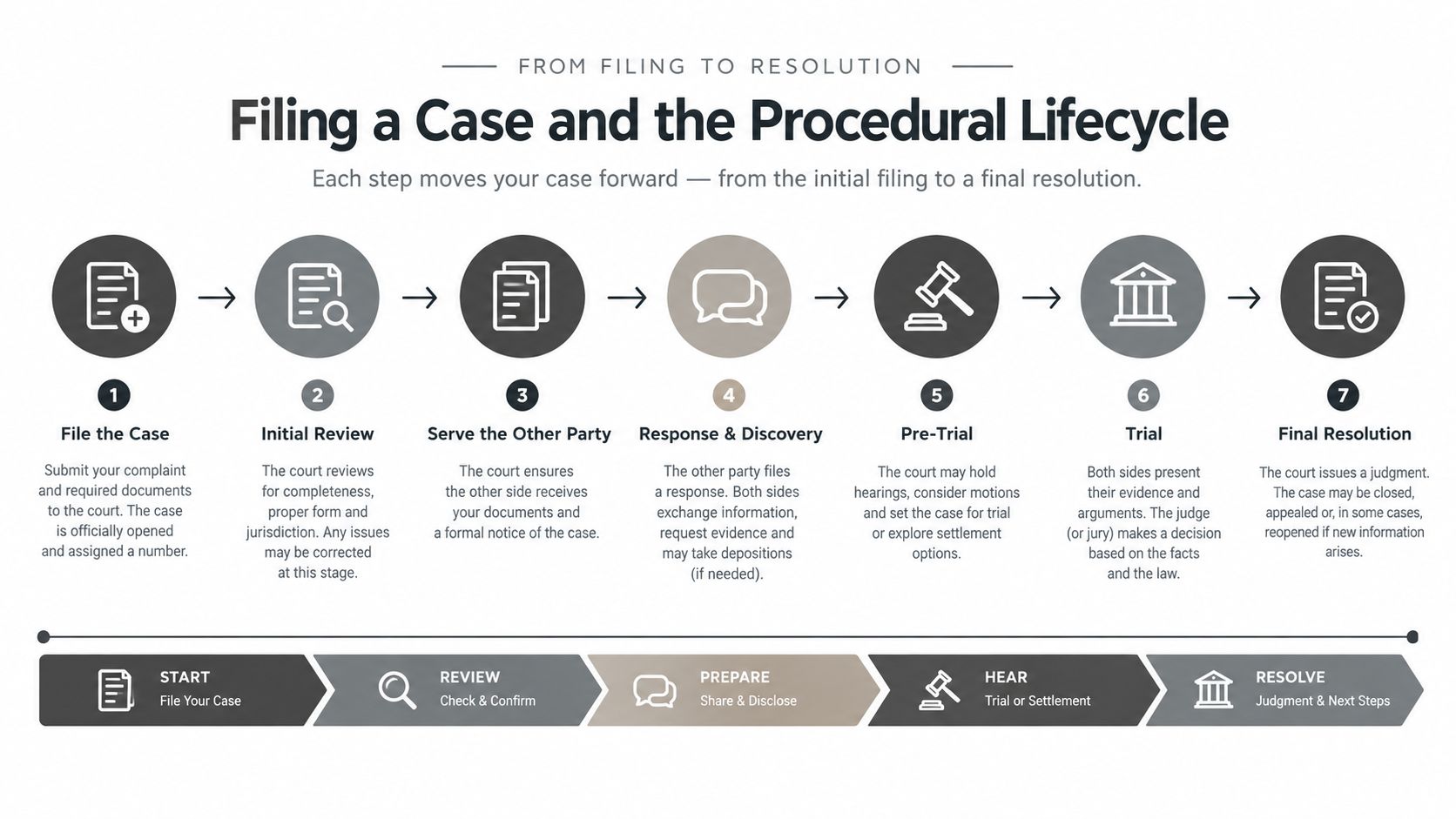
How a case starts
The statement of claim needs to do four jobs at once. It must identify the parties correctly, plead facts with enough precision to support the legal theories, describe damages in a way that will hold up under scrutiny, and attach agreements or account documents if jurisdiction, industry status, or customer status may be disputed. Lawyers who treat FINRA pleadings as broad notice filings usually pay for that choice later in scheduling disputes, amendment practice, and document battles.
The answer matters too, especially in industry cases or customer cases with a plausible eligibility, capacity, or causation defense. A disciplined answer narrows the field early. A reflexive denial usually does not.
The Director manages the administrative flow, and that administrative layer affects real strategy. Incorrect service information, missing party details, unclear requests for relief, or careless attachments can stall the case before the merits are ever discussed. I have seen parties lose months because no one checked whether the right entity was named or whether the controlling agreement was in the initial filing set.
For firms or advisors building the first pleading package, this overview of a demand for arbitration is a useful companion to the Code because the filing decision often determines what the rest of the case will cost.
What happens after the pleadings
Once the pleadings close, the case shifts from paper to calendar. That is the point where prepared parties start separating themselves from everyone else.
The initial prehearing conference is usually the first real test. Hearing dates, discovery timing, motion deadlines, and adjournment standards often begin taking shape there. Parties who show up with a witness list, document custodians identified, and a realistic damages theory usually get a cleaner schedule. Parties who are still collecting basic records tend to spend the next phase asking for extensions they should not need.
The procedural path usually includes:
- Initial prehearing conference: The arbitrator or panel sets scheduling parameters and addresses early procedural disputes.
- Document exchange: Requests and objections begin defining what the case is really about, especially where emails, texts, notes, and supervisory materials exist in different systems.
- Motion practice: FINRA is not motion-heavy, but targeted motions still matter when a claim is defective, a defense is legally barred, or a discovery impasse needs a ruling.
- Evidentiary hearing: Witness testimony, exhibits, and credibility disputes become the record that will drive the award.
- Award phase: The panel issues its decision, and the room for changing the outcome becomes very narrow.
One practical point gets missed often. The case calendar is not just an administrative sequence. It is settlement pressure in slow motion.
How long cases take in practice
Clients usually experience the lifecycle in three different speeds. Filing and answering can move quickly. The middle phase, especially document collection and scheduling, is where cases bog down. Hearing preparation then compresses everything at once, often exposing problems that should have been fixed six months earlier.
FINRA reported that in 2024, 84% of customer arbitration cases closed through settlement or paid damages and the average time to close a case was 12.5 months. FINRA also reported that 2025's overall turnaround time rose to 13.4 months, as shown in FINRA's 2025 dispute resolution statistics. Those figures match what parties feel in practice. A large share of cases resolve before a final merits hearing, but delay still has consequences because costs keep rising while witness memory and settlement flexibility often get worse.
Adjournments are where preparation and case theory meet reality. Some continuances are justified. Many come from preventable mistakes: late collection of communications, damages analyses built too late to test, experts retained after the schedule is already tight, or a witness whose availability was never locked down. The party that controls postponement risk usually has more influence over settlement timing and hearing posture.
Panel Size, Arbitrator Selection, and the Role of the Director
A case file can change shape before the respondent even answers. Ask for unspecified damages or add non-monetary relief without a clear reason, and a matter that might have stayed with one arbitrator can move to a three-person panel. That affects filing strategy, hearing dates, and how much time counsel needs to spend educating the panel on the business issues behind the claim.
For customer cases, panel size generally tracks the amount in controversy. Claims of $50,000 or less are heard by one arbitrator. Claims between $50,000 and $100,000 also usually stay with one arbitrator unless both sides agree in writing to three. Claims above $100,000, claims for unspecified damages, and claims seeking non-monetary relief usually go to three arbitrators, as described in the SEC Investor Bulletin on broker-dealer customer arbitration.
Why valuation determines panel size and cost
That choice has consequences.
A single-arbitrator case is often easier to schedule and less expensive to present. A three-arbitrator panel can be worth the added cost where the record is document-heavy, the supervision issues are technical, or credibility disputes are likely to drive the result. Three arbitrators also means three sets of questions, three professional backgrounds, and more room for disagreement inside the hearing room. Sometimes that helps. Sometimes it makes a straightforward case harder to keep focused.
| Claim Amount | Panel Size | Composition Rule | Selection Method |
|---|---|---|---|
| $50,000 or less | One arbitrator | Simplified threshold under FINRA customer-dispute rules | Selected through FINRA's arbitrator appointment process for that track |
| Between $50,000 and $100,000 | One arbitrator, unless parties agree in writing to three | Default single-arbitrator treatment | List selection and party agreement can alter composition |
| Over $100,000 | Three arbitrators, unless parties agree otherwise in writing | Default three-arbitrator treatment | Neutral list selection with strikes and rankings |
| Unspecified or non-monetary relief | Three arbitrators, unless parties agree otherwise in writing | Treated like larger claims for panel purposes | Neutral list selection with strikes and rankings |
FINRA states the same basic structure in the Code of Arbitration Procedure. The practical lesson is simple. Damages should be pleaded with intention. If the number is still undeveloped, counsel should understand the procedural cost of leaving it open-ended.
Arbitrator selection is an early merits decision
The strike-and-rank process looks administrative on paper. In practice, it is one of the first real case decisions.
Counsel should review disclosure reports with the same care used for key exhibits. Prior awards, prior service, regulatory background, securities industry employment, and patterns in case-management disclosures all matter. A panel with one arbitrator who moves cases firmly can look very different from a panel that tolerates repeated extensions and loose hearing preparation. That difference shows up long before the final hearing.
I usually treat selection as part of case theory. If the claim turns on branch supervision, outside business activities, product due diligence, or suitability documentation, the panel needs members who can absorb industry detail without losing sight of the core misconduct allegations. If the defense is likely to frame the dispute as market loss or client sophistication, selection should account for that too.
The Director sets the procedural rails
The Director does not decide the merits, but the office has real control over panel formation and administrative disputes tied to the selection process. The Director sends the lists, applies the ranking process, and addresses objections that fit the rules. That is why vague complaints about fairness rarely get traction. Specific conflicts, incomplete disclosures, and rule-based objections do.
Lawyers who handle this well do not waste the opportunity. They preserve credible objections, rank with discipline, and avoid turning panel selection into theater. FINRA arbitration rewards parties who prepare the file early and make procedural choices for a reason.
Customer, Simplified, and Accelerated Procedures Compared
A case can turn before the first hearing date is even set. A retired couple files a modest customer claim and expects a full arbitration hearing with live testimony. Instead, the matter is put on a simplified track with one arbitrator, tighter presentation limits, and far less room to run up fees proving points that do not change the damages picture.
That procedural choice shapes the case file from day one. It affects how much paper to gather, how hard to press witness issues, when settlement pressure will hit, and whether the cost of one more motion is justified by the amount at stake.
The core tracks
Standard customer cases are the default frame for disputes that will be developed through a fuller hearing record. These cases usually justify heavier witness preparation, a more deliberate exhibit plan, and sharper panel education because the hearing itself carries much of the persuasive work.
Simplified cases are designed for lower-dollar claims and are typically decided by a single arbitrator under simplified procedures. The process is shorter, but the burden of proof does not get lighter. That trade-off matters. Counsel still has to present a coherent damages theory and a clean documentary record, but usually without the time or budget that larger cases can support.
Accelerated proceedings are different for a separate reason. The calendar contracts. Parties who qualify, often because of age or health under FINRA's updated framework, get a faster case schedule with less tolerance for delay, as discussed in Regulatory Notice 26-06. That can help a well-prepared claimant. It can also expose a party who has not preserved documents, identified custodians, or settled on a hearing theory early.
How the tracks differ in practice
| Feature | Standard Customer | Simplified | Accelerated |
|---|---|---|---|
| Typical claim profile | Customer disputes that warrant a full hearing record | Lower-value claims handled under simplified procedures | Qualifying cases placed on a compressed schedule |
| Panel format | Often a larger panel in bigger cases, depending on claim size and elections | One arbitrator | Follows the underlying case structure, but with faster scheduling |
| Discovery pace | Structured calendar with more room to work through disputes | Usually narrower and more proportional to the amount in controversy | Shorter deadlines and less room for extension requests |
| Motion practice | Limited compared with court, but still useful in the right record | Usually sparse because cost discipline matters | Constrained by time and hearing deadlines |
| Hearing posture | Full evidentiary presentation | Abbreviated presentation, often focused on documents and concise testimony | Fast preparation with little slack for missed steps |
| Settlement pressure | Often increases after key production and before hearing prep costs spike | Usually comes earlier because fees can outpace the claim | Arrives early because delay is harder to get |
The practical mistake is treating small claims as simple claims. They are often less forgiving because every hour billed has to make economic sense. A weak affidavit, scattered account records, or an inflated damages ask can sink credibility fast when one arbitrator is reading a compact file and looking for a clean theory.
Accelerated matters create a different pressure point. Speed helps the party that already has the file organized, the customer chronology built, and the remedy framed in a way the panel can grant without guesswork. Speed hurts the party that still needs months to reconstruct emails, text messages, suitability notes, or supervisory records.
From a filing-strategy standpoint, the right question is not which track sounds faster or easier. The right question is which procedure fits the proof you can present, the costs your client can bear, and the remedy you can defend under pressure.
Discovery Limits, Deadlines, and Document Production
A FINRA discovery fight is often won before the first request goes out. The file that matters is the one built in the first weeks. Emails preserved, text messages collected, supervisory notes identified, account records organized, and a request plan drafted around the claims and defenses that will matter at hearing.
FINRA does not give parties the long runway they might expect from court litigation. In customer cases, the production schedule is front-loaded, and accelerated cases move even faster, as noted earlier. The practical point is simple. Calendar the production deadlines the day the answer is due, then work backward from the records you will need to prove authorization, suitability review, supervision, damages, or notice.
The timing traps
The first landmine is serving discovery too early. Under FINRA Rule 13506, discovery may be served on the claimant or a named respondent only after the waiting period runs from service of the statement of claim. Later-added parties get their own clock. Lawyers who know this rule do not waste energy firing off premature requests. They use that waiting period to draft targeted demands, identify custodians, and fix preservation problems before they become spoliation arguments.
That preparation changes outcomes. A firm that starts collecting branch emails, rep texts, blotters, exception reports, and CRM notes early usually produces with fewer gaps and fewer credibility problems. A customer claimant who assembles account statements, new account forms, correspondence, tax records, and damages support before formal service is in a much better position to press for missing records once discovery opens.
Three habits matter here:
- Preserve first: issue holds early and collect from the devices and systems that matter, not just the central email archive.
- Use the Discovery Guide: the Document Production Lists should shape the first round of requests and objections.
- Build for the hearing: every request should tie to an exhibit, a witness examination, or a damages point the panel can follow.
What FINRA limits on purpose
FINRA arbitration is document-driven. Standard interrogatories are generally not permitted, and depositions are limited to narrow circumstances under the Code and the Discovery Guide. That changes case preparation in a meaningful way. Parties do not get months of sworn pre-hearing testimony to test stories or force admissions. They get documents, focused motion practice when needed, and hearing examinations.
That is why vague requests usually backfire. "All documents relating to" is a lazy phrase in this forum. It invites objections, creates avoidable meet-and-confer fights, and rarely gets the panel's sympathy unless the requesting party can explain why the category is tied to a real issue.
A weak FINRA file rarely improves in discovery. Panels expect each side to know its own records early and ask for the other side's records with precision.
Firms with prior FINRA Rule 8210 response experience often have an operational advantage. They are used to collecting communications, supervisory materials, and account documentation under deadline pressure. That does not guarantee a better defense, but it usually means fewer surprises when production obligations tighten.
What works and what doesn't
The strongest discovery plans are narrow and sequenced. Start with the records that decide the case: communications about recommendations, risk disclosures, suitability reviews, compensation records, supervisory approvals, trade confirmations, and damages support. Then press quickly on missing categories, privilege assertions, or suspicious gaps in date ranges and custodians.
Weak practice usually looks the same from case to case. Overbroad requests. Late privilege review. No custodian map. No plan for text messages or off-channel communications. No theory for why a missing document matters.
Discovery in FINRA is choreography, not volume. The party that treats production as part of hearing strategy, instead of a clerical exchange, usually has the cleaner record when the panel starts asking hard questions.
Remedies, Common Defenses, and the Fee Schedule
A case can look strong on liability and still disappoint at the award stage. That usually traces back to remedy selection, proof problems, or cost pressure that should have been addressed before the statement of claim or answer was filed.
What panels can award
FINRA panels can award damages and other relief that fit the pleadings, the proof, and the governing law. In practice, that may include compensatory damages, rescission, interest, attorneys' fees where a contract or statute permits them, and in narrower cases, punitive damages. The request matters because it shapes discovery, expert work, and hearing time. A rescission claim, for example, often sounds cleaner on paper than it looks once account activity, later communications, and continued trading are in the record.
Panel reaction matters too. Overreaching on remedies can hurt credibility early, especially if the claim sounds bigger than the documents support. A tighter ask, backed by a damages model that can be explained in plain terms, often travels better with arbitrators than a longer prayer for relief that never quite lands.
Defenses that decide remedy value
Eligibility often gets raised before the merits do. FINRA Rule 12206 bars claims that are older than six years from the event giving rise to the dispute, subject to the rule's terms and arguments about what event starts the clock. That does not replace statutes of limitation or tolling arguments, but it is often the first screening issue counsel should test before filing.
Other recurring defenses tend to narrow recovery even when the claimant survives eligibility:
- Party status and forum fit: Whether the claimant is a customer, associated person, or otherwise entitled to proceed under the applicable code.
- Waiver, ratification, and consent: Later account activity, signed acknowledgments, or continued acceptance of the arrangement can weaken rescission and damages theories.
- Contract documents: Account agreements, promissory notes, compensation plans, and release language often frame the defense long before witness testimony begins.
- Causation and loss proof: A panel may find troubling conduct and still award little if the damages model is thin, overstated, or disconnected from the alleged misconduct.
For readers who want to see how FINRA arbitration awards read in practice, the gap between the final award and the amount of strategy behind it is often striking.
Costs shape settlement dynamics even before the hearing
Fees influence case posture from the start. Filing fees, hearing session charges, postponement fees, expert expense, transcript costs, and witness preparation all affect whether a claim should be pushed to hearing or resolved earlier. I have seen modest disputes become uneconomical because the parties treated procedure as free and delayed the hard budgeting conversation until after motion practice and hearing prep were already underway.
A simple question usually clarifies the problem. If the expected recovery depends on a full hearing, multiple witnesses, and a complicated damages presentation, does the likely award justify the spend?
That question cuts both ways. Claimants should test whether the remedy justifies the path required to get it. Respondents should test whether early resolution costs less than building a full evidentiary defense. In FINRA arbitration, fee pressure does not decide every case, but it routinely shapes who has patience, who pushes trial posture, and who comes to mediation with a realistic number.
Practical Preparation Tips and When to Call Counsel
A FINRA case often turns before the hearing starts. The result is shaped by what the file looks like when counsel drafts the statement of claim or answer, what records were preserved, and whether the witness list matches the decision-makers instead of the people with the best titles.
The strongest files are built for use, not storage. Gather the documents that will carry the case: customer agreements, amendments, disclosures, trade records, compensation plans, branch communications, notes, and message history. Then organize them in a way that lets someone new to the matter find the key events in minutes.
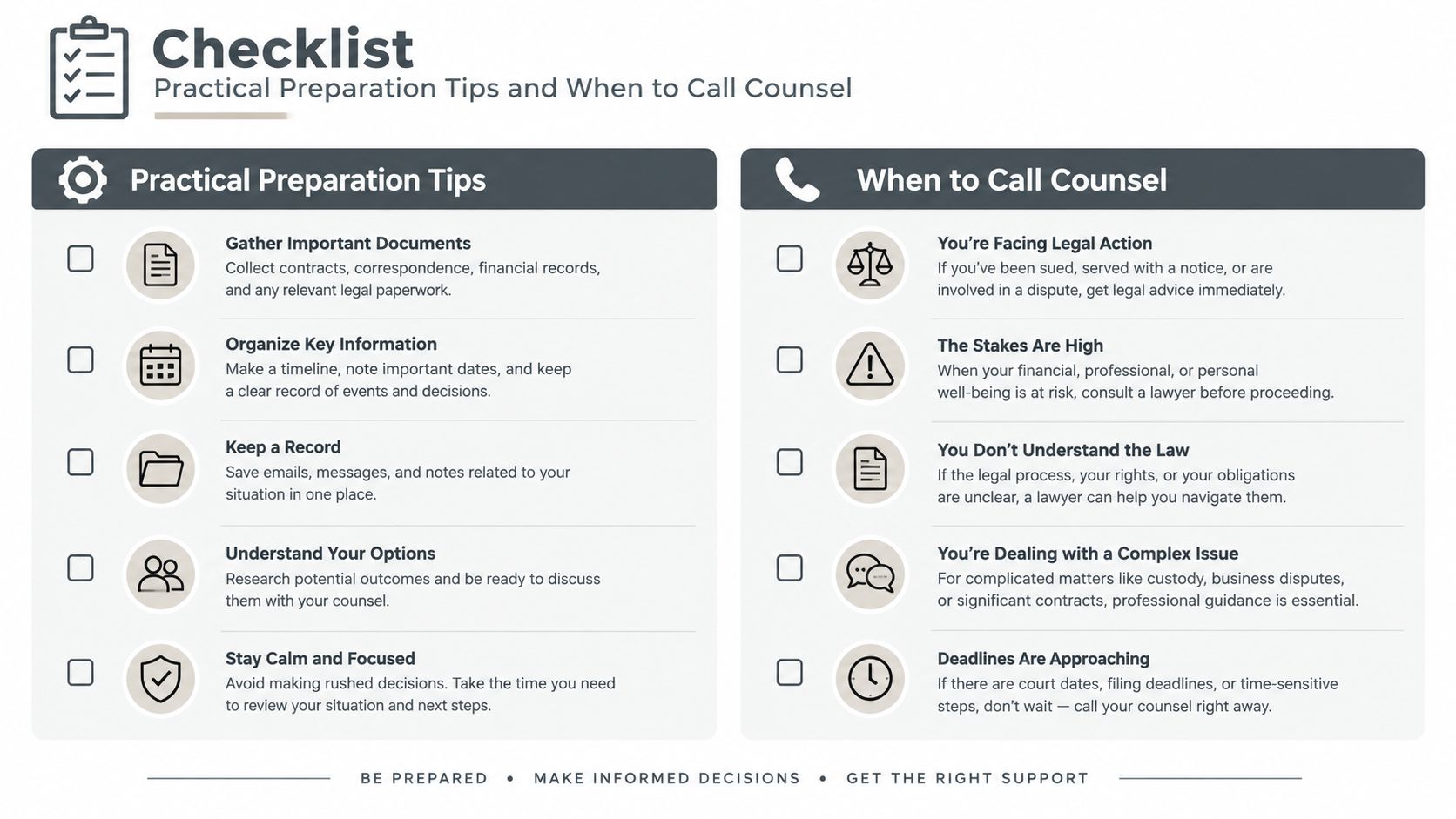
Preparation checklist for filing
Start with a chronology and document map.
- Build one master index: Put the customer agreement, CRD-related material, key correspondence, trade blotters, and account notes into one organized file set.
- Preserve communications early: Email is only part of the record. Texts, Teams messages, mobile chat apps, and CRM notes often become central once testimony starts.
- Identify the witnesses who were present: Panels usually care more about the assistant, branch manager, operations contact, or producing advisor who handled the account than a polished executive who learned the facts later.
- Stress-test the damages model: If the numbers depend on assumptions that are hard to explain line by line, fix that before filing. A weak damages presentation can shrink settlement value and hearing credibility at the same time.
- Prepare testimony around documents: Direct examination is stronger when each major point ties to a dated record, a clear decision, or a specific communication.
Operational discipline matters here. Firms with solid retention protocols, defensible collection practices, or outside support for managed IT for financial compliance usually collect records faster and with fewer side disputes over access, completeness, and chain of custody.
The signs you need outside counsel
Some matters become expensive because counsel was called too late, after the filing theory was set, deadlines were missed, or a witness said something in writing that could not be walked back.
Bring in counsel early if the case involves eligibility or filing-deadline questions, intra-industry claims, expungement, requests for injunctive or other non-monetary relief, or a damages theory that may change the procedural track. The same is true if the dispute overlaps with a Form U5 narrative, an internal review, a books-and-records issue, or a regulatory inquiry. Those problems rarely stay in separate lanes.
Forum-specific counsel also helps with choices that look small but shape the case. Which claims belong in the first pleading. Which defenses should be preserved but not overplayed. Which documents should be collected before the other side asks for them. Which witness needs preparation first because that person will anchor the chronology for the panel.
One practical option is Kons Law, which represents investors and financial professionals in securities arbitration and related regulatory disputes. In the right matter, that kind of forum-specific counsel helps align the pleading, record collection, and hearing strategy before the case turns into avoidable procedural motion practice.
If you want to discuss your business law matter, contact Kons Law at (860) 920-5181.
Kons Law advises businesses, investors, and financial professionals in FINRA arbitration matters, including disputes involving customer claims, advisor transitions, compensation issues, and regulatory overlap. If your case involves deadlines, panel-selection strategy, discovery pressure, or a Form U5-related risk, visit Kons Law to discuss the matter before a procedural mistake hardens into a case problem.
