
You won the arbitration, and now the practical problem starts. The other side is dragging its feet, the account balance is thinner than it should be, and nobody is volunteering the information you need to collect. That's the part too many people miss. Arbitration award enforcement is not just a filing exercise, it's an asset-hunting and collection campaign, and the award only matters once you can turn it into money.
A commercial litigator who has chased debtors across bank accounts, property records, and corporate structures learns the same lesson fast. Courts usually do not rescue the losing side from a valid award, but the creditor still has to find assets, choose the right forum, and move with discipline. The practical path is usually two steps, recognition or confirmation first, then collection, because the award itself is not self-executing and coercive collection usually needs the court's help.
Why Winning the Arbitration Is Only Half the Fight
A financial advisor gets a favorable award and expects payment. Then the losing party stalls, sends partial excuses, or disappears. At that point, the case stops being about legal victory and turns into a hunt for asset location, solvency, and influence over whatever the debtor still controls.
Practical rule: treat the award like a receivable, not a trophy.
Courts usually do not rescue a losing party from a valid award. The fight is usually collections. A study of U.S. federal court arbitration petitions found that courts vacated or denied confirmation or enforcement in only a small share of contested petitions, which means the legal road is usually clearer than the recovery road study on U.S. federal court arbitration petitions.
That is why creditors waste time when they obsess over doctrine and ignore the debtor's balance sheet. The question that matters is straightforward: where is the money, what assets can be reached, and who can reach them first?
Recognition or confirmation comes first. That step turns the award into a court judgment. Enforcement comes next, and that is the collection work that lets you reach assets through ordinary judgment procedures MoloLamken on recognition and enforcement. Skip that second step and you may have a clean judgment with no cash attached to it.
Domestic collection follows the same logic. Once a judgment exists, the hard work is still identifying accounts, property, receivables, and other reachable assets. A practical overview of those post-judgment tools is here: post-judgment collections. The point is simple. A judgment only matters if it can be turned into recoverable value.
Choosing the Right Forum and Timing for Filing
The first choice is not “Should I file?” It's where does filing create the best path to assets? A cheap courthouse is a bad deal if the debtor's property, receivables, or bank relationships sit somewhere else. Venue should follow the money.
Domestic award or international award
If the award is domestic and the parties agreed a judgment could be entered on it, the Federal Arbitration Act lets a party apply to confirm the award within one year after the award is made 9 U.S.C. § 9. That deadline matters, because once you wait too long, you've made the whole recovery project harder than it needs to be.
If the award is international, the New York Convention adds another layer. The practical filing sequence is recognition in a court that can convert the award into a judgment, then collection where the assets are. The Convention itself does not make the award self-executing, so the seat of enforcement and the asset location both matter.
Choose the forum by asset map, not habit
A lawyer who files where the arbitration happened, just because that feels familiar, is often choosing convenience over strength. If the debtor's bank accounts are in one state and the real estate is in another, you need a plan that reaches both. If the debtor is a broker-dealer professional with scattered accounts or business interests, the right forum is often the one that gives you the cleanest path to actual execution, not the one closest to your office.
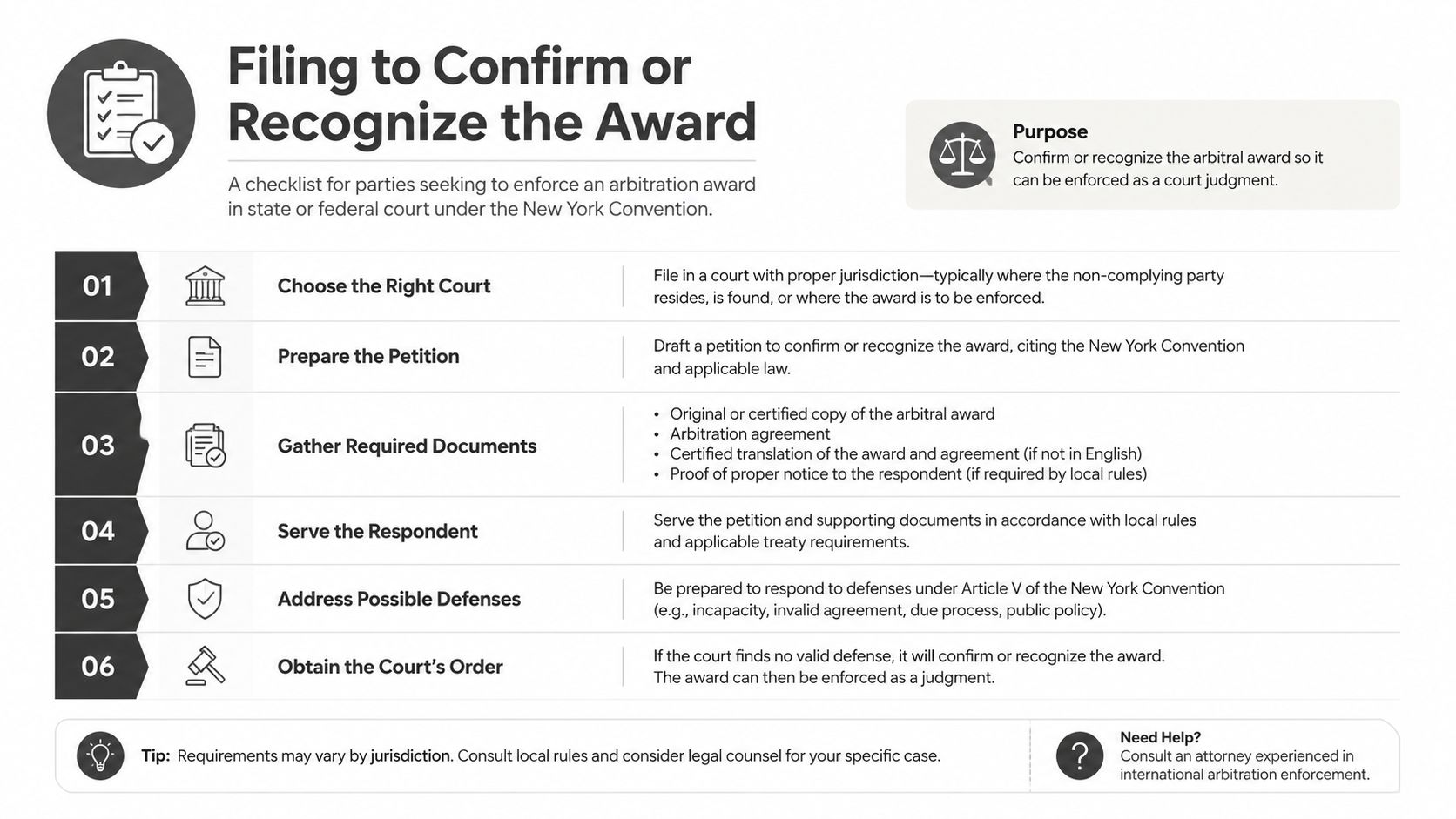
The documentary mechanics also matter. Under the Convention, the party seeking recognition and enforcement must submit the duly authenticated original award or a duly certified copy, the original arbitration agreement or a duly certified copy, and a certified translation if the documents are not in the enforcing court's official language UNCTAD guide to New York Convention filing requirements. If you're missing one of those pieces, you're inviting delay.
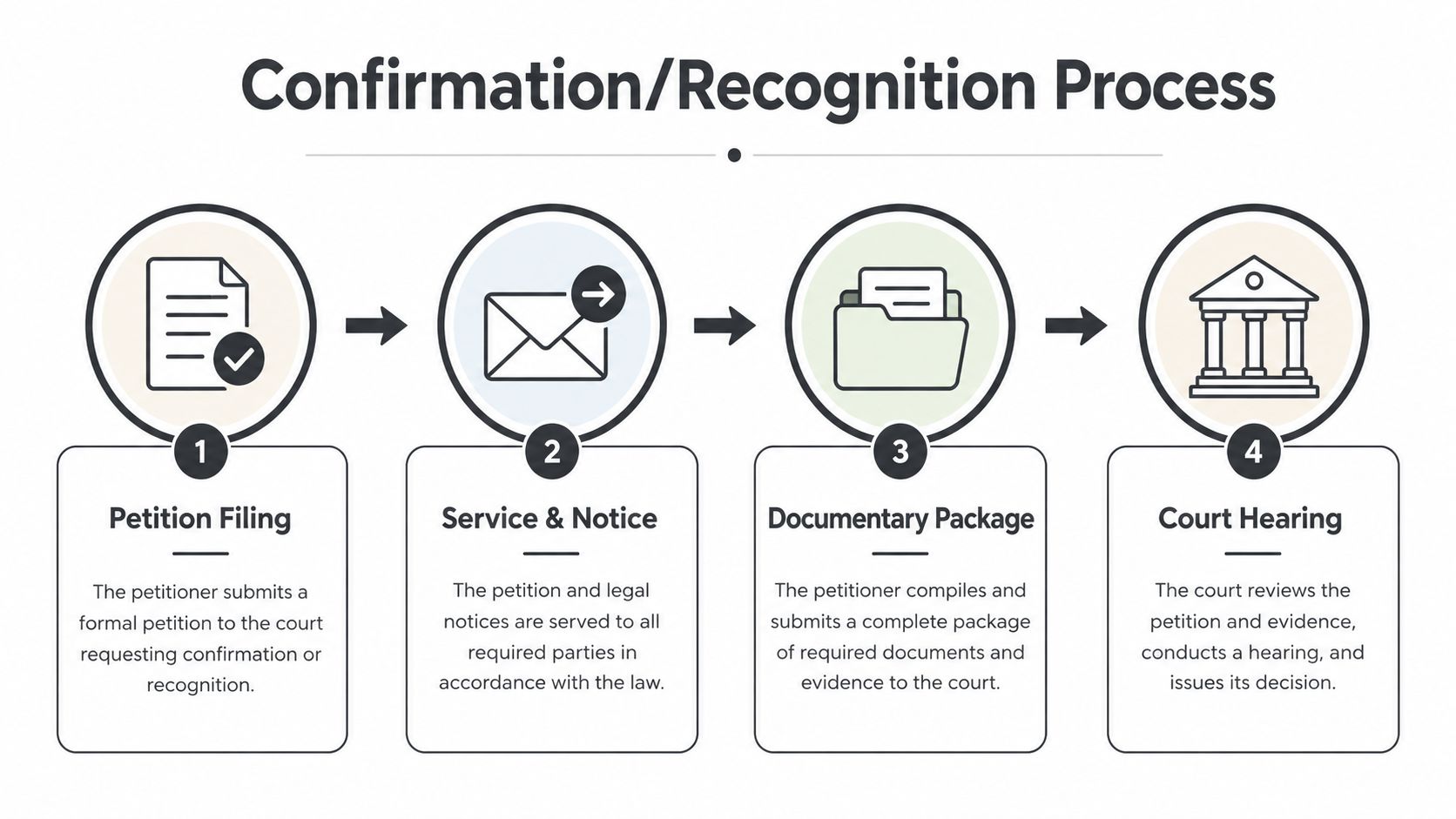
Filing to Confirm or Recognize the Award
The filing process is less mysterious than it looks, but it punishes sloppiness. Courts want a clean petition, proper service, and the right documentary package. If you present the case like a moving target, the losing side will use every defect to slow you down.
Build the petition like a record, not a narrative
The petition should identify the award, the arbitration agreement, the relief you're seeking, and the court's basis for recognizing or confirming it. Keep the presentation narrow. You are not trying to re-try the merits, you are asking the court to put the award into enforceable form.
Service matters because due process matters. The debtor needs notice, and the court needs confidence that the petition was served correctly. A sloppy service job gives the other side an easy procedural angle, even when the merits are strong.
The New York Convention filing package
For an international award, the filing package should be assembled before you start talking about timing. The core items are simple, but they must be exact.
- Award copy: The duly authenticated original award or a duly certified copy.
- Arbitration agreement: The original arbitration agreement or a duly certified copy.
- Translation: A certified translation if either document is not in the enforcing court's official language.
- Notice record: Proof of service and notice so the debtor can't credibly claim surprise.
The point is not paperwork for its own sake. The point is that the court needs a record it can rely on without guessing. If your file is complete, the losing side has fewer places to hide.
The main thing to remember is simple. Confirm or recognize first, then execute. If the court gives you the judgment, you still need a collection plan that matches the debtor's assets and exemptions. For a state-law judgment framework that often comes up in practice, this internal resource is worth keeping nearby: Uniform Enforcement of Foreign Judgments Act.
Defenses the Losing Side Is Likely to Throw at You
The losing party usually does not stand up and say the award was right but unpaid. It attacks the process because that is the only way left to delay collection. Under the FAA, expect fraud, evident partiality, and arbitrator misconduct. Under the New York Convention, expect objections tied to public policy, due process, notice, authority, and whether the arbitration agreement was valid in the first place.
These defenses can slow a case even when they are weak. They work best as delay tactics, not as real wins, especially when the record is clean and the debtor has little else to offer. Courts usually treat these objections as a way to relitigate the merits through the back door, which is exactly why a tight record matters.
What usually gets argued
Start with the arguments that show up most often:
- Fraud claims: The debtor says the award was tainted by dishonesty or hidden evidence.
- Partiality claims: The debtor attacks the arbitrator's neutrality.
- Misconduct claims: The debtor says the hearing was unfair, rushed, or procedurally skewed.
- Public policy claims: The debtor argues enforcement would offend local law or basic fairness.
- Due process claims: The debtor says it lacked notice or a meaningful chance to be heard.
Some of those objections sound serious. Few survive a disciplined record and a court that only wants to decide whether the award can be enforced. If the debtor is trying to reopen the merits, push back hard and keep the fight on the enforcement record.
Remote and online arbitration adds a different layer of attack. Recent scholarship points out that the New York Convention does not speak directly to online arbitration, so the other side may try to turn due process, seat and jurisdiction, and public-policy objections into the main fight in a foreign court article on online arbitration award enforcement. That does not make online awards invalid. It does mean the losing side may try to dress up procedural complaints as enforcement defects.
If you want the practical response, keep the focus where it belongs, on whether the court has a clean record and a basis to recognize the award. The question is usually not doctrine. It is whether the debtor has assets, whether those assets are reachable, and whether the debtor is using objections to buy time before collection pressure lands. A creditor who wants a fresh start despite a judgment has to stop treating every defense as a major threat and start treating it like a collection hurdle.
Read the award record, service papers, and hearing history before you answer. Then compare that record with the debtor's actual location, accounts, and property. If you need a practical roadmap for that part of the fight, the guide on how to enforce a judgment belongs in your working file.
Turning the Judgment Into Actual Money
Once the award becomes a judgment, the tone changes. You stop asking the court to bless the award and start using collection tools against property, accounts, and interests. That means writs of execution, bank levies, wage garnishments, judgment liens, charging orders, and in extreme cases, receivership.
The order matters. Start with the easiest and least expensive sources of recovery. If the debtor has a bank account you can reach, that often beats spending weeks on a property fight. If the debtor owns real estate, record the lien and see what equity exists before you burn time on more invasive steps.
One of the smartest early moves is a debtor examination. It forces the other side to answer questions under oath about accounts, assets, transfers, and business interests. Pair that with third-party subpoenas to banks and other institutions, and you get a much better picture of what can be seized.
If the debtor has moved across state lines, interstate judgment enforcement becomes the primary issue. That's where the internal guide on how to enforce a judgment fits naturally, because collection rarely stays in one county, let alone one state. The practical point is simple: the judgment is portable, but the assets are not.
For readers who need a broader consumer-creditor perspective on what a judgment means after entry, this separate resource, fresh start despite a judgment, is helpful context. It underscores the same reality from the other side of the aisle, a judgment changes the debtor's position, but it does not automatically produce cash.
For more complex asset structures, the right remedy may be a charging order against LLC or partnership interests, or a receivership if the debtor is actively shifting assets. If you know the debtor has homestead issues, exempt property issues, or layered ownership, don't guess. Trace first, then execute.
Planning for Enforcement Before You Ever Sit Down at the Hearing
The first enforcement move happens before the hearing. That sounds counterintuitive until you have seen a winning party spend months chasing an award because nobody checked where the assets sat, which accounts were reachable, or whether the debtor could move property before the dust settled. Enforcement planning belongs in the contract, the arbitration clause, and the evidence plan.
Draft for collectability
A well-drafted dispute clause should preserve the collection paths you may need later. Seat selection, forum selection, and institutional rules should be chosen with enforcement in mind, not just convenience. If a counterparty is likely to keep property, receivables, or banking relationships in specific jurisdictions, map those jurisdictions early and make the clause work for that reality.
You also need to watch the debtor during the case. Asset transfers during arbitration are ordinary, and they happen quickly. If you wait until after the award to ask where the money went, you are already behind.
The award is the last step of the dispute, not the first step of recovery.
Practitioner discussion has made the same point in plain terms, local counsel should be involved early in the forum where collection is likely to happen, because recovery turns on asset location and practical access, not elegant doctrine Eurasian Arbitration Week 2026 discussion on enforcement strategy. That is the right mindset. Find the money, then use the procedure.
If the debtor's profile suggests liens, levies, or collateral issues may matter later, review property and security interests before the hearing ends. The same logic appears in how to perfect a security interest, because collection goes faster when you already understand how the target's assets are organized. If the debtor also has unresolved tax problems, knowing how to resolve a tax levy with Omni Tax can help you spot where a later freeze or levy might hit first.
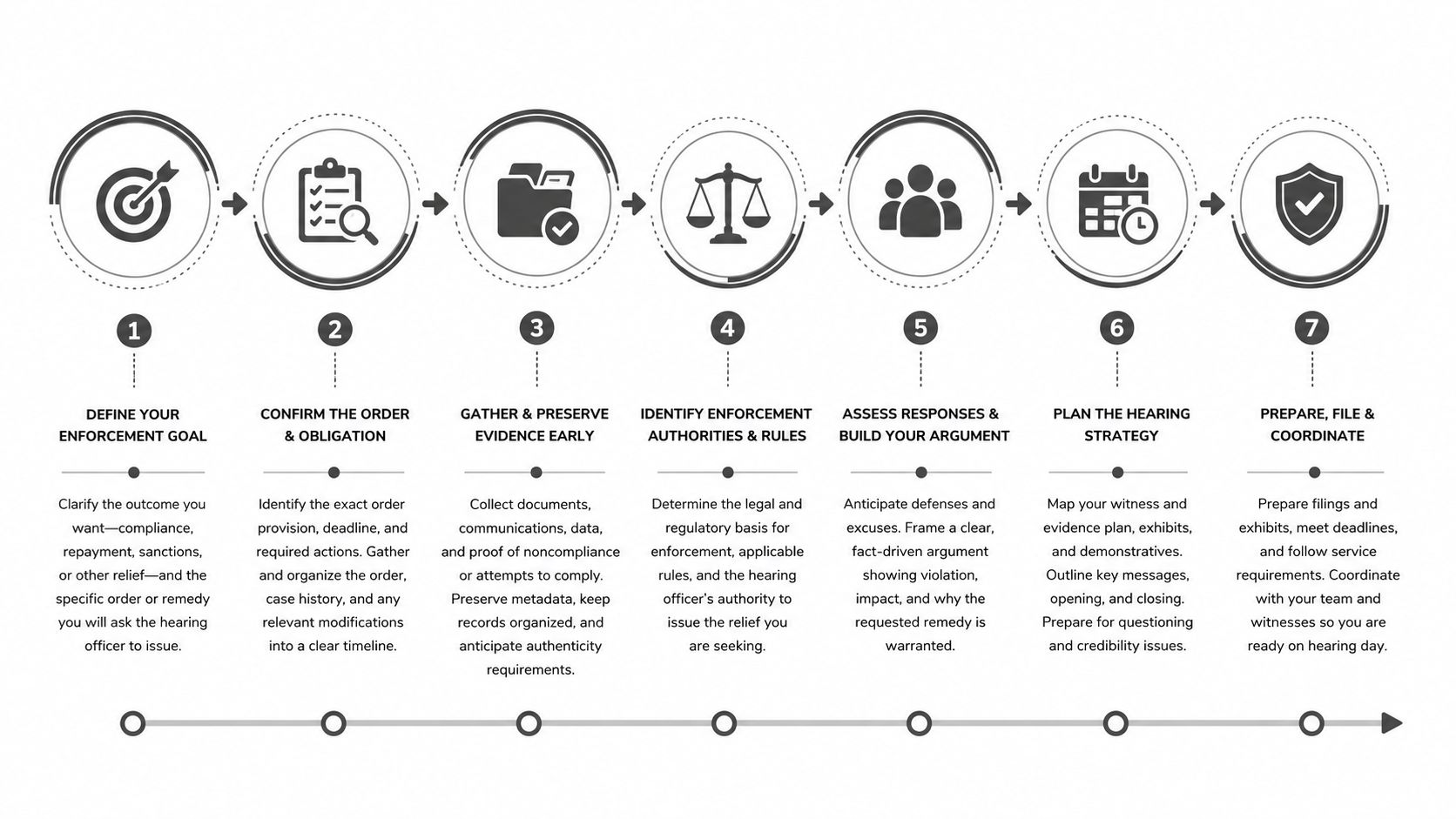
The right takeaway is straightforward. Award enforcement starts before the hearing, not after it. If you want the award to turn into cash, you need to think about seat, assets, local counsel, debtor behavior, and collection pressure while the case is still live.
Common Questions Financial Professionals Ask About Enforcement
How long does confirmation take? It depends on the court, the docket, and whether the losing side files a real challenge or just creates delay. The important point is that the legal standards are usually narrow, so the court fight often turns on documentation and procedure more than on the merits.
Can you enforce in multiple states at once? Yes, if the debtor has assets in more than one place, parallel collection efforts can make sense. That is exactly why asset tracing matters, because the judgment is only useful where property can be reached.
What if the debtor files bankruptcy? Then the collection path changes immediately, and you need to move inside the bankruptcy framework instead of outside it. A valid award may still matter, but you can't just keep levying as if nothing happened.
How do securities-industry awards fit in? They often create the same core problem, a paper win that still requires disciplined collection work. FINRA's unpaid-award data shows the issue is real but limited in scale, which means most cases do not end with a large unpaid-award pool, but the ones that do still demand aggressive enforcement thinking FINRA unpaid customer awards statistics.
If you need a practical plan for a specific award, contact counsel that handles collection, not just the arbitration itself. Kons Law works on business disputes, arbitration matters, and judgment enforcement, and that combination matters when you're trying to turn a paper victory into recovered money.
If you want to discuss your business law matter, contact Kons Law at (860) 920-5181. The firm handles arbitration award enforcement, post-judgment collection, and related business disputes, and it can help you map the fastest route from award to recovery. Visit Kons Law to start the conversation.
