You bought a Connecticut rental. The closing went smoothly. You found a tenant faster than expected. The lease is signed, the first month’s rent clears, and it feels like the hard part is over.
Then real life starts.
A few months later, the tenant installs a lock you never approved, stops reporting a bathroom leak until the ceiling stains, and pushes back when you mention deductions from the security deposit. You start searching online for answers and quickly run into a problem. Most advice is either too generic to trust or too local to another state to use.
That’s where a real estate attorney rental property strategy matters. Not as a last-minute rescue when a marshal, court date, or code complaint appears. As part of how you run the investment from day one.
In Connecticut, rental property ownership is a business activity with legal exposure attached to nearly every stage: acquisition, leasing, maintenance, notice practice, collections, eviction, and post-judgment enforcement. If you also own property outside Connecticut, the risk compounds because one workable rule in one state can be the wrong move in another. New investors often learn this too late, after using a recycled lease, mishandling a notice, or taking an action that felt practical but weakened their position.
A seasoned lawyer helps you build the file before you need to defend it. That means the entity structure is right, the lease matches Connecticut law, the notices are supportable, and the records are good enough to win with.
Your Connecticut Rental Property Journey Starts Here
A first-time landlord usually focuses on the visible parts of the deal. Purchase price. Rent level. Paint, flooring, appliances. Those matter, but they aren’t where most legal trouble begins. Trouble starts in the paperwork and in the decisions made after move-in.
Take a common example. A tenant asks for a small accommodation, then treats your silence as approval for a larger change. A satellite dish appears. Another adult moves in. The dog that was “just visiting” becomes permanent. None of this seems worth a lawsuit, so the owner sends texts, makes a few calls, and hopes the issue settles down. Later, when nonpayment or property damage shows up, the same loose communication chain becomes a serious liability. The file is incomplete. The lease language is weak. The owner has facts, but not proof.
That’s why Connecticut landlords should think like operators, not hobbyists.
A rental property doesn’t become legally complicated only when someone files in court. It becomes legally complicated the moment possession changes hands.
A real estate attorney for rental property work helps at the points where owners usually improvise:
- Before move-in: lease drafting, addenda, entity setup, title and closing review
- During the tenancy: notices, maintenance disputes, compliance questions, vendor contracts
- At default: eviction procedure, payment claims, settlement terms, judgment strategy
- After judgment: collections, domestication issues, and enforcement if the tenant relocates
For a Connecticut investor, that legal support isn’t abstract. It protects cash flow, reduces avoidable mistakes, and keeps one bad tenancy from turning into a broader business problem.
Rethinking Your Lawyer From Last Resort to Strategic Partner
Many landlords treat a lawyer like a paramedic. They call only when something is already on fire. That model is expensive, stressful, and usually avoidable.
The better model is a coach. A coach doesn’t wait for the season to collapse. A coach sets the system, spots weak points early, and makes sure the team isn’t making preventable mistakes.
The emergency-only approach costs more
In the rental market, small legal mistakes can become large financial problems. Courts in Virginia awarded nearly $20 million in attorney fees for eviction cases in a single year, a 48% increase from pre-pandemic levels, according to a report covered by WMRA. The article highlights how high-volume eviction practice can drive major fee exposure.
That figure is from Virginia, not Connecticut, but the lesson applies broadly. Eviction and collection work has become operationalized. Tenants, landlords, courts, municipalities, and counsel all move on deadlines. If your notices, lease terms, documentation, and internal process are sloppy, you start behind.
What proactive counsel actually changes
A strategic attorney helps a landlord make better decisions before conflict hardens. That often includes:
- Drafting for enforcement: a lease that says what you mean and avoids terms a court may refuse to enforce
- Building records correctly: inspections, notices, ledgers, repair requests, payment history, and communication logs
- Separating business from personal conduct: using the right entity, signatures, bank flow, and vendor agreements
- Evaluating risk before acting: deciding when to cure, negotiate, file, or hold position
Those steps don’t sound dramatic. They’re exactly what wins.
What works and what doesn’t
Some landlord habits create unnecessary risk.
| Approach | What usually happens |
|---|---|
| Reusing an old lease from another property | Terms conflict with the new unit, tenant type, or Connecticut practice |
| Sending informal texts instead of formal notices | The tenant disputes what was said or whether proper notice was given |
| Mixing personal and property finances | Asset protection arguments get weaker and records become harder to defend |
| Waiting too long to involve counsel | The owner acts first, then learns the file was damaged by the action |
Practical rule: Hire legal help early enough that your lawyer can prevent the mistake, not just explain it afterward.
The point isn’t to lawyer every routine interaction. The point is to treat the rental as a business with a legal operating system. The attorney should be part of that system, alongside your accountant, insurance broker, and property manager.
Core Legal Services for Your Connecticut Rental Property
A good rental property lawyer doesn’t offer one service. The job touches documents, procedure, compliance, and disputes. If you’re investing in Connecticut, these are the service areas that matter most.
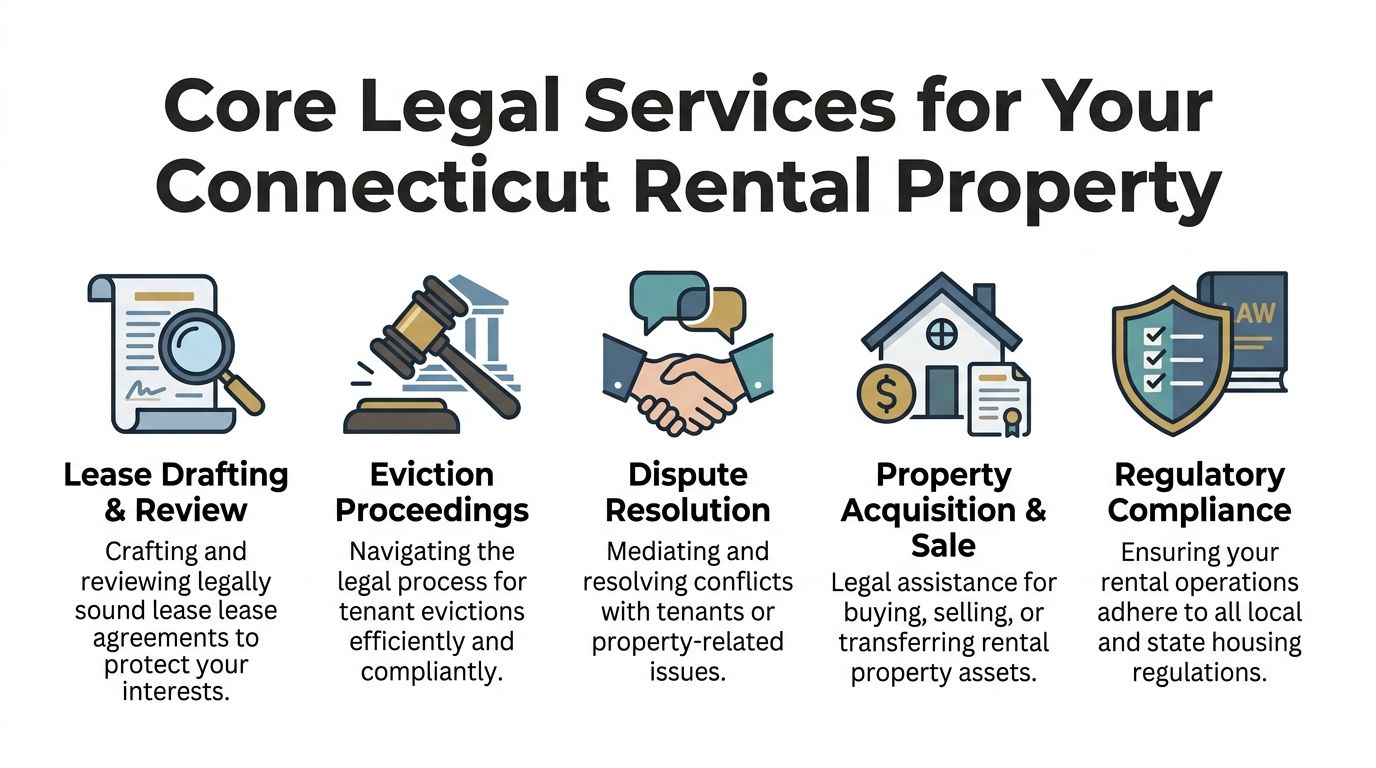
Lease drafting and review
A generic online lease is one of the most expensive “cheap” decisions a landlord can make.
Connecticut rental documents should match the actual deal. That includes occupancy terms, maintenance responsibilities, access provisions, default language, pet rules, smoking restrictions, fee structure, and how notices must be delivered. If the property is a multifamily, condo, inherited home, or owner-nearby unit, the lease often needs different drafting choices.
A lawyer also spots provisions that sound strong but won’t help you in court. Many owners pack leases with penalties, vague charges, or contradictory clauses. That may intimidate no one and confuse everyone.
What works is cleaner drafting. If you want a clause enforced, it needs to be clear, lawful, and tied to the way you manage the property.
Eviction procedure and notice practice
Most self-inflicted eviction problems start before the case is filed.
Connecticut landlords need to think carefully about timing, grounds, notices, service, and what they continue to accept after default. A tenant may be plainly in breach, but the file still has to support the remedy sought. If your records are inconsistent or your notice sequence is wrong, you can lose time and advantage.
That matters because delay is expensive. Lost rent is obvious. Less obvious is the opportunity cost of a unit tied up in conflict while repairs, re-leasing, and collections sit on hold.
A lawyer’s value here is discipline. The file gets reviewed. The grounds are evaluated. The notices are prepared to fit the situation, not copied from a prior matter that involved different facts.
Security deposit and damage disputes
Security deposit fights often come down to proof, not outrage.
Landlords must maintain habitability standards, including functional utilities and pest control, and non-compliance is a factor in over 30% of rental litigation, according to Hemlane’s summary of landlord-tenant law. The same source emphasizes that courts look closely at statutory compliance and that dated move-in and move-out photos should be retained for the lease term plus at least three years.
That recordkeeping point matters in Connecticut. If a tenant challenges deductions, you want a file that tells the story without guesswork:
- Signed move-in condition forms
- Dated photographs
- Repair invoices
- Written tenant complaints and responses
- A clear ledger tied to the tenancy
If you’re dealing with a deposit issue, this guide on help with security deposits in CT is a useful place to start.
The landlord who documents well can negotiate from strength. The landlord who relies on memory usually can’t.
Habitability and compliance counseling
Habitability issues are where many landlords underestimate risk. They view maintenance as an operations issue when it is also a legal issue.
The problem usually isn’t just the underlying condition. It’s the owner’s response. If a tenant reports water intrusion, heat failure, pest activity, or unsafe common conditions, your timeline and documentation matter. Courts and agencies tend to focus less on whether a building is perfect and more on whether the landlord acted reasonably, promptly, and consistently.
Good legal counsel helps owners create a repeatable compliance process:
- receive the complaint in writing when possible
- inspect promptly
- preserve photos and vendor reports
- confirm access attempts
- document the repair path and completion
That process protects more than one case. It protects the portfolio.
Acquisition, sale, and transfer support
Rental property legal work doesn’t begin after closing. It starts before you buy.
Counsel can review purchase terms, title concerns, entity ownership, assignment issues, and post-closing liabilities. For new investors, one recurring mistake is buying in an individual name out of convenience and planning to “fix it later.” Another is assuming inherited forms from a broker, seller, or prior owner will carry forward cleanly into operations.
A lawyer also helps when you sell, refinance, transfer interests between partners, or move a property into a trust or LLC structure. Those steps should line up with financing, tax, and liability objectives rather than happen ad hoc.
Dispute resolution short of court
Not every conflict should become litigation. Some should. Many shouldn’t.
A practical attorney can evaluate whether a matter is best handled through a demand letter, negotiated exit, payment plan, stipulated judgment, or immediate filing. What matters is selecting the response that protects the business result you want. That may be possession. It may be recovery. It may be getting the tenant out with the least additional damage.
Landlords often lose money by fighting the wrong point too long. A lawyer who handles rental property matters regularly can tell the difference.
Structuring Your Investment Why an LLC is Your First Line of Defense
Owning a rental property in your individual name feels simple. It’s also where many new investors take unnecessary personal risk.
An LLC works like a firewall between the property business and your personal balance sheet. If the property is owned individually and a tenant sues over an injury claim, the case doesn’t stop at the building itself. Your home, savings, and other personal assets may become part of the exposure analysis. By contrast, attorneys often advise using a separate legal entity so liability is generally contained within that entity’s assets, as explained in this discussion of estate planning with rental real estate.

Why the entity matters in real life
The most common example is a personal injury claim. A slip-and-fall, stair failure, loose railing, or water-related incident can turn into a demand far faster than most owners expect. If title and operations are in your personal name, your legal posture is weaker from the start.
The LLC also helps with professionalism. Vendors know who they contract with. Tenants know who the landlord entity is. Banking, accounting, and recordkeeping are easier to keep separate. That separation matters when you later need to prove that the property was operated like a business.
What landlords get wrong
Forming the LLC is only the first step. Owners often undercut the protection by ignoring the basics.
- They sign inconsistently: sometimes personally, sometimes as manager.
- They mix funds: rent goes into a personal account, repairs get paid from wherever cash is available.
- They skip records: no resolutions, no organized files, no clear ownership trail.
- They treat multiple properties as one pile: one entity, one account, one set of vague books.
That’s not just messy. It gives the other side room to argue the entity wasn’t respected.
The tax and records side
The same source notes that attorneys often advise detailed recordkeeping for each property and that the IRS can review records up to six years in some situations. That should change how you think about files. Lease copies, invoices, insurance documents, repair receipts, payment records, and tax support should be organized by property and tenancy.
If you’re considering entity setup, this overview of LLC formation in CT is a practical next read.
An LLC is not magic. It’s a legal shield that works best when the owner actually uses it like a business structure, not a label.
The Engagement Process How to Hire and Work With Your Attorney
Hiring a lawyer for rental property matters shouldn’t feel mysterious. It’s a business decision. The better prepared you are, the more useful the first conversation will be.
The rental market has expanded quickly. The U.S. rental market saw average rents increase 36% since 2020, and there are over 3 million active real estate licensees nationwide, according to the video summary cited in the research materials. More transactions, more participants, and more professionalized management usually mean one thing for landlords. Legal oversight matters earlier than it used to.
What to bring to the first meeting
If you call an attorney about a rental issue, don’t summarize from memory if you can avoid it. Bring the file.
That usually means:
- The signed lease and all addenda
- Payment ledger
- Texts, emails, and letters with the tenant
- Inspection photos and repair invoices
- Any notice already served
- Entity documents if the property is held in an LLC
- Insurance correspondence if there’s been damage or injury
If the issue involves repairs or renovation work, landlord disputes often overlap with contractor management. Owners who need help vetting vendors can also benefit from a practical checklist like this smarter home project contractor guide, especially before repair work becomes evidence in a later dispute.
Questions worth asking
A landlord should interview counsel the same way they’d interview a property manager or accountant. Useful questions include:
- Do you regularly handle Connecticut landlord matters, business disputes, or both?
- Do you prefer to solve this through notice, negotiation, or filing, and why?
- What documents do you want from me now?
- What should I stop doing immediately?
- If this becomes a collections matter, do you handle post-judgment enforcement too?
That last question matters more than many investors realize. Winning possession is one issue. Recovering money is another.
Read the engagement letter carefully
The engagement letter should define the scope. Is the lawyer reviewing a lease, handling one eviction, advising on a code issue, or serving as ongoing outside counsel for the rental business? If the scope is vague, expectations drift.
Look for:
- What the lawyer is hired to do
- What isn’t included
- How fees are billed
- Who the client is, especially if an LLC owns the property
- How and when the engagement ends
Common Legal Fee Models for Rental Property Matters
| Fee Model | How It Works | Best For |
|---|---|---|
| Hourly Rates | You pay for time spent on advice, drafting, negotiation, court work, and strategy | Ongoing disputes, complicated compliance issues, multi-issue matters |
| Flat Fees | A set amount is charged for a defined task | Lease review, basic entity formation, some eviction stages |
| Retainers | You deposit funds in advance, and work is billed against that amount | Landlords with recurring needs or multiple active matters |
How to make the relationship work
Good legal work depends on client behavior too. Landlords create problems when they withhold facts, wait too long, or keep communicating with the tenant in ways that cut across legal advice.
The most effective clients do three things well:
- They send documents in full, not selectively
- They ask before acting when the situation is escalating
- They treat legal advice as part of operations, not an optional second opinion
That approach keeps the attorney efficient and the file stronger.
Red Flag Scenarios When to Immediately Call Your Attorney
Some rental problems can wait a day. Some shouldn’t. The issue isn’t whether the tenant is being difficult. The issue is whether the next step can materially affect your legal position.

You receive a housing or code notice
A town notice changes the posture immediately. Now there is a government record, a response deadline, and a set of facts that may later surface in tenant litigation.
Owners often make this worse by firing off a defensive email, arguing with the inspector, or blaming the tenant before they understand the cited issue. Call counsel, gather the lease, maintenance history, photos, and vendor records, then respond in a controlled way.
A tenant reports an injury
If a tenant says they slipped, fell, inhaled mold, or were hurt by a defect, don’t debate liability on the spot. Preserve the scene as best you can, notify insurance, and get legal guidance.
What matters first is documentation and consistency. Casual statements like “we knew about that” or “we’ve been meaning to fix it” can become damaging admissions.
You discover an unauthorized occupant or sublet
This is one of the most common moments when landlords improvise badly. They demand immediate removal by text, threaten lockouts, or accept money from the new occupant without thinking through the consequences.
Each of those actions may complicate enforcement. The right response depends on the lease, the status of the original tenant, and what objective you’re pursuing.
Don’t let urgency push you into a shortcut that weakens the case you may need to bring.
A tenant alleges discrimination
The moment a tenant makes a formal discrimination complaint, stop treating the dispute as an ordinary personality conflict. Communications, screening history, policy consistency, and accommodation handling all become sensitive.
This is not the time for argumentative back-and-forth. It’s the time for file review and controlled response.
You suspect fraud or identity issues
If rental applications, payment instruments, IDs, or occupancy details don’t add up, take it seriously. Real estate crime complaints reported to the FBI totaled 9,359 in 2024, according to the verified data provided earlier in the source materials. Fraud questions also overlap with screening practices, fair housing considerations, and later collection strategy.
If the concern goes beyond an application mismatch and starts looking like a broader scam or transaction issue, a resource on working with a real estate fraud attorney may help frame the problem.
The tenant files bankruptcy or leaves the state owing money
Once bankruptcy enters the picture, ordinary collection instincts can create legal trouble. The same is true when a tenant relocates and you assume the debt is no longer practical to pursue. Both situations require a legal plan, not guesswork.
These are the moments when a real estate attorney rental property owner can rely on becomes more than helpful. It becomes necessary.
Protect Your Investment with Proactive Counsel
A Connecticut rental property can be a strong business asset. It can also produce preventable legal exposure if you run it casually. The landlords who perform best over time usually do the same things well. They use solid documents, keep clean records, respond properly to defaults, and hold title through a structure that protects the broader business and personal balance sheet.
That is why legal counsel works best as part of the operating plan, not as a panic call after the file has gone sideways. Lease drafting, compliance, notices, dispute handling, and entity structure all connect. If one piece is weak, the others carry less weight.
Liability protection is part of that picture too. If you want a deeper look at how business structure affects exposure, this discussion of liability in an LLC is a useful companion read.
If you want to discuss your business law matter, contact Kons Law at (860) 920-5181.
Frequently Asked Questions for Connecticut Landlords
Can I use a generic lease agreement I found online for my Connecticut property?
You can, but it’s usually a bad gamble. Generic forms often contain clauses that don’t fit Connecticut practice, your property type, or the way you manage tenants. They also tend to miss the addenda and definitions that become critical in a dispute. A lease should match the building, the occupancy, the rules, and the enforcement strategy.
My tenant moved out of state but still owes me rent. What can I do?
You may still have collection options, a point often overlooked by many online guides. A major gap in landlord advice is cross-jurisdictional enforcement. The verified data notes that 48% of landlords own 1 to 4 units and that firms with multi-state collections practices can use the Uniform Enforcement of Foreign Judgments Act to reduce recovery times from over 18 months to under 6 months, as described in this landlord and tenant resource discussing multi-state enforcement. The practical takeaway is simple. A tenant crossing a state line doesn’t automatically end your remedies.
What is the right to cure in Connecticut and how does it affect eviction?
In general terms, a right to cure means a tenant may have an opportunity to correct certain lease violations before an eviction can proceed on that ground. Whether cure applies depends on the type of default, the notice used, and the facts of the tenancy. Landlords get into trouble when they assume every violation works the same way. It doesn’t. Nonpayment, serious nuisance, repeated violations, and other grounds can involve different notice analysis.
Should I form one LLC for all my rentals?
That depends on the properties, financing, partners, insurance structure, and how much risk separation you want. Some investors prefer simplicity. Others prefer stronger compartmentalization. The wrong answer is usually no structure at all or an entity that exists on paper but isn’t respected in practice.
If you're a Connecticut landlord, investor, or business owner dealing with lease drafting, entity structure, disputes, collections, or other rental property issues, Kons Law can help you evaluate the risk and choose a practical path forward. To discuss your business law matter, contact Kons Law at (860) 920-5181.
