A compliance team rarely finds FINRA Rule 5130 at the perfect moment. It usually shows up in a messy one, after IPO allocations have already moved through the desk, after a managed account has been booked into a hot new issue, or after someone asks why a family office, retirement plan, or offshore vehicle was treated as eligible without a hard file to back it up. At that point, the question is no longer academic. It is about whether the firm can prove, quickly and cleanly, that its eligibility logic worked before the shares went out.
That's why this rule gets attention from broker-dealers that handle new issues, not just from lawyers who read the rulebook for a living. FINRA Rule 5130 exists to keep initial equity public offerings available to the general public by restricting purchases by restricted persons and accounts in which those persons have a beneficial interest. The rule sits at the center of new issue distribution controls, and the operational burden is real because the decision often happens inside account onboarding, allocation files, and exception workflows, not in a neat legal memorandum. FINRA's own notice on the amendments says the changes were adopted to address “unintended operational impediments,” which is a polite way of saying firms were struggling to implement the rule at scale (FINRA Notice 19-37).
Why FINRA Rule 5130 Demands Your Attention
A mid-size broker-dealer compliance officer can have everything look fine until an IPO allocation report lands on the desk. One managed account took shares in a new issue, the registration records show a beneficial interest held by a restricted person, and the order entry notes only say “eligible.” That is the kind of file that forces a hard question, because the rule is built around access control, not after-the-fact explanations.
The policy reason is straightforward. FINRA Rule 5130 is designed to preserve fair access to initial public offerings by keeping restricted persons and their beneficial interests out of the allocation stream. In practice, that means the firm has to police eligibility before the shares settle into the account, not when someone later notices the account was only “probably” clean. That is why allocation workflows matter so much in broker-dealer supervision, especially where managed accounts and pooled vehicles sit between the issuer and the ultimate investor. A firm also needs its account-opening and supervision process to line up with the FINRA Rule 2090 account identification requirements, because eligibility review depends on knowing who is behind the account.
Practical rule: If the file cannot show eligibility before allocation, the firm is already behind.
The enforcement risk is broader than a single mistaken order. A compliance miss can lead to questions about supervisory systems, written procedures, and how the firm handled representations from clients or intermediaries. If the problem surfaces in a regulatory inquiry, the issue is rarely just the trade itself. It is whether the firm had a repeatable process that should have caught it earlier.
For firms that already have policies for restricted securities, the trap is assuming those controls automatically cover new issues. They do not. Rule 5130 is narrower in some places and more exacting in others, so a generalized “no insiders” policy will not satisfy a regulator if the account-level documentation is weak. A cleaner starting point is to map how IPO allocations move through onboarding, eligibility review, and approval, then verify where the evidence lives in the file.
If your team is still relying on memory, email approvals, or informal desk-side assurances, the file is vulnerable. That is exactly the kind of setup that creates avoidable exposure, even when nobody intended to put the wrong account into the deal.
Core Prohibitions and the 10 Percent Ownership Threshold
A deal can look clean on the desk and still fail under FINRA Rule 5130. The rule bars purchases of new issues by restricted persons and by accounts in which those persons hold a beneficial interest. For compliance teams, the key issue is how the account is built, who can benefit from it, and whether the file proves that the firm checked those points before allocation.
The line the rule draws
An account can qualify for a general exemption only if the beneficial interests of restricted persons do not exceed 10% of the account. A fund can also qualify if restricted persons receive no more than 10% of the profits and losses from each IPO investment. Those limits are the operational gatekeepers. If the account sits over the line, it should be blocked.
The common mistake is treating the test like a casual disclosure question. A family trust, a managed account, or a pooled vehicle may look fine at the headline level and still fail the rule if a restricted person's beneficial stake pushes it over the threshold. Compliance needs a clear view of where the ownership data comes from, who certifies it, and what documents support the conclusion.
The file has to answer a few basic questions without guesswork:
- Identify the vehicle type. Managed account, trust, fund, or another pooled structure each needs its own review path.
- Measure beneficial interest. The relevant point is the restricted person's stake, not just the name on the account.
- Check the IPO profit and loss split. For funds, the allocation of gains and losses matters just as much as ownership.
- Document the conclusion. If the account qualifies, the file should show why.
That is where a firm's account review process either holds up or falls apart. If the team cannot show how the threshold was tested, the allocation decision becomes hard to defend.
The comparison with Rule 5131 helps prevent confusion. Rule 5131 uses a separate 25% threshold for executive officers, directors, and persons materially supported by them, which is why firms should compare the two rules carefully while understanding private securities transactions. The rules are related, but they do not use the same test. A firm that borrows logic from one and applies it to the other can end up with false positives or false clears.
A clean file is the one that shows the threshold test, the source of the ownership data, and the person who signed off on it. For firms that need to trace account relationships beyond the obvious holder, a digital footprint investigation guide can help frame the evidence that should be captured before the order is accepted.
Identifying Restricted Persons Under the Rule
Restricted person analysis usually goes wrong because teams stop at the obvious categories. Broker-dealer personnel are the easy call. The harder questions involve who is tied to them through family, support, authority, or a fiduciary role, especially when the relationship is indirect and the account sits in a different name.
Rule 5130 reaches broker-dealers and their personnel, finders and fiduciaries associated with broker-dealers, portfolio managers, persons owning a broker-dealer, and in some cases persons materially supported by, or immediate family members of, those persons. That scope matters because firms often screen only the named account holder and miss the network around that person.
Where firms usually miss
The most common operational blind spot is a family or support relationship that never gets rechecked after onboarding. A financial advisor's adult child working in an unrelated industry can still matter if the rule's family-member analysis links the account back to a restricted person. A portfolio manager at a registered investment advisory firm can also fall within scope, even if the firm is not a broker-dealer, because the rule looks at function and relationship, not just employer type.
Another trap is assuming the account title tells the whole story. It doesn't. A trust, LLC, or family vehicle can look ordinary and still be restricted because of who controls it, who benefits from it, or who falls inside the rule's defined relationships. That is why firms need a repeatable process for tracing ownership and control instead of relying on a one-time questionnaire.
When a file is murky, the better outside resource is a structured tracing exercise, not a guess. A useful starting point is the digital footprint investigation guide, which shows how information scattered across public and private traces can help confirm who is connected to whom. That kind of review is especially helpful when the account paper does not tell the full story.
Why the review has to be broader than the account form
A strong restricted person review asks three questions. Who is the person, who benefits, and who has decision-making authority? If the answer depends on stale records or oral statements, the firm is taking unnecessary risk.
A clean title on the account does not cure a bad beneficial-ownership analysis. A firm also needs written representations, refresh triggers, and a process for escalating conflicts when the facts change. That is where the operational work begins, because eligibility is not a static label. It has to be re-checked against the account's actual ownership, control, and relationship profile.
Key Exemptions and Safe Harbors
The exemptions matter because Rule 5130 is not a blanket ban. It works through exceptions, so the task is matching the account file to the right carve-out and proving the match in the record. In practice, the most common path is still the general exemption for accounts in which restricted persons stay below the 10% beneficial interest line, but firms also have to account for more specific exclusions that affect institutional, retirement, and cross-border structures.
Comparing the main exemptions
| Rule 5130 Exemption Thresholds | Key Threshold | Additional Conditions |
|---|---|---|
| General account exemption | Restricted persons' beneficial interests must not exceed 10% of the account | The file has to show the ownership structure and the basis for the conclusion |
| Fund exemption | Restricted persons may receive no more than 10% of the profits and losses from each IPO investment | The review is done at the fund level, not just by investor label |
| Employee retirement plan exemption | At least 10,000 participants and beneficiaries and at least $10 billion in assets | The plan must also satisfy governance and fiduciary administration requirements |
| Business development company exemption | Available after the July 23, 2025 amendments | The BDC cannot be formed or maintained for the purpose of giving restricted persons access to new issues |
The retirement plan carve-out is one of the most important structural exceptions. The materials FINRA uses for this rule describe exempt employee benefit plans as foreign or domestic plans with at least 10,000 participants and beneficiaries and at least $10 billion in assets, administered in a nondiscriminatory manner by a trustee or manager with fiduciary obligations who is not sponsored by a broker-dealer, as explained in the Lowenstein overview. That level of detail is the reason a quick “pension plan” label is not enough for compliance.
The amendments also widened access for certain foreign investment structures, sovereign wealth-related vehicles, family investment vehicles, and offshore offerings under Regulation S, and they added a categorical exemption for BDCs if they are not formed or maintained to let restricted persons into new issues. The operational point is simple. These exemptions only help when the file shows which one applies and why, and that requires a written supervisory procedure that tells reviewers what evidence to collect and who approves the exception, as discussed in this written supervisory procedures definition guide.
Firms should treat every exemption as affirmative. If the account record does not show the exemption analysis, the exemption will be hard to defend when the regulator asks.
Building a Compliance Framework That Works
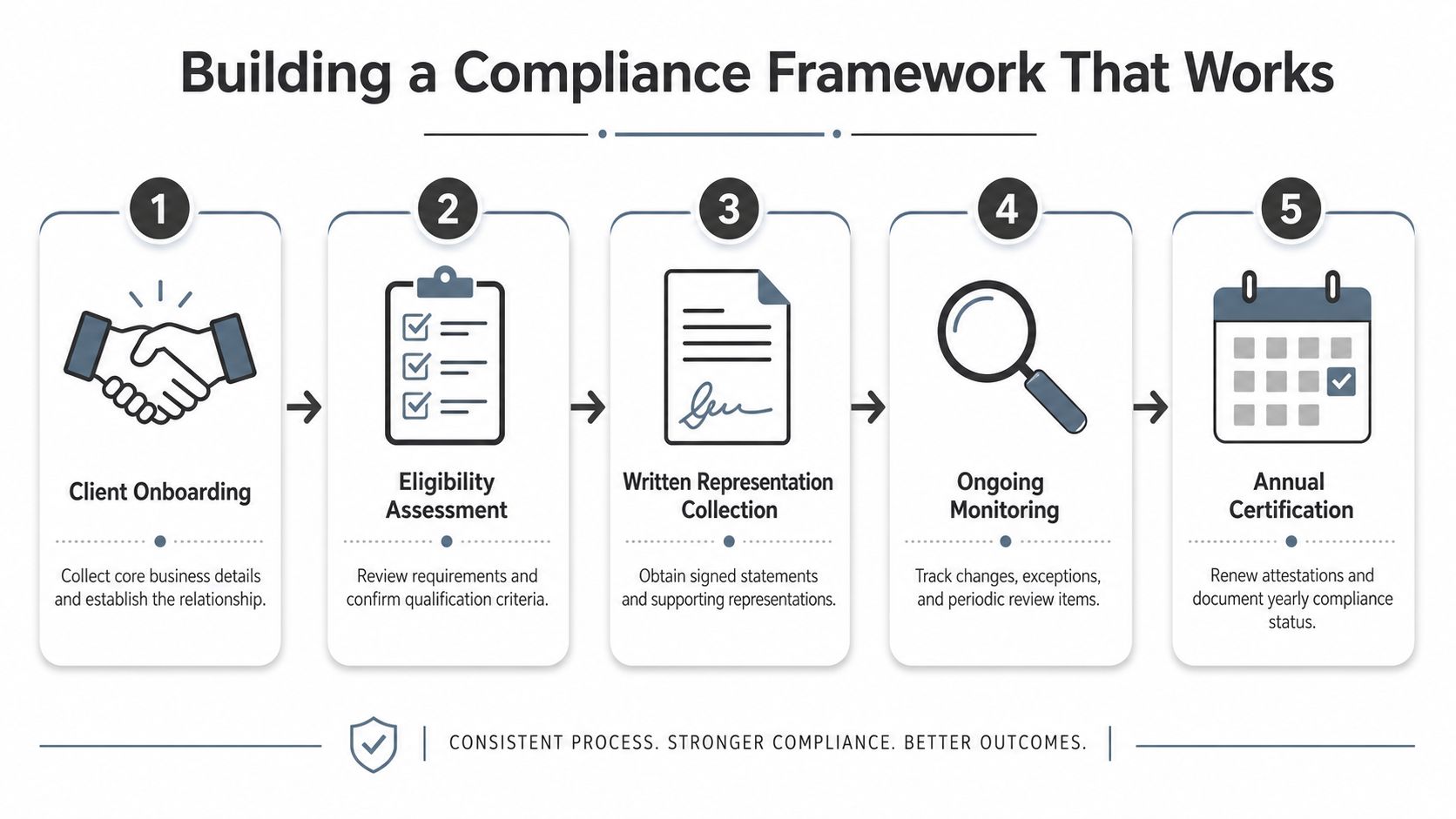
A workable Rule 5130 program starts before the IPO order ticket ever reaches the desk. The control points have to sit inside onboarding, account maintenance, and allocation review, because the breakdown usually happens in the workflow, not in the legal analysis. A firm that handles a large account base cannot rely on memory or occasional cleanups.
A useful starting point is to map the eligibility decision to a named owner. One person or team should review account structure, another should confirm restricted person status, and a third should have clear authority to halt an allocation when the file is incomplete. If the desk, operations group, and compliance team each assume someone else owns the call, the new issue process will drift and errors will slip through.
Make eligibility a documented workflow
Written representations matter because they create a point-in-time record. They are not a substitute for judgment, but they force the account holder or intermediary to commit to a statement that can be checked later. The record should tie to the specific account, the exemption relied on, and the facts used to clear the trade.
The best firms also make the eligibility step repeatable. Their written supervisory procedures should describe who collects the certification, who reviews it, what evidence is required, and when the matter escalates. A practical drafting baseline is the written supervisory procedures definition, because the question is whether the procedure matches how the desk allocates shares.
Build an audit trail that survives a FINRA ask
A useful audit trail is plain and complete. It should show the eligibility questionnaire, the representation, the analysis of beneficial interest, and the final approval. If the account was reviewed as a managed account or retirement plan, the file should show that the reviewer applied the correct exemption logic instead of recycling a generic template.
That file also needs to make the exemption decision understandable to someone who was not involved in the trade. If a reviewer cannot reconstruct why the allocation was approved from the record alone, the process is too loose and the firm will have trouble defending it under exam conditions.
Firms that sell into new issues also need to think about operational spillover. A control built only for the front office will fail if operations cannot preserve the evidence, monitor changes, and stop reuse of stale certifications. The safest programs treat compliance as a workflow problem and build the evidence trail into the same systems that move the order.
If the team can't recreate the decision six months later from the file, the process is too loose.
That is also why legal safeguards for data extraction matter in firms that pull account data from multiple systems. The source of the data is less important than whether the firm can document what it relied on, who reviewed it, and why the allocation was approved.
Common Compliance Failures and Misconceptions
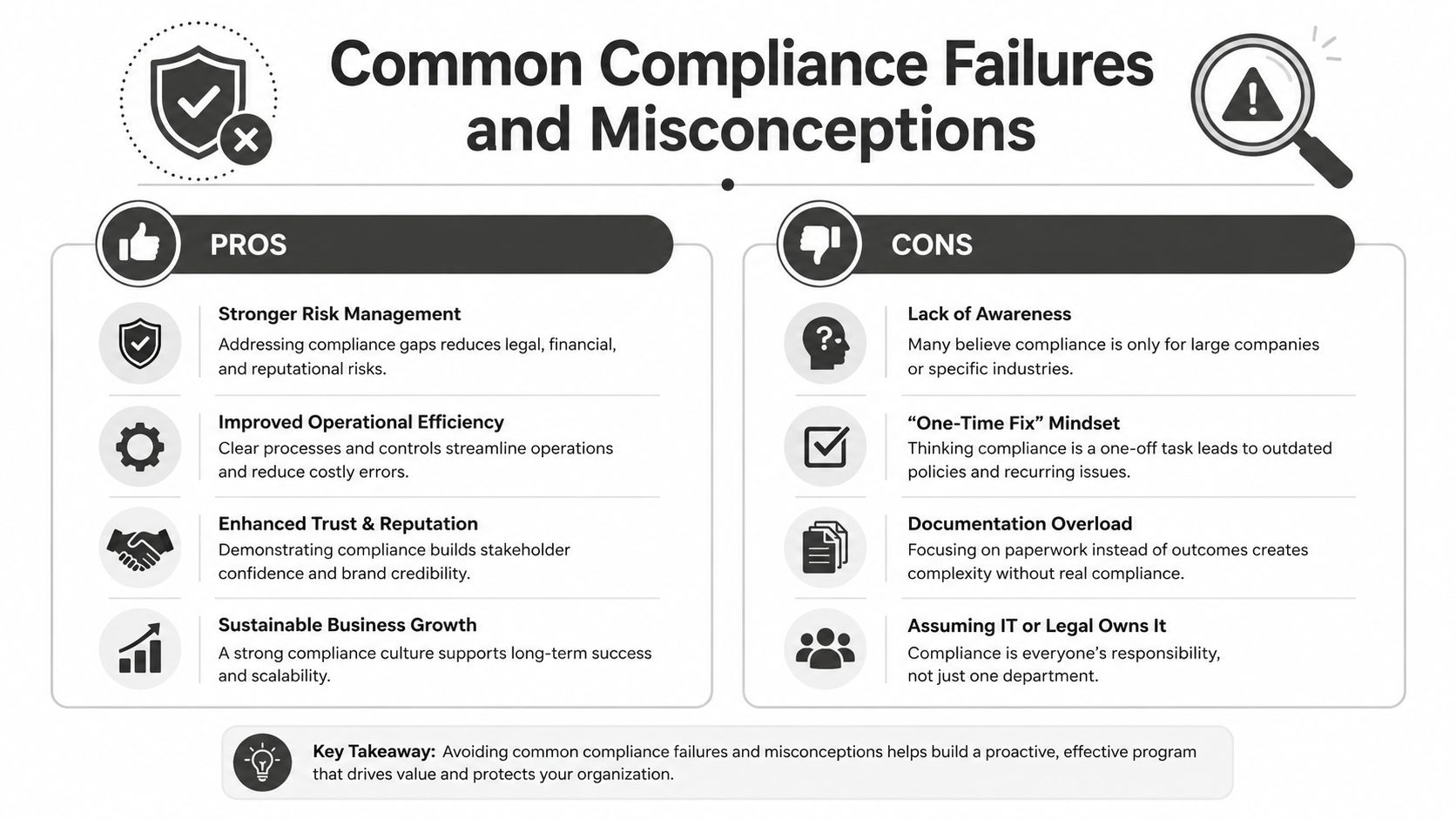
The most dangerous compliance errors are the ones that look administrative. A stale certification, a missed ownership change, or an approval based only on self-certification can all become systemic problems if the firm keeps reusing the same process without review. Regulators usually care less about the one bad file than about whether the firm's controls were designed to catch the bad file at all.
The errors that keep showing up
One recurring mistake is assuming a representation collected once will stay accurate forever. Beneficial ownership changes, family relationships evolve, and account structures get amended. If the firm never refreshes the certification, the file can drift out of compliance even though nobody touched the trade ticket.
Another misconception is that non-U.S. offerings are automatically outside the rule. They are not always. The rule excludes some offshore offerings under Regulation S, but concurrent offerings can still pull the transaction back into scope, so the legal analysis has to track the structure of the deal, not just the geography of the issuer.
Automated systems can also create false comfort. A workflow that only checks one variable, or that treats every entity under the same label as eligible, will miss the nuance in Rule 5130's exemptions. The system may look efficient on a dashboard while skipping the actual decision points that matter in an audit.
For teams thinking about how data collection and verification can go wrong, the legal safeguards for data extraction resource is a useful reminder that information gathering needs legal discipline, not just technical speed. In the compliance context, the same lesson applies. If the input data is weak, the automation won't save you.
The safest assumption is that regulators will test the process, not just the result. If a firm can't show how the eligibility call was made, the fact that the allocation happened only once is not much comfort.
A single clean allocation does not fix a broken control environment.
Responding to Inquiries and Protecting Your Interests
A Rule 5130 inquiry demands speed and control. Preserve the allocation records, questionnaires, exemption analysis, written representations, and every internal email showing who approved what and when. Do not let staff “clean up” the file after the fact, because that creates a second problem on top of the first.
The next step is to bring in experienced securities counsel immediately. A measured response can narrow the issue, state the facts accurately, and keep the matter from expanding into a broader supervisory problem. FINRA inquiries often start with document requests and explanations, and the first response can shape the direction of the review.
Avoid statements that sound casual or defensive. Off-the-cuff explanations made under pressure often read later as admissions, or as proof that the firm knew the control failed. The better approach is to answer factually, keep the timeline tight, and make sure the record supports each statement.
If the issue affects employment or Form U5 reporting, counsel should evaluate those consequences at the same time. Discipline, suspensions, and disclosure can affect career mobility long after the original allocation issue is resolved. Early strategic handling usually gives the firm more room to resolve the matter on a narrower track.
For a disciplined response to a regulatory matter, the regulatory compliance attorney resource is a useful reference point for the kind of early legal coordination that protects the record.
If you're dealing with a FINRA Rule 5130 issue, Kons Law can help you assess the facts, organize the documentation, and respond with the discipline regulators expect. If you want to discuss your business law matter, contact Kons Law at (860) 920-5181, or visit Kons Law to connect with counsel focused on securities regulation, compliance disputes, and defense strategy.
