
A mid-market advisory firm signs a side letter with a product issuer to place a mutual fund on its platform. Six months later, a competing broker-dealer is pitching the same product to the firm's target accounts, while the issuer insists that the side letter never promised meaningful exclusivity. The business owner is left with a commercial dispute, a channel conflict, and a compliance problem that the short document never addressed.
That outcome is avoidable. A well-drafted distribution agreement does more than authorize sales. It allocates territory, customer access, pricing authority, marketing responsibility, data control, regulatory duties, and exit rights. For financial advisors, broker-dealers, product issuers, and other regulated businesses, the agreement also has to fit supervisory systems and applicable securities rules.
What a Distribution Agreement Really Does
A distributor has agreed to sell a supplier's product across several states. The supplier expects broad market access, while the distributor assumes it has control over customer relationships and pricing. If the contract leaves those expectations unstated, the parties can face disputes over territory, authority, liability, and termination before the channel has matured.
A distribution agreement sets the operating rules for that relationship. It authorizes the distributor to buy, market, resell, and sometimes service the supplier's products within a defined territory, customer group, or market segment. The document governs an ongoing channel, not merely one purchase order. It should therefore address commercial authority, customer ownership, marketing duties, data access, pricing limits, compliance responsibilities, and exit rights.
The label matters because different channel arrangements allocate risk differently. A sales representative agreement usually covers a person or firm soliciting orders for a commission. A referral arrangement generally involves introducing prospects without taking inventory or controlling resale. A master service agreement establishes broad service terms, but it does not necessarily grant product resale rights. Misclassifying the relationship can produce the wrong treatment of revenue, authority, liability, and customer ownership.
In the United States, distribution agreements do not fall under one special regulatory scheme as a general class. The parties ordinarily rely on contract law, while Article 2 of the Uniform Commercial Code applies to goods transactions and has been adopted, with adjustments, in all 50 states, as explained in this overview of U.S. distribution agreements. A goods contract may also implicate the UCC Statute of Frauds when the applicable threshold is met. State-law differences still affect enforceability, remedies, and termination.
The regulatory overlay for financial channels
Contract law is only the foundation if the product involves securities, investment advice, or broker-dealer activity. Agency law may apply when the distributor can bind the supplier. Financial products may also trigger FINRA, SEC, and state securities administrator requirements.
A broker-dealer must connect the agreement to its supervisory system. The parties should assign responsibility for approving communications, maintaining records, monitoring representatives, and handling customer complaints. Marketing, fulfillment, and account-level functions require precise descriptions, especially where operations cross state lines or involve multiple distribution channels. Generic templates rarely resolve those issues.
Practical rule: Draft the agreement around what the parties will actually do, not the label they prefer.
Distribution relationships may last 10 to 20 years or more, while written terms are commonly set for 1 to 5 years and renewed as needed. That mismatch makes renewal rights, performance conditions, and termination mechanics commercial terms rather than boilerplate. A short initial term does not make weak exit language safe.
The Five Core Types of Distribution Arrangements
The appointment model determines who controls customers, who bears inventory risk, and how much freedom the supplier retains. Choose the model before negotiating the wording.
| Model | Exclusivity Default | Who Holds Inventory | Principal-Agent Risk | Typical Use |
|---|---|---|---|---|
| Exclusive distribution | Exclusive within a defined scope | Usually distributor | Moderate, depending on authority | Established territories and committed channel investment |
| Non-exclusive distribution | Multiple distributors permitted | Usually distributor | Moderate, depending on authority | Broad market coverage and testing |
| Territorial or regional appointment | Limited by geography, channel, or customer type | Usually distributor | Moderate | Multi-state or international expansion |
| Reseller or value-added reseller | Usually non-exclusive unless negotiated | Reseller | Lower if it buys and resells for its own account | Technology, equipment, and specialized services |
| Agency or sales representative | No resale exclusivity by default | Supplier or customer | High | Commission-based financial and enterprise sales |
Exclusive and non-exclusive models
An exclusive distribution arrangement gives one distributor the only right to sell within a stated territory or channel. The supplier usually demands minimum purchase or performance commitments in return. If the distributor misses those commitments for the stated period, the supplier may withdraw exclusivity or terminate, as described in this discussion of exclusive distribution agreements.
Non-exclusive distribution preserves supplier control. It may create channel conflict, but it prevents one underperforming partner from blocking the market. This model is often sensible when the supplier is testing demand or when customers require different service capabilities.
Regional, reseller, and agency structures
A territorial appointment can be exclusive or non-exclusive. The territory must identify more than a country or broad region. It should address states, countries, customer types, direct sales, online marketplaces, affiliates, wholesalers, and sub-distributors. A reseller buys and resells for its own account, generally carrying inventory and credit risk. A value-added reseller may also configure, install, or support the product.
An agent or sales representative solicits orders for a commission and typically doesn't take title to inventory. That legal line matters. Misclassifying an agent as a distributor can create tax, employment-style, termination, and mandatory compensation exposure. For broker-dealers, the classification may also affect net capital treatment and supervision under FINRA Rule 3110. The FTC's Business Opportunity Rule and state franchise laws may become relevant when the arrangement includes prescribed marketing systems, fees, ongoing support, and required representations.
Operationally, the same allocation questions appear in physical delivery networks. A company evaluating reseller responsibilities may also benefit from reviewing how businesses manage last-mile delivery routing, particularly where a distributor handles fulfillment rather than merely taking orders.
Key Clauses That Shape Every Distribution Deal
A generic template usually lists the right headings and still misses the commercial risk. Review the agreement in the order the relationship will operate.
Grant, scope, territory, and channels
Start with the grant of rights. Identify the supplier, distributor, products, services, territory, customer categories, channels, and permitted sub-distributors. State whether the distributor may sell online, through marketplaces, to affiliates, or outside the territory when a customer places an order across borders.
Exclusivity must be explicit. Specify whether it covers all products or only named products, whether the supplier retains direct-sale rights, and whether competing distributors can serve particular accounts. A territory clause should work alongside online-sales rules. “North America” or “Europe” is not precise enough if the parties haven't addressed states, countries, affiliated buyers, delivery destinations, and digital platforms.
Economics and performance
Pricing clauses should cover discounts, rebates, taxes, duties, refunds, chargebacks, currency, shipping terms, and price changes. A price list alone isn't a pricing clause. Payment terms should reflect credit risk, and the contract should state when title and risk of loss pass.
Minimum purchase commitments are usually measured by quantity or dollar value over a contract year. Some agreements use monthly, quarterly, or annual benchmarks, according to this distribution agreement template guidance. If exclusivity depends on performance, state the consequence of a miss. The remedy might be loss of exclusivity, reduced territory, reduced product scope, or termination.
Require regular reporting on sales, inventory, pipeline, returns, complaints, marketing activity, and sub-distributor use. Give the supplier audit rights that reach relevant books and records, while preserving required regulatory, privacy, and customer confidentiality protections.
Brand, product, and compliance obligations
The IP license should be limited to the relationship and should prohibit trademark, domain, social-media, and marketplace-account registration by the distributor. Set approval rights for advertising, translations, product claims, and local listings. Define who owns localized content and customer-facing accounts.
Representations and warranties should address authority, lawful sales practices, licensing, anti-corruption compliance, sanctions, data security, and product conformity. Product disclaimers shouldn't contradict mandatory consumer or securities obligations. For financial firms, the contract should identify who approves communications and how records are retained.
Indemnification should match actual control. A distributor that controls advertising should defend claims arising from its marketing. A supplier should address product defects, IP infringement, and regulatory failures within its control. This explanation of indemnification clauses is useful when testing whether baskets, caps, exclusions, and defense-control language align with the risk allocation.
Liability, exit, and disputes
Address limitation of liability, insurance, confidentiality, data use, term, renewal, termination triggers, cure periods, and termination for convenience. Post-termination provisions should cover inventory sell-off, buyback, customer transition, warranty handling, return of confidential information, trademark removal, marketplace access, data deletion, and non-solicitation terms.
Financial firms need a books-and-records carve-out from confidentiality and liability limitations where law, regulators, arbitration rules, or supervisory obligations require access. The agreement should also preserve audit, cooperation, investigation, and record-retention duties after termination.
Finally, choose governing law, venue, arbitration rules, language, service mechanics, interim relief, and attorneys' fees deliberately. Governing law and dispute forum are different choices. A clause that selects familiar law but leaves the supplier unable to obtain relief where the distributor holds assets isn't a complete solution.
Negotiation Tips and Sample Language That Works
Negotiation should exchange value, not merely divide risk. If a distributor wants exclusivity, the supplier should receive measurable performance, reporting, and cooperation in return. If the supplier wants aggressive minimums, the distributor should receive pricing, launch support, or a narrower product scope.

Trade exclusivity for proof
Don't give broad exclusivity on signature. Use a staged structure:
Sample compromise: “Distributor receives non-exclusive rights during the initial launch period. Exclusivity for the approved territory and products begins only after Distributor satisfies the applicable purchase, reporting, and compliance milestones.”
Minimums should reflect realistic demand, not a distributor's optimistic forecast. Tie the consequence to the problem. A missed target might reduce the territory or remove exclusivity before it triggers full termination.
For a distributor asking for protection, offer a step-in right instead of a permanent lockup:
“Supplier may appoint an additional distributor for accounts or channels where Distributor has not commenced active sales efforts, after written notice and an opportunity to submit a corrective plan.”
Control price, IP, and audit scope
Most-favored-nation language can inadvertently restrict the supplier's ability to serve different channels. Limit it to comparable products, customers, quantities, and commercial terms. Exclude negotiated enterprise deals, promotions, bundled offerings, and legally required pricing differences.
IP language should grant only the rights needed to sell the products. Require written approval for new claims, translated materials, domain registrations, and marketplace listings. Audit rights should be practical, confidential, and tied to defined records.
Negotiation position: “Distributor may use approved brand materials solely to perform this agreement. Any adaptation, translation, paid campaign, or platform listing requires prior written approval and remains subject to Supplier's removal instructions.”
Commercial delivery relationships show the same need for clearly assigned handoffs and service expectations. For a useful comparison point on partnership terms, review Peak Transport delivery partnerships.
Preserve necessary confidentiality access
A confidentiality clause should protect pricing, customer information, product plans, and technical material without blocking legally required disclosure. Permit disclosure to regulators, auditors, insurers, lenders, professional advisers, and affiliates under confidentiality duties. Require notice where legally permitted, but don't make regulatory cooperation contingent on supplier consent.
For a broader explanation of bargaining mechanics, see this guide to contract negotiation. The practical objective is simple. Put every major concession beside the condition that earns it.
Common Pitfalls and Enforcement Issues to Avoid
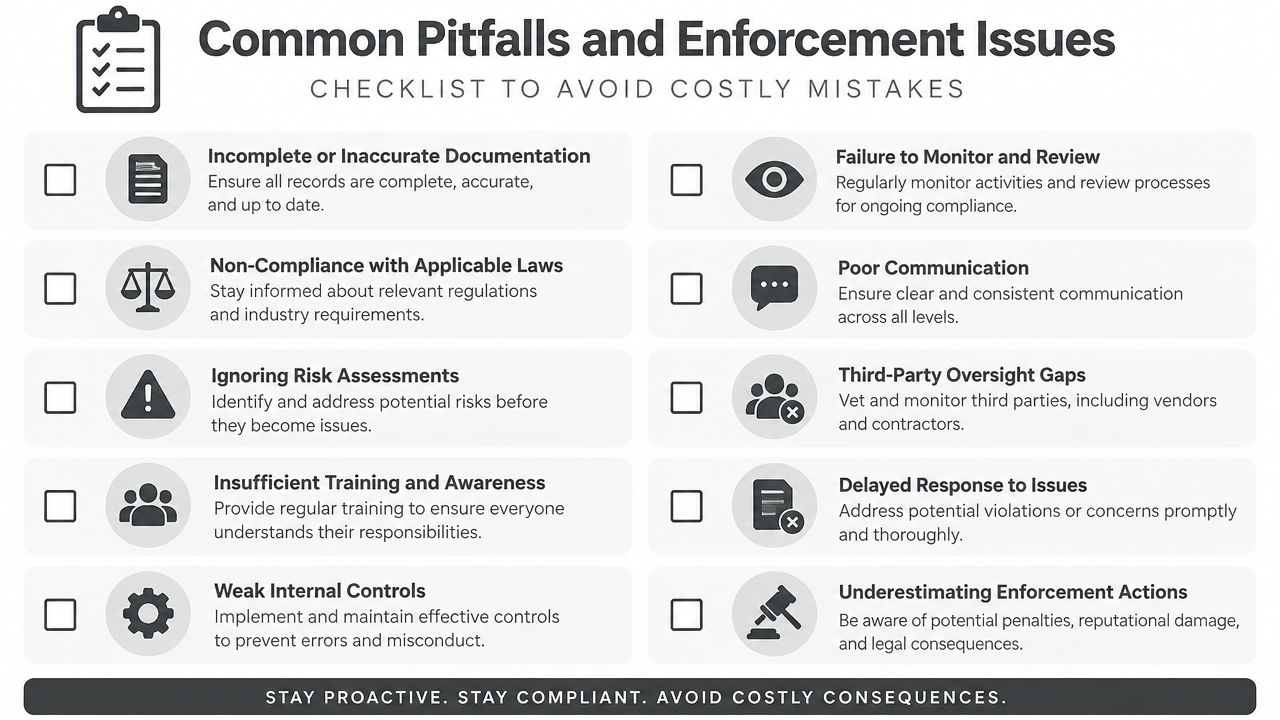
Experienced parties still lose advantage through operational ambiguity. The contract may say “exclusive distributor” while failing to explain whether the supplier can sell directly, whether an affiliate can take orders, or whether an online marketplace shipment violates the territory.
Classification and transition failures
A party called a distributor may function like an agent if it solicits sales for commission, represents that it can bind the supplier, or lacks meaningful resale risk. That classification can affect tax treatment, termination rights, compensation, and supervision. In advisor transitions, the wrong structure may also create employment-style, severance, or customer ownership disputes.
Post-termination planning is where many agreements become unusable. Address inventory buyback, sell-off periods, customer notices, warranty claims, account transfers, marketing removal, data access, and non-solicitation enforcement before the relationship deteriorates.
Drafting defects that defeat remedies
Vague territory language invites channel conflict. Weak assignment provisions allow a distributor to transfer the relationship to an unknown buyer. Indemnification baskets may leave a party exposed to routine claims, while broad liability caps can accidentally protect fraud, confidentiality breaches, IP misuse, or regulatory violations.
Notice mechanics also matter. Specify permitted delivery methods, addresses, effective receipt, and authorized recipients. Add cure periods where appropriate, but carve out breaches that require immediate action, such as unauthorized trademark registration, misuse of customer data, fraud, or serious compliance failures.
Enforcement rule: A termination right is only useful if the agreement explains the trigger, notice method, cure process, effective date, and post-termination duties.
Regulatory and Antitrust Considerations You Cannot Ignore
Distribution terms change when the distributor is a broker-dealer, registered representative, investment adviser, or financial product platform. The supplier should map responsibility for communications, supervision, customer recommendations, books and records, complaints, and regulatory inquiries directly into the contract.
In U.S. antitrust analysis, most distribution restraints are vertical restraints evaluated under the rule of reason, rather than automatically illegal. The FTC identifies competitive effects such as foreclosure, raising rivals' costs, and facilitating tacit collusion as relevant considerations in exclusive dealing and exclusive distribution arrangements, as explained in the FTC's vertical restraints discussion.
The European Commission provides a practical screen for many vertical agreements. Where the supplier and buyer each have no more than 30% market share, and the agreement contains no hardcore restrictions, the arrangement will usually lack anticompetitive effects or its benefits will outweigh harm, according to the European Commission's vertical agreement guidance.
| Framework | Trigger Threshold | Drafting Response |
|---|---|---|
| U.S. vertical restraint analysis | Competitive effects, market power, foreclosure, or rivals' costs | Narrow exclusivity, preserve alternative channels, and document service or investment justifications |
| EU vertical guidance | Supplier and buyer each at or below 30% market share, with no hardcore restrictions | Confirm market shares and remove prohibited resale-price or territorial restrictions |
| FINRA supervision | Broker-dealer activity and supervisory responsibilities | Assign Rule 3110 supervision, communications review, records, complaints, and escalation duties |
| SEC and state securities oversight | Investment recommendations, product communications, and state activity | Embed applicable conduct standards, approval workflows, and jurisdictional controls |
Registered representatives may need permission to discuss competing products, even under an exclusive commercial appointment. The agreement should also include compliance flow-through duties for sub-distributors and vendors. For a practical foundation on compliance systems, review this overview of regulatory compliance.
Regulation Best Interest obligations should not sit only in a policy manual when the distribution agreement controls marketing and sales conduct. Define prohibited incentives, required disclosures, supervisory access, training, record retention, and cooperation with examinations. Multi-state operations require the same mapping for licensing, privacy, advertising, tax, and business registration requirements.
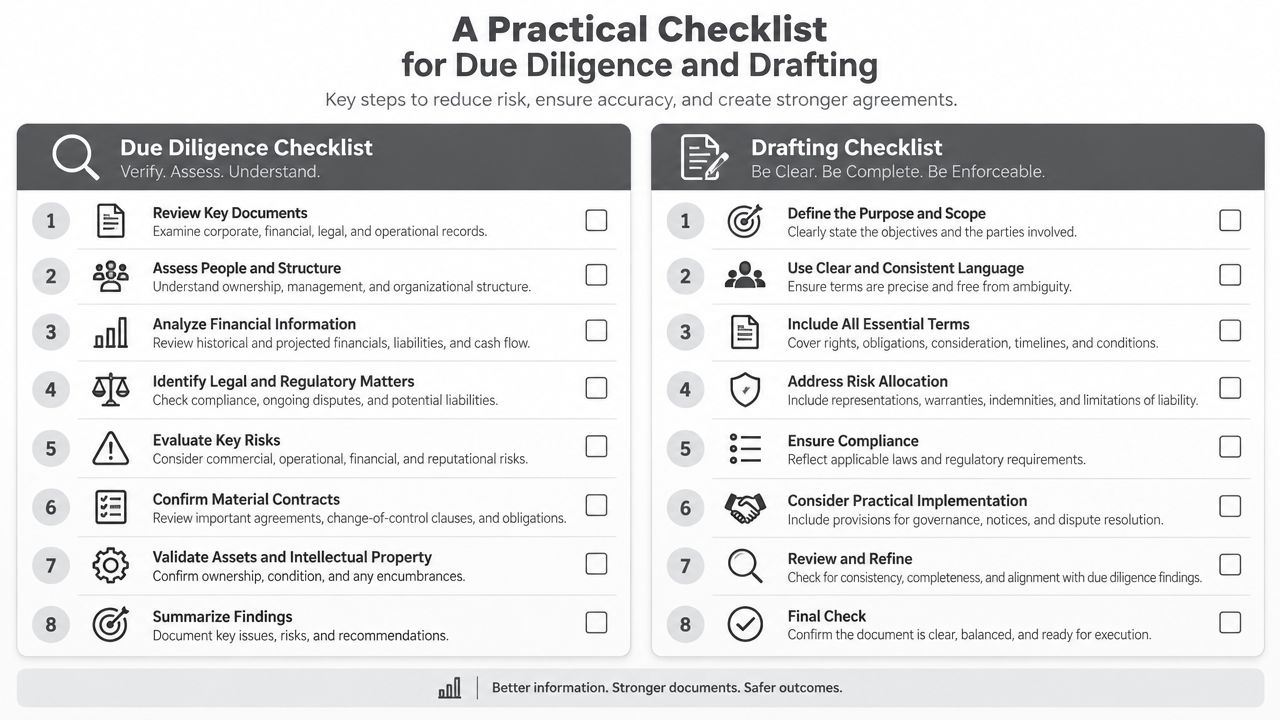
A Practical Checklist for Due Diligence and Drafting
Use a written deal file. It should show what you checked, what you decided, and who owns each ongoing obligation.
- Verify the counterparty: Confirm the legal entity, ownership, signing authority, licenses, financial capacity, litigation history, competing products, and sub-distributor relationships. Produce a diligence memorandum.
- Map the channel: Identify customers, states or countries, direct sales, online marketplaces, affiliates, wholesalers, and service providers. Produce a territory and channel schedule.
- Test the economics: Model pricing, discounts, payment exposure, inventory, returns, currency, duties, minimums, and performance remedies. Produce an approved commercial term sheet.
- Review regulatory fit: Identify FINRA, SEC, state, EU, privacy, advertising, anti-corruption, and product rules that apply. Produce a responsibility matrix.
- Mark up the contract: Review grant, exclusivity, territory, pricing, IP, warranties, indemnities, insurance, confidentiality, data, termination, and dispute provisions clause by clause.
- Plan the exit: Define notice, cure, inventory, customer transition, account access, data return, trademark removal, and cooperation duties. Produce a transition checklist.
- Set monitoring triggers: Schedule reporting, audits, compliance certifications, complaint escalation, minimum reviews, and renewal decisions. Assign each deliverable to a named person.
A focused business due diligence process should produce decisions, not just collected documents. Review the agreement again before renewal, expansion into a new territory, appointment of a sub-distributor, or launch of a new product.
Kons Law helps businesses, financial professionals, and broker-dealer participants draft and review distribution agreements, allocate regulatory and commercial risk, and prepare workable termination and dispute provisions. If you want to discuss your business law matter, contact Kons Law at (860) 920-5181 or visit Kons Law.
