
A supplier delivers late, a customer rejects work it says never met the agreed scope, and the contract offers no clear answer about when payment became due. What began as a manageable operational disagreement can become a six-figure dispute once attorneys start arguing over acceptance, invoices, lost revenue, and who carried the risk.
That result rarely comes from one dramatic drafting failure. More often, the agreement contains familiar commercial contract clauses that don't fit together. A payment trigger depends on an undefined deliverable. A liability cap doesn't address indemnification. A termination right says nothing about transition work. A notice clause requires delivery to an address nobody checks.
Businesses don't need to become contract lawyers, but they do need to understand how the language they sign will work under pressure. The practical resources on legal terms for developers can also help technical teams understand terminology before they commit to scope, ownership, or performance obligations.
Why Commercial Contract Clauses Matter More Than You Think
A technology company once hired a services vendor to build a customer portal. The business team agreed on a broad description of the result, with payment tied to “completion” and final approval. The contract didn't define completion, identify objective acceptance criteria, or explain what happened if the customer requested revisions.
The vendor delivered a working portal and invoiced the final installment. The customer identified missing features and withheld payment. The vendor argued that the agreed scope was complete, while the customer relied on sales discussions describing capabilities that never made it into the contract. Neither side had a clean contractual answer.
The disagreement then spread. The vendor suspended support, the customer hired another developer, and both sides claimed the other had breached first. Legal fees increased, the customer relationship deteriorated, and settlement became more attractive than proving whose interpretation a court would accept. The original drafting gap was small. Its consequences were not.
Clauses allocate business risk
Every commercial agreement is a mosaic of interdependent provisions. A supplier purchase order, software subscription, commercial lease, and enterprise services agreement all address some combination of:
- Cash flow: When does a party invoice, and what event makes payment due?
- Performance: What exactly must each party deliver, and how will acceptance be measured?
- Risk: Who pays when a third party brings a claim or a deliverable causes damage?
- Exit: Can either party terminate, suspend performance, or require a transition?
- Procedure: Where must a dispute be filed, and how must formal notice be delivered?
The negotiation is therefore not about whether a clause sounds balanced in isolation. A broad indemnity favors the protected party. A narrow indemnity favors the party providing it. A liability cap creates a financial ceiling, but carve-outs can remove the ceiling for the risks that matter most. A vague notice provision may look harmless until a party misses a cure deadline because notice went to the wrong address.
Boilerplate still needs a transaction-specific design
Commercial contract clauses aren't ornamental language. They are instruments for shaping exposure before a dispute exists, and they become the map a judge, arbitrator, or business executive follows after the relationship breaks down.
Historical contract law reflects the same concern with stability. The U.S. Contract Clause became a major constitutional safeguard for commercial promises after 1787, and scholarship summarized by Harvard Law Review reports that Contract Clause litigation appeared in nearly 40% of cases challenging state legislation before 1889, including 75 decisions before that year. Cases including Fletcher v. Peck, Dartmouth College v. Woodward, and Bronson v. Kinzie helped define protections involving contracts, corporate charters, and mortgage rights.
Practical rule: If a clause changes money, control, timing, or exit rights, treat it as a negotiated business term, not boilerplate.
Payment Terms, Confidentiality, and Warranties
These three clauses appear in many business agreements, but their familiar wording often hides important choices. A payment provision can determine whether a company has working capital. A confidentiality clause can restrict ordinary operations. A warranty can define whether a buyer receives a remedy or must accept a defective result.
Payment terms should identify the trigger
“Net-30” and “net-60” describe the period for payment after the contractual payment event, usually receipt of a proper invoice. They don't answer the more important question in a services deal, which is what allows the vendor to issue that invoice.
Time-only schedules can create disputes because the parties may disagree about whether the vendor performed enough work to earn payment. Milestone-based terms work better when each milestone identifies a deliverable, acceptance standard, review period, and consequence of rejection. A workable clause might say:
“Customer shall pay each undisputed invoice within thirty days after receipt. Customer shall pay a late charge at the rate of two percent per month on overdue amounts, or the maximum lawful rate, if lower. Vendor may suspend performance after written notice if an undisputed amount remains unpaid.”
The 2% monthly interest rate in that sample is a drafting example, not a universal recommendation. Counsel should check applicable law and the transaction's commercial context before using it. Payment terms also deserve the same attention businesses give to staying compliant on loan covenants, because contractual cash obligations can affect broader financial planning.
Confidentiality must be usable
A one-way confidentiality clause protects information disclosed by one party. A mutual clause protects information exchanged by both sides. The drafter should define permitted use, identify who may receive the information, and include practical exclusions for information that is:
- Already public: The recipient didn't cause the disclosure.
- Independently developed: The recipient created it without using protected information.
- Lawfully obtained: Another source provided it without a confidentiality violation.
- Legally compelled: A subpoena or regulator requires disclosure, subject to notice where lawful.
Many agreements use a survival period of 2 to 5 years, although trade secrets and highly sensitive information may require protection for as long as they remain legally protectable. A clause can also authorize injunctive relief, while recognizing that equitable relief remains subject to the applicable court's standards. Businesses handling negotiations should review what a confidentiality agreement covers before accepting a template designed for a different relationship.
Warranties define the remedy
An express warranty is a specific promise about goods, services, performance, or compliance. Under the UCC, implied warranties may arise unless the contract effectively disclaims them. Buyers often look for a warranty that goods conform to specifications and are free from defects. Sellers may seek conspicuous “AS IS” language and exclusions of implied warranties, subject to applicable law.
Duration matters as much as substance. A repair, replace, or refund remedy ladder can give the seller an opportunity to cure while giving the buyer a defined endpoint if cure fails.
| Clause | Primary Purpose | Key Variables | Common Negotiation Point |
|---|---|---|---|
| Payment | Controls cash flow | Trigger, invoice process, interest, suspension | Acceptance versus invoice date |
| Confidentiality | Controls information use | Scope, exclusions, duration, remedies | Mutual protection and survival |
| Warranties | Defines promised quality and remedies | Standard, duration, exclusions, cure | Repair, replacement, refund, or disclaimer |
Indemnification and Limitation of Liability
Indemnification and limitation of liability are often negotiated as separate paragraphs, but they function as a single risk system. Indemnity identifies specified losses one party must bear. A liability cap limits the amount recoverable for breach or performance failure. If the provisions don't align, the financial result may be accidental.
Indemnity language needs a complete obligation
The traditional triad is defend, indemnify, and hold harmless. “Defend” addresses the obligation to respond to a covered third-party claim. “Indemnify” generally addresses reimbursement or payment of covered losses. “Hold harmless” expresses protection against responsibility for those losses, although its precise effect depends on the governing law and wording.
The clause should also distinguish third-party claims from first-party losses. A customer may want protection if a stranger claims that delivered software infringes intellectual property. That is different from a direct claim that the vendor missed a milestone.
A focused provision might state:
“Vendor shall defend, indemnify, and hold harmless Customer and its officers, directors, and employees from any third-party claim alleging that the licensed deliverables infringe a United States intellectual property right, and shall pay damages, settlements approved by Vendor, and reasonable attorneys' fees finally awarded in that claim.”
The clause should address notice, defense control, cooperation, and settlement consent. A party that must pay should generally have a meaningful opportunity to control the defense, while the protected party shouldn't be forced to accept a settlement imposing admissions, non-monetary obligations, or continuing restrictions.
The liability cap can fail silently
A common structure caps aggregate liability at the fees paid during the prior 12 months. The parties may make the cap mutual or give one side a higher ceiling. They may also exclude consequential, incidental, special, or punitive damages, subject to enforceability and the contract's wording.
The central drafting problem is whether indemnity sits inside or outside the cap. As Thomson Reuters explains in its discussion of indemnification clauses, indemnity and a liability cap allocate different types of exposure, and an indemnity may remain uncapped unless the agreement expressly applies the cap to indemnity obligations.
Consider a $100,000 contract with a $50,000 liability cap and an uncapped intellectual property indemnity. If an infringement claim produces $500,000 in covered exposure, the apparent cap may offer no protection at all. That numerical example illustrates the drafting issue rather than predicting a likely claim value.
Detailed agreements state the result directly. They may include indemnity within the general cap, apply a separate indemnity cap tied to contract fees, or expressly carve indemnity out. The party providing indemnity almost always wants a ceiling. The receiving party usually argues that the specified risk should remain outside it. The correct answer depends on insurance, control of the risk, and the deal's economics. A focused review of indemnification clauses in contracts can help identify conflicts between the provisions.
Termination, Force Majeure, and Notice Provisions
A contract's operational strength becomes visible when performance deteriorates. Termination, force majeure, and notice provisions determine whether a party can exit, pause obligations, or preserve a claim.
Termination must explain the aftermath
Termination for cause usually requires a material breach, written notice, and an opportunity to cure. Termination for convenience allows exit without proving breach, but it can undermine a vendor's investment or leave a customer without continuity.
A useful structure might read:
“Either party may terminate for material breach if the breaching party fails to cure within thirty days after receiving written notice describing the breach. Customer may terminate for convenience on sixty days' notice. On termination, Customer shall pay for accepted work performed through the effective date, and Vendor shall return Customer data and provide reasonable transition assistance.”
The specific periods in that sample are drafting examples. The important point is to address payment, data return, work in progress, transition support, prepaid fees, and provisions that survive termination. A termination right without consequences often creates a second dispute immediately after the first.
Force majeure needs specific categories
A general reference to events beyond a party's control may not answer whether a pandemic, government order, supplier failure, cyberattack, or transportation interruption qualifies. The clause should identify covered events, causation, notice, mitigation, suspension rights, and the point at which prolonged disruption permits termination.
| Event Category | Pre-2020 Treatment | Post-2020 Treatment |
|---|---|---|
| Pandemic | Often omitted or listed generally | Addressed expressly, with attention to disease outbreaks and resulting restrictions |
| Government action | Usually included as a general legal restraint | Often separated into orders, shutdowns, export controls, and regulatory restrictions |
| Supply chain disruption | Frequently treated as ordinary business risk | Negotiated more specifically, with causation and mitigation requirements |
Businesses should distinguish an event that makes performance impossible from one that merely makes performance more expensive. A party seeking relief typically must show that the clause covers the event and that it took reasonable steps to mitigate the impact. For a practical overview, see what a force majeure clause does.
Notice is a procedural condition
Notice provisions should state the permitted method, delivery address, recipient, deemed receipt rule, and whether a copy must go to counsel or an operational contact. Allowing only one delivery channel creates an avoidable failure point. A clause could permit email plus nationally recognized overnight delivery, while requiring the sender to use the addresses listed in the agreement and update them by notice.
If termination depends on effective notice, the notice clause isn't administrative detail. It may determine whether the contract ended, whether a cure period began, and whether a later claim was preserved.
Choice of Law and Dispute Resolution
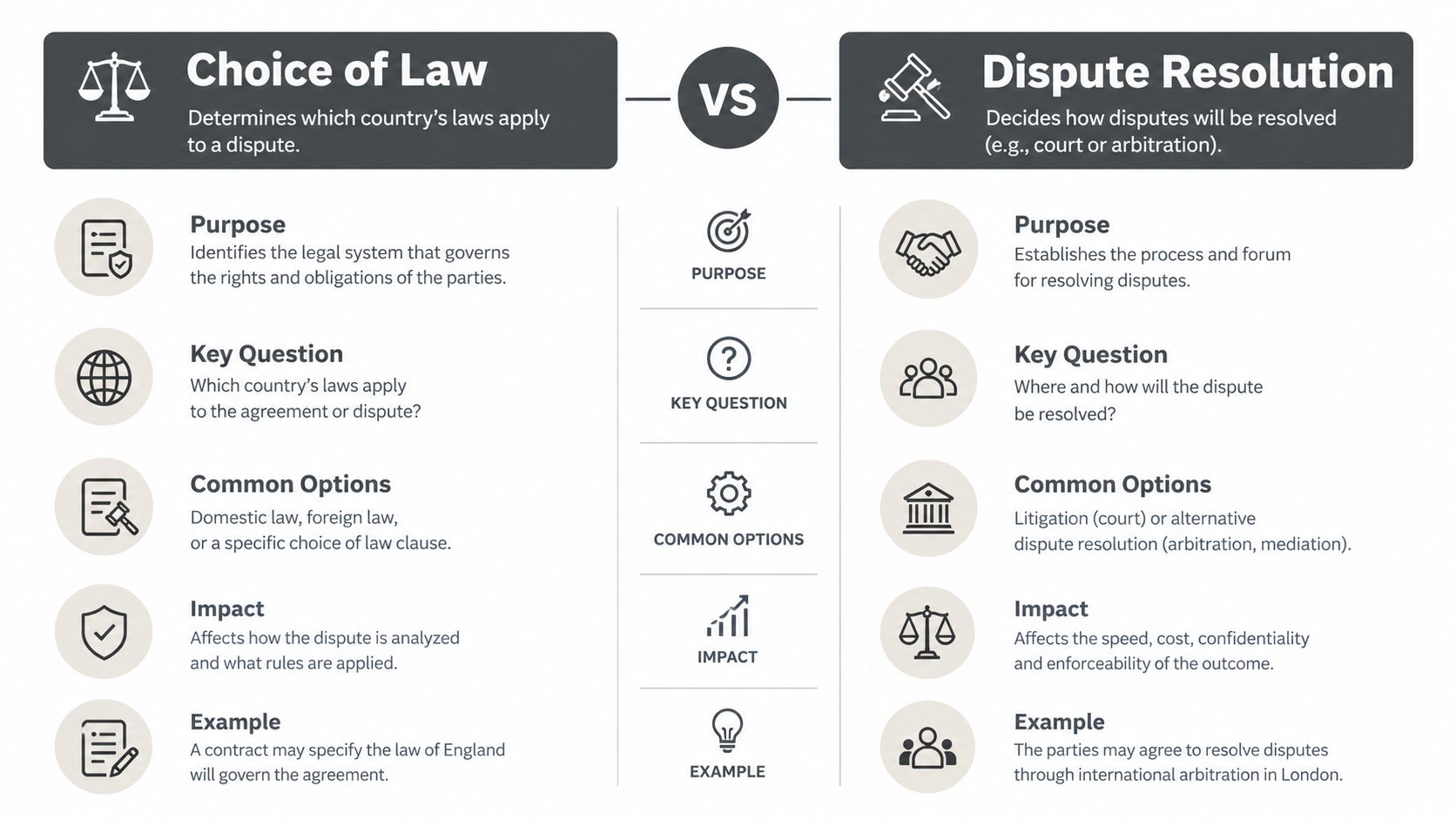
Choice of law and dispute resolution answer different questions. Governing law identifies the legal rules used to interpret the agreement. A forum clause identifies where the dispute will proceed and what procedure will govern it. Combining them carelessly can produce a forum that applies unfamiliar substantive rules or a remedy the parties never considered.
Court litigation and arbitration involve different trade-offs
Domestic litigation offers established procedural rules, judicial subpoenas, appellate review, and public decisions. Arbitration may provide greater confidentiality, procedural flexibility, and an adjudicator with industry experience. Neither option is automatically faster or cheaper. Complex discovery, emergency relief, expert evidence, and enforcement can affect the result in either forum.
| Consideration | Domestic litigation | Arbitration |
|---|---|---|
| Cost | Court fees may be predictable, but discovery can be extensive | Administrative and arbitrator fees add cost, while procedure may be narrower |
| Speed | Court calendars and appeals can extend the process | Parties may obtain a tailored schedule, subject to tribunal availability |
| Confidentiality | Filings and hearings may be public | Proceedings are generally private, subject to the agreement and law |
| Enforceability | Court judgments follow applicable local enforcement rules | International awards may benefit from treaty-based enforcement mechanisms |
New York and Delaware law are frequently selected in U.S. commercial deals because businesses and counsel are familiar with their commercial jurisprudence, but the selection should reflect a real connection or a deliberate risk decision. International transactions may favor institutions such as the ICC or LCIA, particularly where the parties want a neutral forum and a defined arbitral framework. The New York Convention can support recognition and enforcement of qualifying foreign arbitral awards, but enforcement still depends on the relevant jurisdiction and the agreement's validity.
A court clause might provide:
“The state and federal courts located in Hartford, Connecticut, shall have exclusive jurisdiction over any dispute arising from this agreement, and each party consents to that jurisdiction.”
An arbitration clause might provide:
“Any dispute arising from this agreement shall be finally resolved by arbitration administered by the ICC under its applicable rules, seated in New York, New York, and conducted in English.”
Businesses can compare their escalation process with the ABS Insurance Brokers complaints procedure before choosing whether internal complaints, mediation, court litigation, or arbitration should come first. The clause should also address emergency relief, document production, arbitrator selection, costs, and judgment entry. The practical guidance on alternative dispute resolution versus litigation is useful when those choices affect more than forum preference.
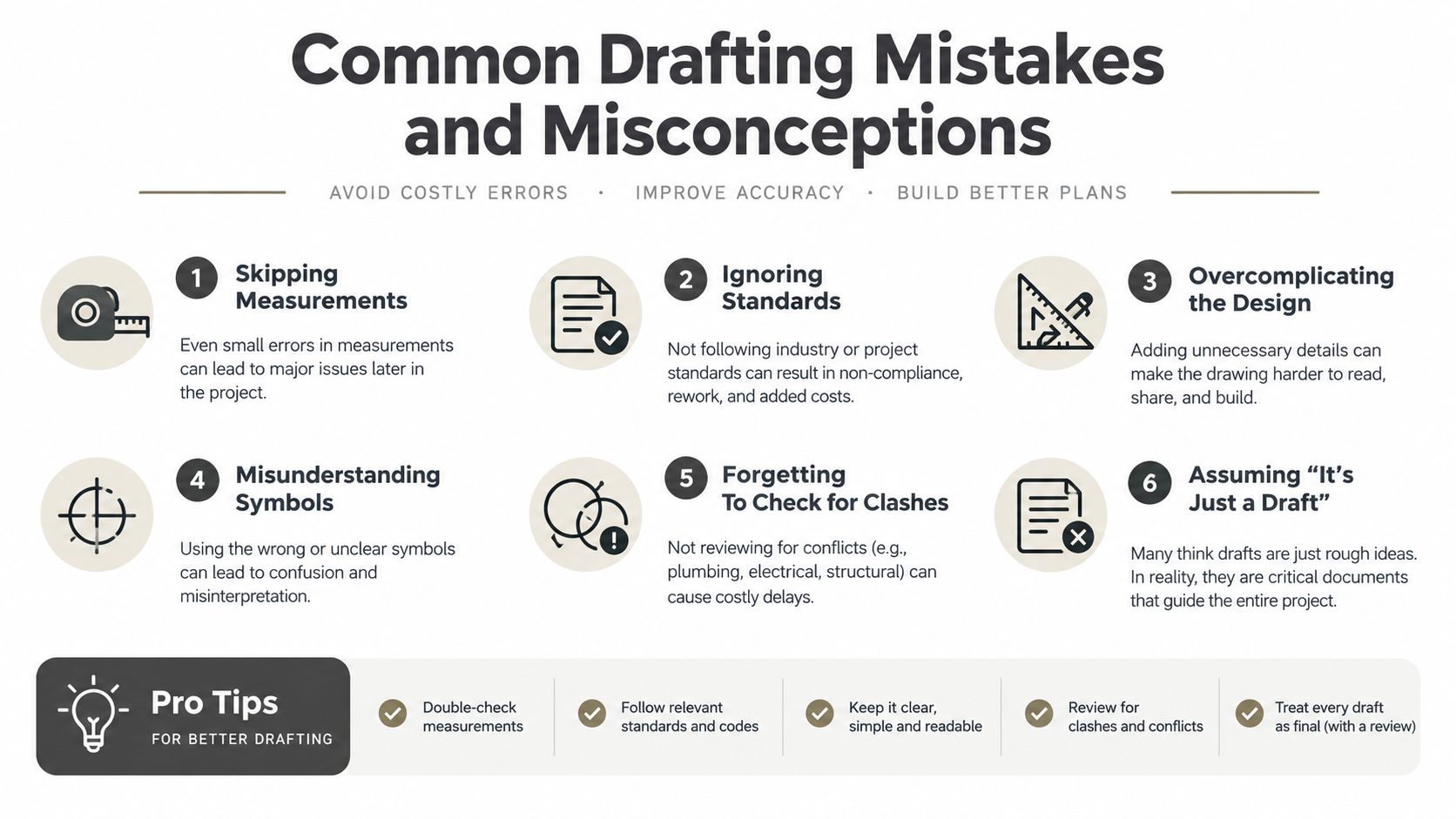
Common Drafting Mistakes and Misconceptions
The most dangerous contract language often looks familiar. “Reasonable efforts,” “commercially reasonable,” and “as soon as practicable” may be appropriate in context, but they don't establish a useful standard unless the agreement explains what performance requires.
A junior drafter may copy a software template into a manufacturing agreement, or use a domestic court clause in a cross-border transaction without checking enforcement. The words can be grammatically correct and commercially wrong. A clause should reflect the deal's deliverables, dependencies, data, personnel, and remedies.
Familiar language can conceal missing decisions
Ask what happens if the parties disagree about a clause that seems standard:
- “Reasonable efforts”: Reasonable compared with what objective, cost, timeline, or industry practice?
- Assignment: Can a party transfer the agreement during a sale, reorganization, or change of control?
- Successors: Do obligations bind permitted assignees and successor entities?
- Integration: Does the written agreement replace prior proposals, emails, and sales statements?
- No reliance: Which pre-contract representations can a party later claim it relied on?
- Consequential damages: Are lost profits, business interruption, or data loss excluded, and do exceptions apply?
- Implied warranties: Has the contract disclaimed them effectively and conspicuously?
An integration or merger clause can support the argument that the written contract is the final expression of the deal. The University of Alabama study of 1,521 commercial contracts found that 1,145 agreements, or 75.28%, included a merger clause, as reported in its commercial contract interpretation research. That prevalence doesn't make every integration clause effective. Scope, consistency, and applicable law still matter.
Silence invites default rules
When a contract omits a subject, statutory law and common-law doctrines may fill the gap. The result may not match either party's business expectation. Under UCC Article 2, a sales-contract modification requires no new consideration but must be made in good faith. A common-law modification generally requires fresh consideration under the pre-existing duty rule. The distinction, summarized in this commercial credit and contract materials resource, makes the governing law and transaction type important.
Liquidated damages offer another example. They can define recoverable damages when actual loss would be difficult to calculate in advance, such as a lost business opportunity, but they shouldn't operate as an unenforceable penalty. The drafter must connect the amount or formula to the anticipated difficulty of proving loss.
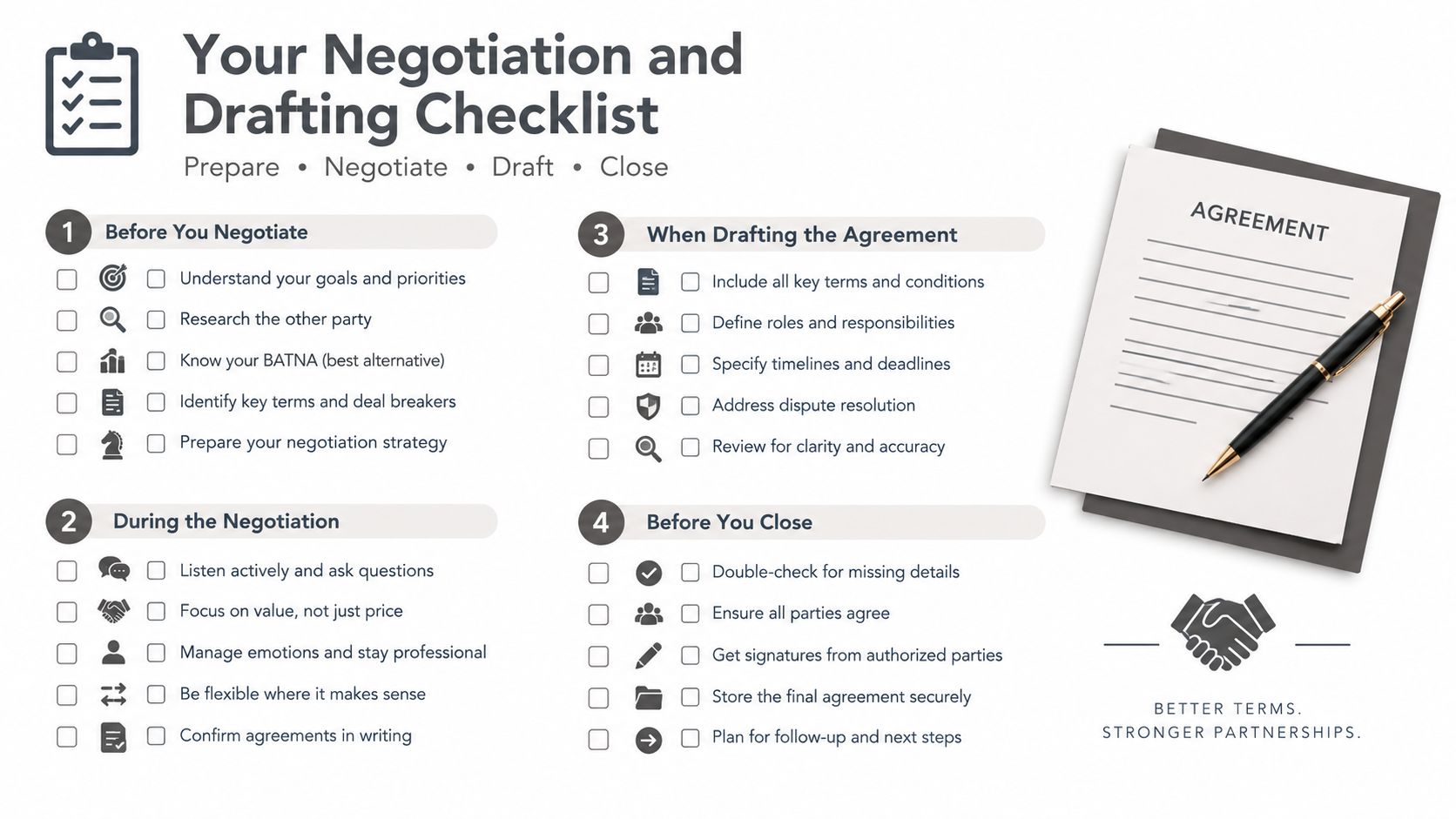
Your Negotiation and Drafting Checklist
A reliable review begins before anyone marks up the agreement. Identify the economic deal, operational dependencies, unacceptable risks, and realistic fallback positions first. Counsel can then draft language that implements those decisions rather than guessing at them.
Before drafting
Ask four questions:
- What is being exchanged: Are the deliverables, pricing model, acceptance process, and timing specific enough to support invoicing and enforcement?
- Who controls the risk: Which party controls the people, technology, data, suppliers, and regulatory exposure that could cause the loss?
- What cannot be compromised: Do confidentiality, intellectual property, insurance, payment, or termination terms protect matters the business requires?
- What happens if the relationship ends early: Have you addressed transition support, data return, work in progress, and prepaid amounts?
A vague answer usually signals a drafting problem, not merely a business preference.
During drafting
Read across provisions, not only down the page. Defined terms must remain consistent, and the scope, order of precedence, statement of work, insurance, indemnification, and liability sections must describe the same allocation of risk. A carefully negotiated indemnity can still fail if the statement of work narrows the covered services or a liability exclusion removes the intended remedy.
Compare the indemnity cap with the general liability cap. Check that every carve-out appears in the correct provision and has not been removed by a conflicting exclusion elsewhere. Reconcile notice addresses and governing-law references throughout the agreement, including exhibits and purchase orders.
For longer arrangements, decide whether the price should stay fixed or whether the contract needs a benchmark, indexation mechanism, price-review clause, hardship trigger, or termination right. A McKinsey analysis on contracting for performance and benchmarking reported that eight out of every ten contracts in its sample lacked a benchmarking clause. Benchmarking can compare pricing with market indices or industry standards. Without a usable mechanism, a customer may be locked into an outdated price, while a supplier may face pressure to reduce charges without an agreed reference point.
During negotiation and after signing
Prioritize redlines by business impact. Preserve fallback language for the liability cap, indemnity scope, cure period, and dispute forum. Record the commercial trade-off when one party receives a broader right in exchange for a narrower remedy elsewhere. That record helps the business understand what it accepted and gives counsel a clearer basis for later interpretation.
After execution, store the signed version where the responsible team can find it. Track renewal dates, insurance certificates, reporting duties, payment triggers, notice requirements, and obligations that survive termination. A signed contract can fail operationally when nobody monitors these requirements.
AI provisions deserve the same practical review. A 2026 contract dataset found standalone AI Usage Policy clauses in 18% of SaaS service agreements and AI provisions in about 8% of independent contractor agreements, according to Spellbook's 2026 State of Contracts report. Ask who owns AI-generated output, which tools may be used, what data may be entered, and who bears responsibility for AI-assisted performance.
If you want to discuss a business law matter, contact Kons Law at (860) 920-5181. Kons Law helps businesses draft, review, and negotiate commercial agreements, including provisions addressing payment, indemnification, liability, termination, and dispute resolution. Visit Kons Law to discuss your contract needs with counsel.
