
Getting ready for a deposition is about more than just showing up on the right day. The heart of solid preparation lies in a meticulous review of all case documents, strategic sessions with your attorney, and practicing how to deliver clear, truthful answers under pressure.
Why Deposition Preparation Is a Critical Step
A deposition is not a simple chat; it’s sworn testimony. Every single word you say will be recorded, transcribed, and can be used later to either help or hurt your case during settlement talks or even at trial. The importance of accurate legal transcription services can't be overstated—they create the official record that will be scrutinized for months or years to come.
Think of it this way: the opposing attorney’s job is to uncover facts that help their side, lock you into a specific version of events, and expose any inconsistencies. Even a small misstatement or a well-intentioned guess can be twisted to attack your credibility down the line.
The Advantage of Proactive Preparation
Good preparation isn't about memorizing a script. It’s about fully understanding the landscape of the case. This means you need to focus on a few key areas:
- Master the Facts: Know the timeline, the key players, and the critical documents cold.
- Define Your Role: Understand exactly what information you are there to provide, especially when testifying as a corporate representative.
- Anticipate the Questions: Work with your lawyer to game out the opposing counsel's likely lines of attack.
- Practice Your Delivery: Learn how to answer questions truthfully and precisely, without giving away extra information that could be harmful.
This approach turns you from a reactive witness into a composed and effective one. You’ll be able to control the flow of information, rather than letting the opposing lawyer control the narrative. This is particularly vital in the world of complex business disputes. You can see more on how we approach these cases in our overview of Commercial Litigation.
A deposition is a pivotal event in any lawsuit. It’s often the only chance opposing counsel gets to question you before trial. Your performance can set the tone for the rest of the litigation and have a major impact on the case's settlement value.
In the high-stakes arena of commercial litigation, where Kons Law has handled disputes across more than 25 states, we’ve seen that thorough preparation is the foundation of success. Our experience has shown that well-prepared witnesses consistently achieve more favorable outcomes. This has been especially true in FINRA arbitrations, where unprepared witnesses often find their claims weakened by inconsistencies brought to light during their testimony.
Ultimately, the time you put into preparing for your deposition is a direct investment in protecting yourself, your reputation, and your business.
If you want to discuss your business law matter, contact Kons Law at (860) 920-5181.
Mastering Your Case Documents and Key Facts
In any lawsuit, the documents—emails, contracts, reports, text messages—are the foundation of the story. Simply reading them isn’t enough. You have to internalize the timeline and understand how each piece of paper fits into the bigger picture. The other side’s attorney won’t just ask about documents you wrote; they will ask about the entire “universe” of evidence relevant to your case.
Your best defense against being blindsided by an exhibit is a thorough review with your legal team. The goal is to build a rock-solid timeline and understand the context behind every key event. This deep familiarity is what allows you to give accurate, confident testimony, even under pressure.
Creating a Factual Timeline
First, sit down with your lawyer and map out a chronological narrative of what happened. This isn't just a dry list of dates. It's a story that connects actions, conversations, and outcomes. You should organize the documents in a way that makes sense to you, whether it’s by date, topic, or the key people involved.
This process helps you accomplish a few critical things:
- Pinpoint the Big Moments: You’ll identify the specific decisions and events that are truly central to the dispute.
- Connect the Dots: It becomes clear how different documents and conversations influence one another.
- Find the Weak Spots: You can spot potential inconsistencies or areas of confusion that opposing counsel will almost certainly try to exploit.
Building this framework moves you from being a passive reader to an active participant who understands the factual bedrock of the case. It’s an essential step for any witness.
This preparation phase is the crucial bridge between just being a witness and delivering a successful deposition, as this flowchart shows.
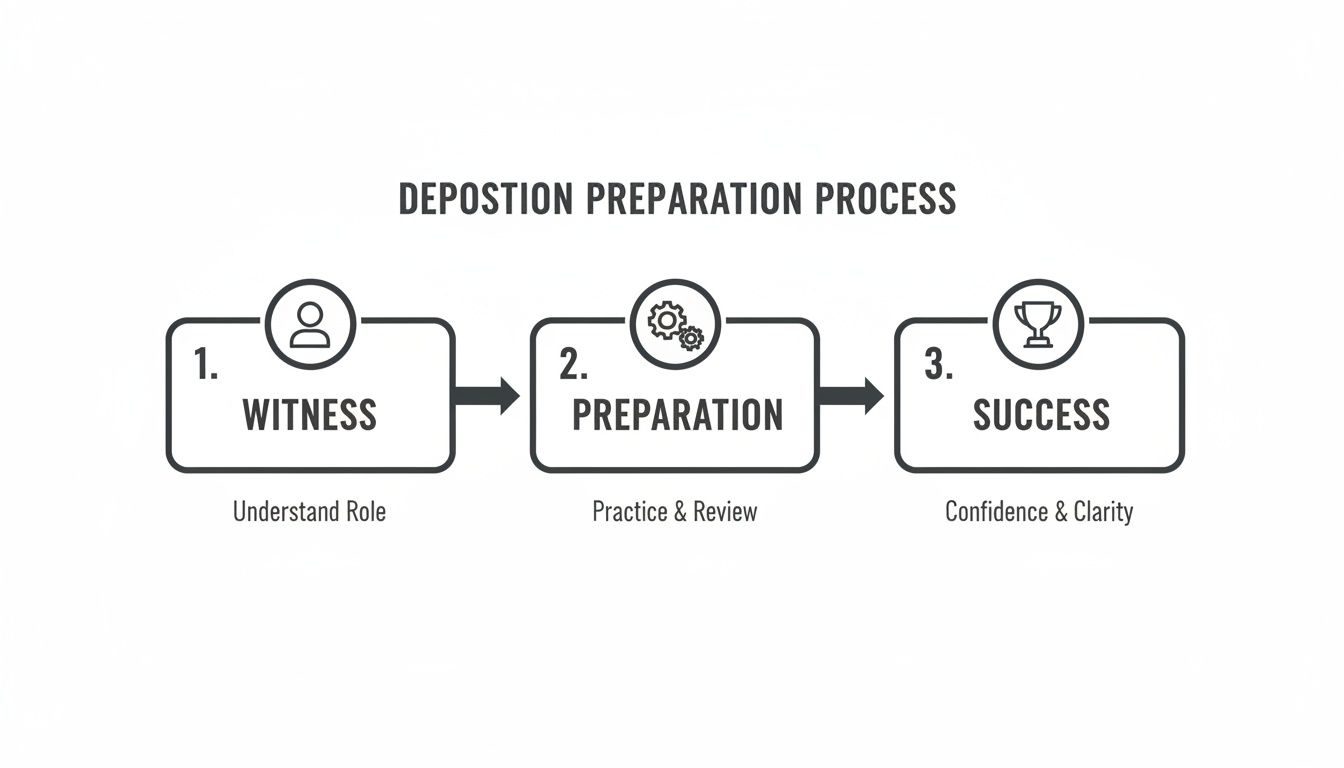
As you can see, the work you put in during preparation directly transforms your experience as a witness and leads to a much stronger outcome.
Go Beyond Just Reading the Documents
It’s a mistake to only review the evidence from your own point of view. You need to put on the opposing counsel's hat. What negative story could they construct from that one email chain? How could a single sentence in a report be twisted out of context? This level of critical analysis is a huge part of effective deposition prep.
To truly get a handle on the key facts, you need to think like the people on the other side of the table. It helps to learn how to analyze and then effectively write transcripts that create actionable outcomes to better understand how testimony is captured and used. This skill trains you to anticipate how your words will be interpreted alongside the existing evidence.
Your testimony doesn’t exist in a vacuum. It will be compared against every email, contract, and relevant document. When your spoken words align perfectly with the written record, your credibility becomes nearly unshakable.
How to Organize a Mountain of Information
In complex commercial litigation, the sheer volume of documents can be staggering. We're often talking about thousands, or even tens of thousands, of pages. Trying to memorize it all is impossible—and it's the wrong approach.
Instead, you and your lawyer need a structured plan.
- Group Documents by Theme: Categorize files by project, key individuals, or major events. This makes it far easier to recall the context when a specific document is suddenly put in front of you.
- Create a "Hot Docs" Binder: Work with your attorney to pull out the 50-100 most important documents. These are the exhibits you absolutely must know inside and out, as they will likely form the core of your questioning.
- Master Your Own Words: Pay extra attention to any document you wrote, sent, or received directly. You will be expected to remember the circumstances surrounding your own communications.
This systematic approach turns an overwhelming pile of paper into a manageable and understandable landscape. You won't know every single page by heart, but you’ll know the terrain well enough to navigate any question that comes your way.
Building a Winning Strategy with Your Attorney
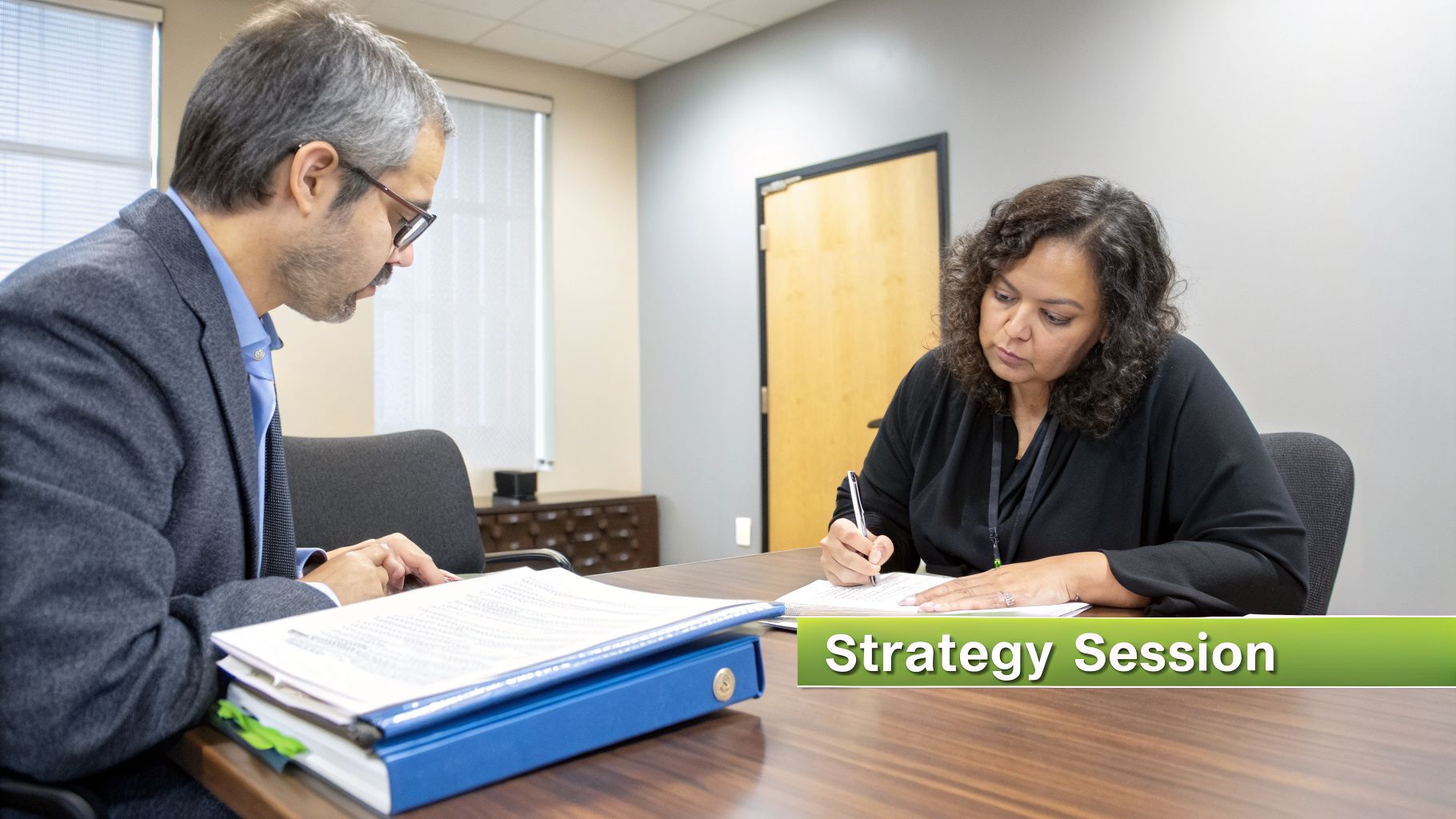
Once you have a firm grasp of the key documents, it’s time to shift from reviewing facts to building your testimony strategy. This is where you and your lawyer work closely to shape your story into a clear, consistent, and persuasive narrative for the case.
This isn’t about memorizing a script. Instead, you'll work together to identify the core themes of your testimony, pinpoint the most critical messages you need to deliver, and anticipate the traps opposing counsel will likely set.
The Mock Exam: Your Ultimate Practice Session
One of the most powerful preparation tools is the mock examination, sometimes called a "murder board." In this session, your attorney will step into the shoes of the opposing lawyer, firing off the same types of questions and using the same tactics you’ll face in the real deposition. It’s your chance to practice in a completely safe environment.
The mock exam is designed to:
- Build muscle memory for pausing before you answer.
- Desensitize you to aggressive or tricky questioning.
- Refine your answers with immediate feedback from your lawyer.
- Uncover weaknesses or inconsistencies in your testimony.
This practice is invaluable. It helps you channel nervous energy into a focused, confident performance, turning what could be a stressful interrogation into a controlled conversation.
Understanding Attorney-Client Privilege
Your conversations with your lawyer are protected by attorney-client privilege, meaning they are confidential and cannot be the subject of questions in your deposition. Knowing this protection exists is critical.
Be careful, though—discussing your lawyer’s advice with a third party could waive that privilege. Your attorney will explain these boundaries so you know exactly which communications are shielded. For a broader look at the roles counsel can play, you may find our guide on what a business lawyer does helpful.
Never volunteer what you and your lawyer discussed during your prep sessions. If asked, the correct response is that your conversations are protected by attorney-client privilege. Your lawyer will take it from there.
The legal field has also seen a major shift toward remote depositions, with over 70% of law firms now conducting them. This trend highlights the growing importance of legal technology, a market expected to reach $25 billion by 2025.
The core principles of preparation, however, remain the same. Witnesses who dedicate 20+ hours to record review and mock sessions can reduce contradictory statements by an impressive 65%. This meticulous work reinforces why flexibility is key, as rigid scripts are 55% more likely to fail under pressure. You can learn more about these practices in the full report on Everlaw.com.
To help you prepare, it's useful to understand the different questioning styles you might encounter and how to handle them effectively.
Deposition Questioning Styles and How to Respond
| Questioning Style | Objective of Opposing Counsel | Your Best Response Strategy |
|---|---|---|
| The Machine Gun | To overwhelm you with rapid-fire questions, preventing you from thinking. | Take a deliberate pause before each answer. Don't let their pace dictate yours. |
| The Sympathetic Friend | To build rapport and make you feel comfortable enough to volunteer extra information. | Remain professional and friendly, but only answer the question asked. Don't get chatty. |
| The Confused Actor | To feign confusion about your answers, hoping you'll over-explain and create inconsistencies. | Give a simple, truthful answer and stop. If they claim to be confused, just repeat your answer. |
| The Aggressor | To intimidate or anger you, hoping you'll lose your composure and make a mistake. | Stay calm and professional. Do not get defensive or argue. A flat, unemotional tone is your best defense. |
Recognizing these tactics is the first step toward neutralizing them. Your mock examination is the perfect place to practice your responses.
Turning Weaknesses into Strengths
Every case has its weak spots. The goal isn’t to hide from them—it’s to prepare for them. During your strategy sessions, your attorney will help you confront difficult facts head-on.
You will practice how to acknowledge a challenging document or an unfavorable fact without panicking. The strategy is to answer truthfully and concisely, then stop. This prevents you from over-explaining or becoming defensive, which only signals to the opposing counsel that they’ve hit a nerve. By anticipating and rehearsing these moments, you take away their power.
If you want to discuss your business law matter, contact Kons Law at (860) 920-5181.
Navigating the Deposition in Person or Remotely
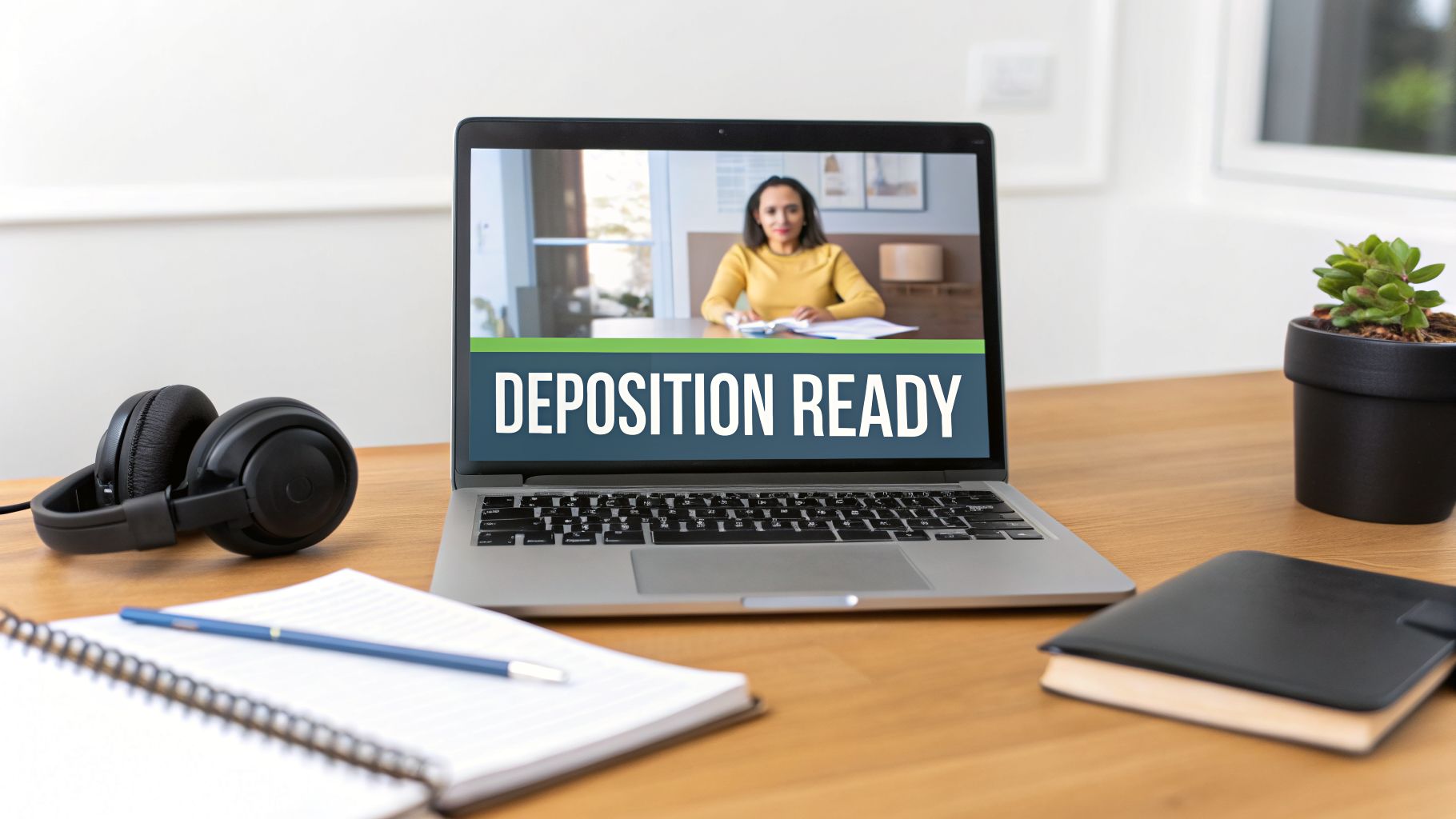
Whether you’re walking into a conference room or logging into a video call, the setting of your deposition plays a critical role. Your ability to project confidence and give clear, credible testimony depends on being logistically and mentally prepared for either format.
Understanding the nuances of both in-person and remote sessions allows you to take control of the environment, so your focus remains entirely on the questions at hand.
The In-Person Deposition Experience
A traditional in-person deposition is a formal, controlled affair. You’ll be in a room with a few key players, and knowing who’s who is the first step.
- Opposing Counsel: The attorney asking you questions.
- Your Attorney: Your counsel, sitting right beside you to object to improper questions and protect your interests.
- The Court Reporter: This person creates the official transcript by recording every word spoken.
- The Videographer: In many cases, your testimony will also be video-recorded, so be mindful of your body language and professional demeanor.
When you're handed physical documents like contracts or reports, take a moment. Don’t let the opposing attorney rush you. Review the exhibit carefully before answering any questions—it’s there to help you, so use it to ensure your testimony is accurate.
Best Practices for Remote Depositions
Remote depositions are now a mainstay in litigation, but they introduce unique technical and practical hurdles. Your primary goal is to create a seamless experience, eliminating any tech glitches or distractions that could undermine your testimony.
The shift toward virtual proceedings is only accelerating. A 2024 legal industry survey found that 10.86% more firms plan to increase their use of remote depositions, while the number expecting to decrease their use fell by 28.63%. For expert witnesses and executives, this means being prepared to defend complex reports under the microscope of a webcam, where, as legal experts note, the 'devil is in the details.'
In a remote deposition, the environment is yours to control. Use this to your advantage. A professional, quiet space demonstrates that you take the process seriously and are prepared to give focused, credible testimony.
Your Remote Deposition Tech Checklist
Work with your attorney to run through this technical checklist before the deposition begins:
- A Stable Internet Connection: A wired Ethernet cable is always more reliable than Wi-Fi. Test your connection speed beforehand to prevent lags or dropped calls.
- A Professional Background: Opt for a neutral, uncluttered backdrop, like a blank wall or a tidy bookshelf. Avoid virtual backgrounds, which can look unprofessional and distracting.
- Clear Audio and Video: Use a quality external webcam and a headset with a built-in microphone. This ensures the court reporter can hear every word clearly and minimizes disruptive background noise.
- Proper Device Setup: Position your camera at eye level. This simple adjustment creates a sense of direct eye contact, which is essential for building rapport and credibility on screen.
- Exhibit Platform Familiarity: Your lawyer should schedule a practice run on the virtual exhibit platform. Make sure you are comfortable with how to view, scroll, and navigate documents electronically.
The skills you build for a deposition can also be helpful in other legal settings. For more context on preparing for formal legal discussions, you can review our guide on how to prepare for mediation.
Finally, remember that non-verbal cues are just as important on video. Sit up straight, keep your focus on the camera when you speak, and listen intently. Your professional demeanor is a powerful tool, whether you are in the room or on the screen.
If you want to discuss your business law matter, contact Kons Law at (860) 920-5181.
The Golden Rules for Answering Every Question
Once you’re in the deposition room, every single word you say goes on the official record. There’s no such thing as an “off the record” chat. Your objective is simple: provide truthful, accurate, and brief answers. You’re there to respond, not to help the opposing counsel build their case against you.
To do this effectively, you need to master a simple but powerful four-part rhythm: Listen, Pause, Answer, Stop. This method intentionally creates space between the question and your response, giving both you and your attorney critical time to think. It’s your best defense against getting caught in a rapid-fire Q&A where mistakes are bound to happen.
Listen, Pause, Answer, Stop
This isn’t just a mental note; it’s a physical discipline you need to practice.
- Listen: Let the lawyer finish the entire question. Don't interrupt. Focus on the exact words they use—every detail matters.
- Pause: Take a breath. This simple act gives your attorney a window to object if the question is improper. It also gives you a moment to frame a precise, careful answer. The pause will feel much longer to you than to anyone else.
- Answer: Give a response that directly answers the question asked, and nothing more. Use clear, simple language.
- Stop: As soon as you’ve answered truthfully, stop talking. Don’t volunteer extra details, don’t explain your reasoning, and don’t feel the need to fill the silence.
Learning to be comfortable with the silence after your answer is one of the most powerful tools in your arsenal. It forces the other attorney to come up with another question, rather than letting you accidentally hand them more ammunition.
Answering Only the Question Asked
One of the most common traps witnesses fall into is trying to be too helpful. An attorney will ask a straightforward yes-or-no question, and the witness launches into a five-minute story. This is a critical mistake. Your job is not to tell the whole story or educate the other side.
Imagine this exchange:
Attorney: "Did you attend the project meeting on May 15th?"
Wrong Answer: "Yes, I did. I remember I was running late because traffic was terrible, but I got there just as Sarah was starting her presentation on the budget, which I thought was way too optimistic from the start..."
Right Answer: "Yes."
The first answer is a goldmine for the opposing lawyer. It opens up completely new, unplanned lines of questioning about the traffic, Sarah’s presentation, and your personal opinions on the budget. The second answer is truthful and complete, forcing the lawyer to ask another specific question if they want to know more.
The most effective answers in a deposition are often the shortest. "Yes," "No," "I don't know," and "I don't recall" are all complete sentences. Use them.
"I Don't Know" vs. "I Don't Recall"
It is absolutely acceptable—and often, the correct response—to say you don’t know or can’t remember something. Guessing is one of the worst things you can do. If you guess and a document or another witness proves you wrong, your credibility is shattered.
While they sound similar, there’s a crucial difference between the two phrases:
- "I don't know" is the right answer for information you never had. For example, if you're asked about a private conversation between two colleagues at a meeting you didn't attend, the only truthful answer is, "I don't know."
- "I don't recall" is for information you might have known once but can't remember now. If asked for the specific wording of an email you sent three years ago, "I don't recall" is both an honest and a perfectly strategic response.
Never be afraid to use these phrases. A truthful "I don't recall" is infinitely better than a guess that turns out to be wrong.
If you want to discuss your business law matter, contact Kons Law at (860) 920-5181.
What's Next for Your Case?
A well-executed deposition can be a turning point in your litigation, often paving the way for a favorable resolution. As we’ve covered, success isn't about luck; it comes from a disciplined approach: mastering the facts, working closely with your legal counsel, and practicing your testimony until you can deliver it confidently under pressure.
Think of the time you put into preparing as a direct investment in your case. This isn't just about getting through a single day of questioning. It's about shaping the entire narrative and outcome. Your performance can directly influence settlement talks and signal the strength of your position to the other side. For more on handling business disputes, take a look at our article on finding the right commercial litigation attorney near you.
Your deposition is a critical moment to establish your credibility and take control of the story. The confidence you build through meticulous preparation is your most powerful tool at the table.
If you are facing litigation and want to ensure you're fully prepared for your deposition and every other stage of the process, contact our experienced team. Call the business litigation attorneys at Kons Law at (860) 920-5181 to discuss your matter.
Frequently Asked Questions About Deposition Preparation
Even after the most thorough prep session, it's natural to have a few nagging questions as the deposition day gets closer. We've found that addressing these common concerns head-on is the final step in building the confidence you need to walk into that room fully prepared.
What Is a 30(b)(6) Deposition and How Is It Different?
A Rule 30(b)(6) deposition isn't your typical testimony. This is a special proceeding where the opposing side deposes the company itself, and you have been designated to speak on its behalf about specific topics laid out in a formal notice.
The preparation is far more demanding than for a personal deposition. The crucial difference is that your testimony legally binds the entire company. You are no longer just a witness speaking from personal memory; you are the official voice of the organization. This means you must become an expert on all the noticed topics, which often involves digging through corporate records, interviewing colleagues, and learning facts well outside your day-to-day role.
How Long Does It Take to Prepare for a Deposition?
There's no magic number here. The time required to prepare properly depends entirely on the complexity and stakes of your case.
- For a simple matter with few documents, a couple of hours reviewing materials and meeting with your lawyer might be all you need.
- In a high-stakes commercial lawsuit involving thousands of documents, preparation can become a multi-day or even multi-week affair, complete with several mock examinations and deep-dive document reviews.
As a general rule, the more that is at stake in the lawsuit, the more time and effort you and your legal team should dedicate to deposition preparation. It is an investment that pays significant dividends.
What Should I Do If the Opposing Lawyer Is Aggressive?
First, understand that an aggressive lawyer is using a tactic. Their anger isn't personal—it's a calculated performance designed to rattle you, make you defensive, and bait you into a mistake. The single best response is to remain calm, collected, and professional.
Don't take the bait. Refuse to argue, raise your voice, or get drawn into a fight. Simply stick to your training: listen carefully to the entire question, pause deliberately before you speak, give a concise and truthful answer, and then stop. Your lawyer is in the room for the specific purpose of protecting you from harassment and will object to improper questions or behavior. Trust them to handle the opposing counsel while you focus only on the question, not the tone.
Can I Bring Notes With Me into the Deposition?
It is strongly advised not to bring notes of any kind into your deposition. While it seems like a helpful security blanket, anything you use to refresh your memory—a notepad, a timeline, even a single sticky note—is fair game for the other side.
The moment the opposing attorney sees you have notes, they can demand to see them, mark them as an exhibit, and launch a whole new line of questioning about them. They'll ask why you wrote certain things down, what you left out, and who helped you. This creates a messy and entirely avoidable distraction. It's much safer to trust your memory and the comprehensive prep you did with your legal team.
If you want to discuss your business law matter, contact Kons Law at (860) 920-5181.
