
So, you’re thinking about starting a food business from your home kitchen in Connecticut? You’re in luck. Thanks to the state’s cottage food law, it’s more possible than ever to turn your passion into a real business without the massive overhead of a commercial kitchen.
One of the most exciting recent changes was a major bump in the annual sales cap—it doubled from $25,000 to $50,000. This one move opened the door for serious growth, making a home-based food business a truly viable venture.
What Is a Cottage Food Operation in Connecticut?
At its heart, a cottage food operation is a small-scale business that lets you make certain foods in your home kitchen and sell them directly to people. Think of it as a launchpad for bakers, jam makers, and other culinary creators. It’s a legal framework that helps you get started with minimal upfront cost.
The entire CT cottage food law is built on a simple principle: managing risk. The state gives the green light to "non-potentially hazardous" foods. These are items that are shelf-stable and don't need to be kept in the fridge to stay safe for consumption. This focus on low-risk products is what makes the whole system work without the need for the intense, expensive inspections required for restaurants or large food manufacturers.
The Foundation of the Law
Getting a handle on this law is your first step. It draws clear lines around what you can make, how much you can earn, and exactly what needs to go on your labels. Following these rules isn’t just about staying out of trouble; it’s about earning your customers’ trust and proving you’re a professional from day one. Proper regulatory compliance is the bedrock of any business that’s built to last.
A Major Boost for Home Entrepreneurs
That jump in the annual sales cap from $25,000 to $50,000 was a game-changer. It was a clear signal from lawmakers that they support small-scale food artisans in Connecticut, aligning the state with a national trend of empowering home-based entrepreneurs.
This single update effectively doubled the earning potential for people like you. What might have started as a side hustle now has the real potential to become a full-time career.
Let's break down the official definition for a moment.
A "cottage food operation" means any person who produces cottage food products only in the home kitchen of such person's private residence for sale to the consumer.
This definition points to three non-negotiable elements:
- Production Location: It has to be the kitchen in your primary residence. No outbuildings or secondary properties.
- Product Type: You’re limited to a specific list of approved "cottage food products."
- Sales Method: You can only sell directly to the end consumer.
Nailing down these fundamentals is essential before you even think about perfecting that cookie recipe or designing your logo. If you want to discuss your business law matter, contact Kons Law at (860) 920-5181.
What You Can and Cannot Sell From Your Home Kitchen
Before you even think about designing a logo or printing labels, the very first step in building a compliant home-based food business is understanding your product boundaries. Connecticut’s cottage food law is built on a single, crucial principle: you can only sell “non-potentially hazardous” foods.
What does that actually mean? Think of it this way: if a food item can sit safely on a kitchen counter at room temperature without spoiling or becoming a risk, it's likely on the approved list. This simple test is your best guide for creating a product line that’s both delicious and legal.
Getting this right is everything, as this flowchart makes clear.
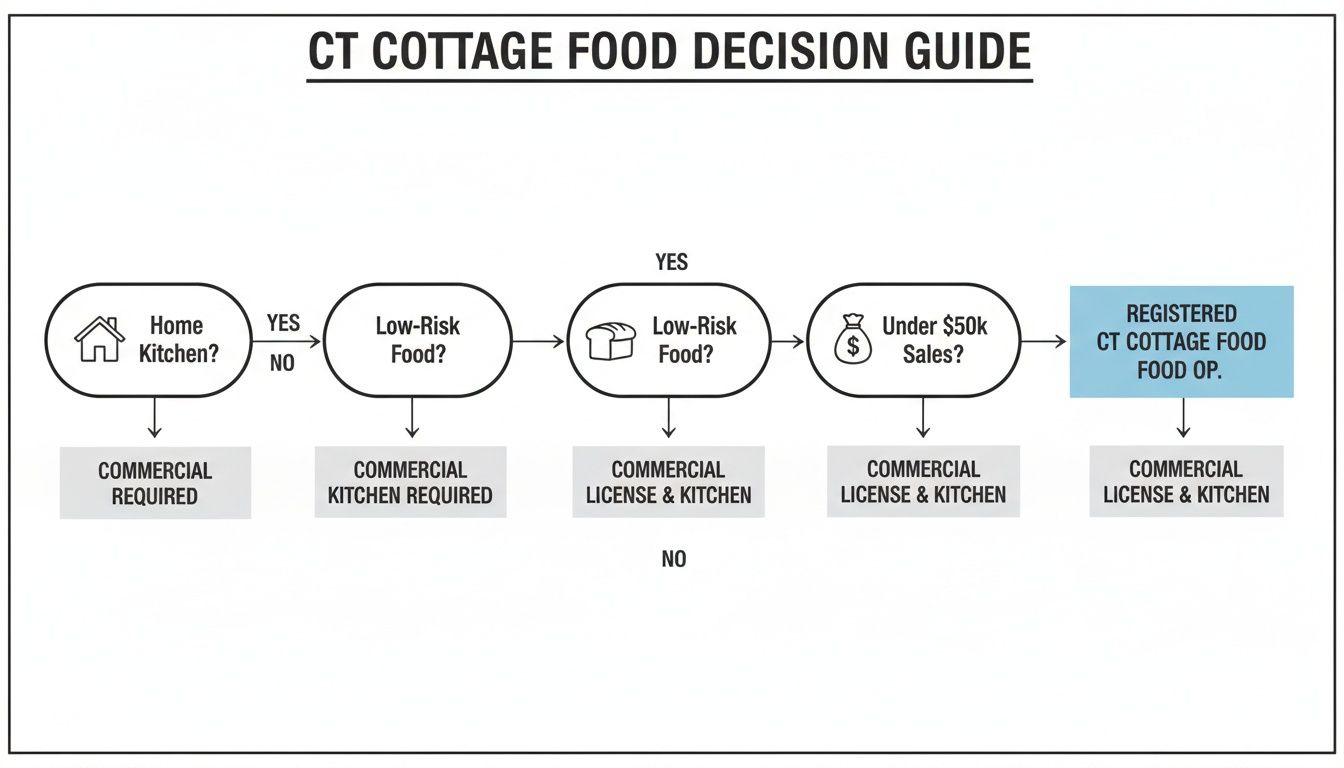
As you can see, operating from your home kitchen with low-risk foods while staying under the sales cap are the three pillars of compliance. If you want to discuss your business law matter, contact Kons Law at (860) 920-5181.
Foods You Can Legally Sell
The good news is that Connecticut provides a clear list of approved items, giving you plenty of creative freedom within safe parameters. Your menu can legally include a wide variety of popular and profitable goods that customers already love.
Here are the most common categories of allowed foods:
- Baked Goods: Think breads, cookies, cakes, cupcakes, and muffins—as long as they don't require refrigeration.
- Jams and Jellies: Standard fruit jams, jellies, and preserves are a go.
- Confections: Candies, chocolates, and fudge are generally allowed.
- Dry Goods: You can sell items like dry herbs, seasonings, granola, and dry baking mixes.
- Other Approved Items: This also covers things like honey, maple syrup, and popcorn.
Focusing on these shelf-stable products is what allows the state to waive the requirement for expensive commercial kitchen inspections, making it so much easier for you to get started.
Foods That Are Strictly Prohibited
Just as important is knowing what you can't sell. Venturing into prohibited territory is the fastest way to face legal trouble and potentially get your operation shut down. These foods are considered “potentially hazardous” because they create a breeding ground for harmful bacteria if not kept at specific temperatures.
A critical mistake for new entrepreneurs is assuming an item is safe without confirming it's on the approved list. Always verify your product ideas against the state's official guidelines before investing time and money.
To avoid costly errors, you need to steer clear of making and selling these items:
- Cream-Filled Pastries: Anything with cream, custard, or cheese fillings (like cheesecakes or cream puffs) is off-limits.
- Meat and Seafood Products: This includes jerky, fish, and any product containing meat.
- Canned Vegetables and Sauces: Low-acid canned foods like green beans or tomato sauce require special processing to prevent botulism and are not allowed.
- Dairy Products: Items like milk, cheese, and yogurt are prohibited.
- Garlic-in-Oil Mixtures: These create an environment where botulism can thrive and are strictly forbidden.
Under Connecticut's cottage food law, producers have a $50,000 annual revenue limit, which classifies it as a 'medium revenue' state. This cap, recently increased from $25,000, is designed to let home bakers and jam makers thrive. Sticking to the approved list of non-hazardous items not only ensures public safety but also allows you to grow your business successfully within this financial framework. You can find more insights on state-by-state laws over at Butterbase.app.
Getting Registered and Labeled Correctly
Alright, so you’ve confirmed your secret-recipe jam is on the approved list. What's next? It's time to make your operation official with the State of Connecticut. This part—registration and labeling—can feel like a lot of red tape, but it’s really just about ensuring safety and being upfront with your customers.
First things first, you need to register with the Connecticut Department of Consumer Protection (DCP). This involves filling out a cottage food operator application where you'll detail your business name, address, and exactly what you plan to sell. Be thorough here.
Some towns might also ask you to complete a basic food safety course. Honestly, even if it's not required, I highly recommend it. It shows customers you’re serious and arms you with critical knowledge about safe food handling—something you can’t put a price on.
Getting Your Labels Right
This is where so many new cottage food operators stumble. Your label isn't just a pretty sticker; it's a legal requirement that tells your customers exactly what they’re getting. Getting this wrong isn't an option.
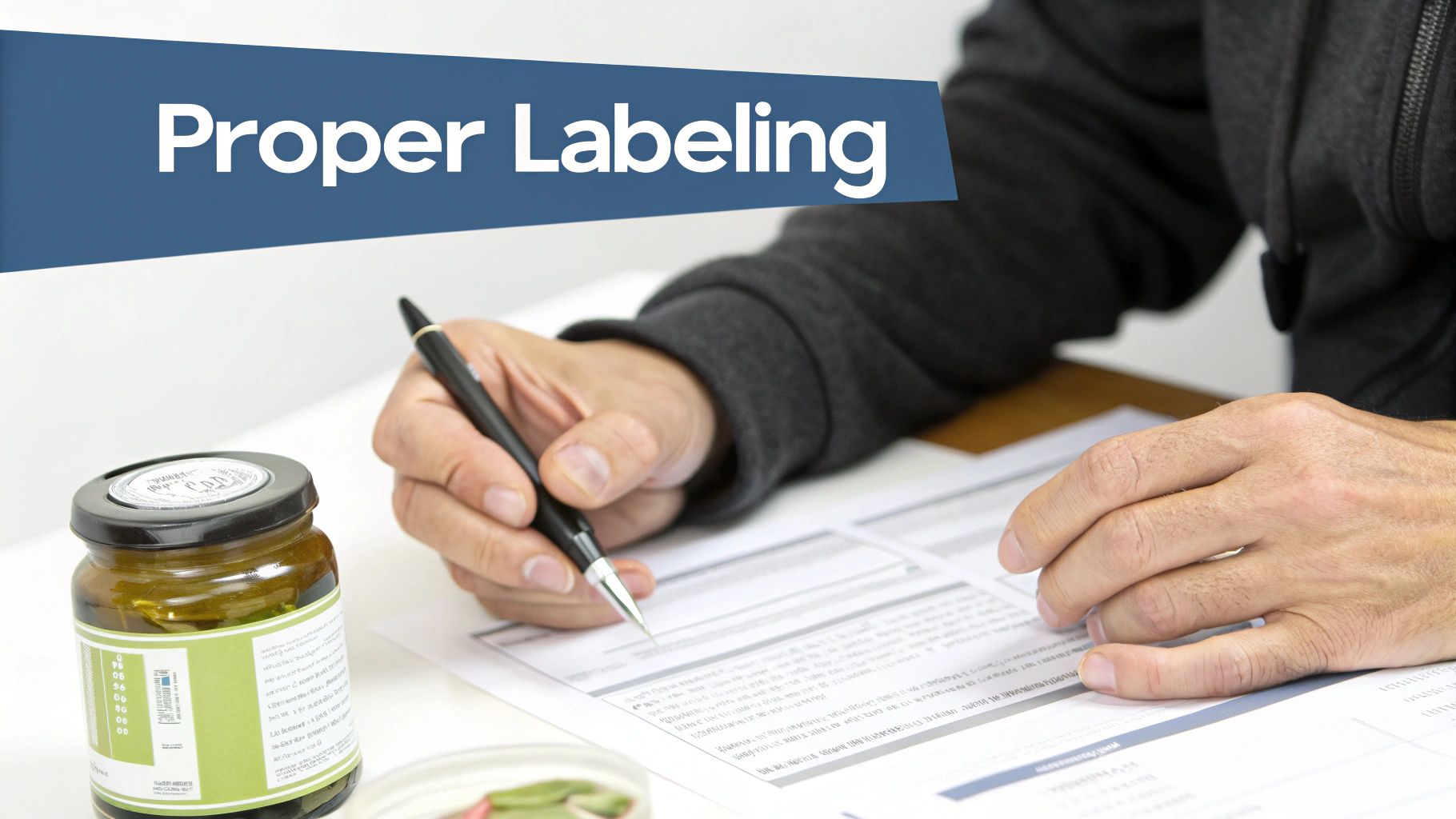
To comply with Connecticut law, every label must have these key elements:
- Your Business Name and Address: Customers need to know who made their food.
- Product Name: Be clear. Call them "Oatmeal Raisin Cookies," not "Grandma’s Best."
- Complete Ingredient List: You have to list every single ingredient in order of predominance by weight. If you use chocolate chips, you need to list the sub-ingredients of those chips, too.
- Allergen Warning: Federal law requires you to clearly state the presence of any major food allergens, like milk, eggs, wheat, soy, peanuts, or tree nuts.
If you're looking for a deeper dive into label design, materials, and other FDA rules, this comprehensive guide to food packaging labels is an excellent resource.
The All-Important Disclaimer
Beyond the basics, Connecticut has a mandatory disclaimer that must be on every single product you sell. This statement is the foundation of the cottage food law, and it’s non-negotiable.
Your label must clearly state: "Made in a home kitchen that is not subject to state licensure or inspection."
This isn't fine print. The disclaimer must be easy to find and easy to read. It protects you by ensuring every customer knows your kitchen isn't inspected like a commercial restaurant. It’s all about transparency.
Where You Can (and Can't) Sell Your Goods
The CT cottage food law is very specific about sales channels. The whole point is to keep the relationship directly between you and the person eating your food. Straying from these rules can put your entire business at risk.
You are legally allowed to sell from these locations:
- Directly from your home: People can come right to your door.
- Farmers' markets and farm stands: These are prime spots for finding hungry customers.
- Festivals and other public events: Pop-up events are a fantastic way to sell directly.
- Online for local delivery or pickup: You can take orders via your website or social media, but you must personally hand the product to the customer within Connecticut.
Here’s what you absolutely cannot do: You cannot sell your products to a third party for resale. That means no sales to coffee shops, grocery stores, or restaurants. You also can’t ship your products using mail carriers like USPS or FedEx. Those are considered indirect sales and are strictly prohibited. Staying within these guardrails is key to keeping your cottage food operation compliant.
If you want to discuss your business law matter, contact Kons Law at (860) 920-5181.
Navigating Business Structures and Financial Duties
Running a cottage food operation is more than just a hobby—it's a real business. While perfecting your recipes is the fun part, understanding your legal and financial duties is what builds a strong, sustainable enterprise. Here, we'll move beyond the food itself to cover the essential business mechanics, from choosing a legal structure to managing taxes and insurance.
Treating your operation like a professional business from day one sets you up for long-term success. It not only protects you but also builds customer trust and paves the way for future growth.
Choosing Your Business Structure
One of the first and most critical decisions you'll make is choosing a legal structure for your business. This choice directly impacts how you're taxed and, most importantly, your personal liability if something goes wrong.
The two most common paths for a new cottage food business are:
- Sole Proprietorship: This is the default structure. It’s the simplest to set up because you and your business are legally considered the same entity. The downside? Your personal assets—like your home or car—could be at risk if the business is ever sued.
- Limited Liability Company (LLC): An LLC creates a legal wall between you and your business. This "corporate veil" helps shield your personal assets from business debts and lawsuits. While it requires a bit more formal setup and record-keeping, the protection it offers is invaluable for many entrepreneurs.
Making the right choice really comes down to your personal risk tolerance and long-term plans. For a deeper look at these options, our guide on how to choose a business structure can help you decide what's best for your situation.
Financial Management and Tax Obligations
Under the CT cottage food law, your gross annual sales cannot exceed $50,000. Meticulous financial tracking isn't just good practice; it's a legal requirement to ensure you stay compliant.
Start with a simple system. A dedicated business bank account is non-negotiable for keeping your personal and business finances separate. From there, a basic spreadsheet or simple accounting software can help you track every dollar in and out. If you're new to this, exploring the bookkeeping basics for small business owners is a great way to get your system set up correctly.
You must also register with the Connecticut Department of Revenue Services (DRS) to collect and remit state sales tax. Food products often have specific tax rules, so it’s vital to understand your obligations from your very first sale.
Insurance and Local Zoning Laws
Even though your home kitchen isn't subject to inspection, your business is still exposed to risks. What if a customer has an allergic reaction to an undeclared ingredient, or someone slips and falls while picking up an order at your home?
Homeowner's insurance policies almost never cover business-related activities. Relying on your personal policy for business liability is a significant and often costly mistake.
You should strongly consider purchasing a separate business liability insurance policy. This coverage protects you from claims of injury or property damage related to your products, offering essential peace of mind and financial security.
Finally, don't forget to check your local zoning regulations. Just because the state permits cottage food operations doesn't automatically mean your town or homeowners' association does. A quick call to your local planning and zoning office can confirm if running a home-based business is allowed in your neighborhood, preventing any potential headaches down the road.
If you want to discuss your business law matter, contact Kons Law at (860) 920-5181.
When Your Business Is Ready for a Commercial Kitchen
The CT cottage food law is an incredible launchpad, but every successful home food business eventually reaches a crossroads. There comes a point where the very rules that helped you start begin to hold you back. Recognizing when you’ve outgrown your home kitchen is one of the most important moments in your journey as an entrepreneur.
Success brings its own set of challenges—and opportunities—that just don’t fit inside the cottage food framework. If you plan for this transition ahead of time, you can scale your business smoothly and legally, instead of hitting a frustrating growth ceiling.
Key Signs You Are Ready to Graduate
Several clear signals will tell you it's time to start looking at commercial spaces. These aren't just signs of success; they're practical triggers telling you that your current setup can no longer support your business's trajectory.
If any of these situations sound familiar, you're probably ready for the next level:
- You're nearing the sales cap: The $50,000 annual gross sales limit is a hard stop. As you get closer to that number, you have a choice: either pump the brakes on sales or start the transition to a licensed commercial kitchen so you can keep growing.
- Retailers are calling: Have local coffee shops or grocery stores asked about carrying your products? That's fantastic news! But these wholesale opportunities are strictly off-limits under the cottage food law, which only allows for direct-to-consumer sales.
- Your product ideas are expanding: Maybe you've perfected a killer cheesecake recipe or want to sell savory meat pies. If your creativity is pulling you toward foods that aren't on the state's approved list of "non-potentially hazardous" items, a commercial license is your only way forward.
It's so important to recognize these growth signs early. Finding and outfitting a commercial kitchen takes time. If you wait until you've already maxed out your cottage food limit, you could face a costly shutdown while you try to make the switch.
Understanding the Transition to a Commercial Operation
Moving from a cottage food operation to a licensed commercial food business is a huge leap. You’ll be dealing with a completely different set of rules, much more oversight, and higher start-up costs, but you'll also unlock enormous potential.
The biggest changes are in regulations and inspections. Your business will no longer be exempt from health department oversight. You’ll need to get a food manufacturing license, and your facility will be subject to regular inspections to make sure it meets public health codes. The standards for equipment, sanitation, and food handling are far more demanding than what's required for a home kitchen.
The costs are also a major factor. You'll have to find a suitable location, which likely means leasing a dedicated space. Knowing how to negotiate a commercial lease is a crucial skill for managing this new overhead. On top of rent, you’ll be investing in commercial-grade equipment, paying for licenses, and maybe even hiring your first employees.
While the jump can feel intimidating, it opens up a world of new possibilities. You'll have unlimited sales potential, the ability to sell wholesale to other businesses, and the freedom to create almost any food product you can dream of. If you want to discuss your business law matter, contact Kons Law at (860) 920-5181.
Get Expert Guidance for Your Food Business
Connecticut's cottage food law opens up some incredible opportunities, but turning your passion into a real business means dealing with food regulations, business formation, tax laws, and even local zoning ordinances. Getting professional advice from the very beginning can save you a massive amount of time, money, and headaches down the line.
When you get to the point of making major decisions, that's when legal guidance becomes truly essential.
These are the big steps, like forming an LLC to shield your personal assets, drafting a solid partnership agreement, or getting ready to sign a lease for your first commercial kitchen. Every one of these moves has long-term consequences for your business's health and your own financial security.
Building a Solid Legal Foundation
A business lawyer is more than just someone who handles paperwork; they're a strategic partner. They can help you spot potential problems before they ever crop up, whether it's a zoning issue with your town or a disagreement with a business partner. You can learn more about what a business lawyer does in our detailed guide. This kind of proactive thinking is what separates a hobby from a sustainable business.
Ensuring your venture is built on a solid legal foundation gives you the clarity and confidence you need to focus on what you do best—creating delicious food products for your customers.
Proper legal counsel helps you structure your business for growth, protecting everything you’ve worked so hard to build. Think of it as an investment in your future success.
If you're ready to make sure your cottage food operation is set up for success from day one, contact Kons Law at (860) 920-5181 to discuss your business.
Common Questions About the CT Cottage Food Law
When you’re wading into the details of a new business venture, a few specific questions are bound to pop up. It’s only natural. Thinking through the what-ifs and finer points of the rules is part of the planning process. Let's tackle some of the most common questions we hear from aspiring cottage food operators in Connecticut.
Getting these details straight from the start will give you the confidence to move forward and help you sidestep simple mistakes that could slow you down.
Do I Need a Separate Kitchen in My Home to Operate?
No, you don't. The whole point of the CT cottage food law is to make it easier for home-based entrepreneurs to get started, so it allows you to use your primary home kitchen.
Of course, with that flexibility comes a great deal of responsibility. Your kitchen has to be spotless and sanitary, especially when you're in production mode. All your prep work must happen right there in that designated kitchen. Most importantly, you have to make sure pets and children are kept completely out of the area while you're working. This is non-negotiable for creating a safe and hygienic environment.
Can I Sell My Cottage Food Products Online and Ship Them?
This is a big one, and it causes a lot of confusion. Yes, you can absolutely market your goods online. A great website or an active social media presence is a fantastic way to find customers. But the law is very specific about how the product actually gets into their hands.
All sales have to be direct to the consumer. That means you need to hand the product to them in person, right here in Connecticut. You can deliver it yourself, or the customer can come pick it up from your home. What you absolutely cannot do is ship your products via mail carriers like USPS, UPS, or FedEx. That’s considered an indirect sale, which is strictly prohibited.
What Happens If I Make More Than $50,000 in a Year?
Hitting the $50,000 annual gross sales mark is a fantastic achievement! It's also the sign that you’ve officially outgrown the cottage food framework. Once your sales cross that threshold, you can no longer operate under these specific rules.
To keep your business going legally, you'll need to transition into a fully licensed commercial food establishment. That’s a whole different ballgame involving a new set of regulations—you'll need commercial permits, a commercial-grade kitchen, and you’ll be subject to regular health department inspections. The key is to start planning for this transition before you hit the limit so there's no interruption to your business.
Does My Home Kitchen Need to Be Inspected by the Health Department?
No, and this is one of the biggest advantages of the law. Home kitchens for cottage food operations are exempt from routine inspections by state or local health departments, which significantly lowers the barrier to entry for new entrepreneurs.
This lack of inspection is precisely why the mandatory labeling disclaimer is so critical. The law requires you to inform every single customer that your products were "Made in a home kitchen that is not subject to state licensure or inspection."
This statement creates total transparency. It allows your customers to make an informed decision and protects your business by clearly stating the nature of your operation.
If you want to discuss your business law matter, contact Kons Law at (860) 920-5181.
