
You're already in the danger zone if you raised money once and never filed the paperwork. The round may have closed, the checks may have cleared, and everybody may have moved on, but the securities law question doesn't disappear just because the bank deposit hit your account. Rule 504 of Regulation D is often the first place people look when they need to clean up a small private raise, especially when the company is local, the investor base is familiar, and a full SEC registration never made business sense.
The practical issue is simple. You need to know whether the offering fits the rule, whether a Form D should have been filed, what state law still applies, and whether the next round can be structured without repeating the same mistake. That's where a lawyer who handles offering workflow, not just the theory, earns their keep.
What Rule 504 of Reg D Is and Why Small Issuers Use It
A regional restaurant operator wants to raise money from local investors to open a second location. The owner is not trying to go public, and a full registration statement would swallow the economics of the deal. Rule 504 fits that kind of transaction. It is one of the three main Regulation D exemptions and lets eligible issuers offer and sell up to $10 million of securities in any 12-month period without registering under the federal securities laws, so long as the rest of the rule is respected and the issuer files a Form D notice within 15 days after the first sale Investor.gov on Rule 504.
Four questions the rule answers
The issuer side usually comes down to four questions. Who can buy, how much can be raised, what has to be disclosed, and what gets filed with the SEC. Rule 504 answers those questions with a lighter federal burden than a registered offering, but it still leaves room for state law to matter. That is why the mechanics feel simple only on paper.
Rule 504 sits below the better-known private placement rules in the Reg D family because it is meant for smaller issuers and smaller capital raises. In practice, that makes it useful for community rounds, friends-and-family deals, and small bridge financings where the company needs capital but does not need the full machinery of a public offering. It also fits issuers that are still trying to keep the cap table manageable while they test whether the business can absorb more investor money.
Practical rule: Rule 504 is often a fit when the company needs a modest raise and can tolerate the state-law overlay. It stops making sense when the company wants broad marketing, complex multi-state coordination, or a larger institutional round.
A lot of issuers also need a way to find older investors, former customers, or local contacts who have moved. In those situations, practical skip tracing can matter. A useful starting point is how peoplefinder supports skip tracing, especially when an issuer is trying to reconnect with an investor record that was not maintained cleanly.
| Exemption | Aggregate Cap | General Solicitation | Form D Required |
|---|---|---|---|
| Rule 504 | $10 million in any 12-month period | Limited, depending on structure and applicable conditions | Yes, within 15 days after the first sale |
| Rule 504 in practice | Small private raises | Often narrower than issuers expect | Yes |
| Rule 506 alternatives | No cap in the same way | Different solicitation rules | Yes |
For a broader compliance lens, it helps to keep the basics aligned with regulatory compliance in a business setting, because Rule 504 is never just a federal filing exercise.
The Core Building Blocks of the 504 Reg D Exemption

A Rule 504 filing only works if the pieces line up the way the rule expects. If one piece is off, the offer may still be a securities offering, just not an exempt one that holds together on review. The federal cap sits at $10 million in any 12-month period, and the rule measures that amount on a rolling basis under 17 CFR § 230.504, with prior sales in the last 12 months and sales during the offering counted in the total Cornell Law, 17 CFR § 230.504 SEC small business Rule 504 resource.
The cap comes first
The first building block is the federal size limit. If the aggregate offering price goes over the rule's ceiling when measured the way the regulation requires, the exemption can fail. That is why counsel looks at the current raise, prior closes, and any related sales before the term sheet is finalized.
Eligibility comes next
The second building block is issuer eligibility. Rule 504 does not apply to every issuer, and the exclusions matter as much as the cap. A company can be within the dollar limit and still be outside the rule because of its status, which is where many founders get caught off guard.
Solicitation has to match the structure
The third building block is the offering method. Rule 504 does not let the issuer advertise without regard to the structure. The marketing plan has to fit the exemption being used, and outside counsel usually asks who will see the materials before asking how much the company wants to raise.
Form D is a notice, not a blessing
The fourth building block is the federal notice filing. A filed Form D does not approve the deal. It tells the SEC that a Rule 504 offering has started, and it should be filed within 15 days after the first sale SEC small business Rule 504 resource.
Anti-fraud rules still sit on top
The fifth building block is the one people sometimes treat as a footnote until the file is already messy. Rule 504 still sits under federal anti-fraud rules, so the offering documents, investor communications, and oral statements all need to be accurate. A clean exemption does not fix a sloppy disclosure package.
A lawyer reviewing the workflow for a broker-dealer or issuer usually wants the subscription agreement lined up early, because the deal file has to tell one consistent story. For a useful drafting reference, see what is a subscription agreement.
The state-law overlay also matters in practice. Broker-dealers and outside counsel usually check blue sky filing steps, state notice timing, and local securities rules at the same time they review the federal file, because a Rule 504 offering can be technically sound at the SEC level and still create problems if the state notices, legends, or resale conditions are handled late. That is why the workflow is not just about the Form D, it is also about coordinating the exemption with the states where investors live and where the offer is made.
Eligible Issuers and Common Disqualifying Categories
Rule 504 looks broad until the issuer is screened against the SEC exclusions. The field narrows quickly. The rule is unavailable to Exchange Act reporting companies, investment companies, blank-check-style issuers with no specific business plan, and bad actor disqualified persons, so the first job is screening, not drafting.
Start with the entity, not the pitch deck
A real eligibility review starts with the company's status and filing history. If the issuer already files periodic reports under the Exchange Act, Rule 504 is off the table. If the vehicle functions like an investment company, that is another hard stop. If the issuer is a shell with no specific business plan, the rule does not fit the way many small founders hope it will.
A clean cap table does not fix an ineligible issuer.
The next question is control persons. If someone in a controlling role is a disqualified person, the offering can be tainted even when the company itself looks ordinary. Outside counsel usually asks for background checks, prior securities history, and any enforcement or disciplinary issues before anyone starts circulating documents.
Where bad-actor review belongs
Bad-actor review belongs before the first draft of the disclosure memo, not after investors have signed. If the facts suggest a disqualification, the issuer needs to know immediately because the transaction may need a different exemption or a different structure. Waiting until after funds are wired just creates a cleanup problem with more moving parts.
For the broker-dealer or issuer file, that screening step usually sits alongside the later notice process. A practical team also keeps the filing workflow organized with a Form D filing checklist so the exemption analysis and the notice obligations do not drift apart. State-law review belongs in that same file review, because a Rule 504 offering can be sound at the federal level and still create trouble if legends, notice filings, or resale conditions are handled late.
The practical takeaway is simple. Issuer eligibility is a gatekeeping function. If the client cannot answer who controls the company, whether any reporting obligations already exist, and whether any disqualifying history is in the background, Rule 504 should stay on the shelf until those facts are sorted.
For a quick refresh on the rule family and related definitions, Rule 501 in Regulation D is a useful companion reference when a deal file starts to blur categories.
Form D Filing Requirements and Timing Traps
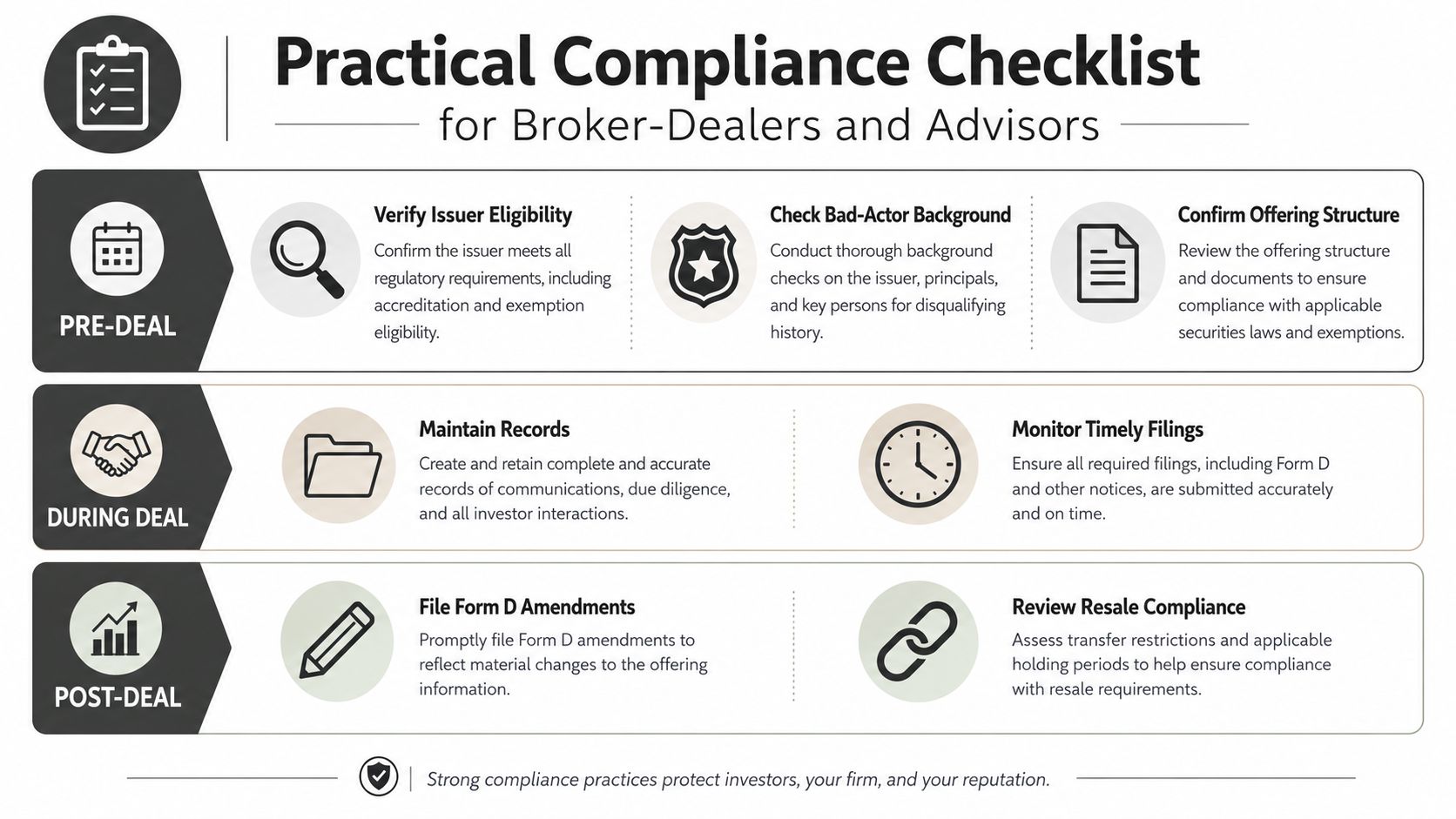
Form D is a notice filing, and that small phrase causes more trouble than it should. The SEC's Rule 504 notice is due within 15 days after the first sale, which means the clock starts when securities are sold, not when the issuer starts sounding out investors, circulating a draft, or getting a subscription agreement back unsigned. Rule 504 guidance from Investor.gov makes that timing point plain, and in practice it is where late filings usually begin.
What the form actually does
Form D tells the SEC who the issuer is, what exemption it is relying on, and the basic details of the offering. It is filed on EDGAR, and it serves as a notice, not a request for permission. That distinction matters because some issuers file first and assume the exemption is somehow confirmed by the filing itself. It is not.
The filing also sits inside the state-law process. State securities regulators often require their own notice filings and fees, so the Form D becomes one piece of a larger compliance file rather than the whole answer. A broker-dealer, issuer, or outside counsel has to keep the federal filing and the state notice work aligned, especially when the transaction is moving fast and the investor base is spread across multiple states.
The traps that create cleanup work
The first trap is simple and common, counting the deadline from the wrong event. The second is treating the first filing as the last one. If the issuer changes, the offering terms change, or the original filing contains an error, an amendment may be needed. In a working deal file, counsel usually keeps a log of the closing date, the first sale date, and each later change that could affect the filing.
A late Form D is a problem, but it is not a cure. Filing does not fix an offering that was never eligible for Rule 504 or one that missed a different part of the compliance process. That is why the filing should be handled as part of the exemption analysis, not as paperwork tacked on after money comes in.
What belongs in the file
A clean file usually has the offering summary, subscription documents, investor records, and a calendar that tracks the filing deadline. For many compliance teams, the practical move is to prepare the Form D before closing and release it as soon as the first sale date is confirmed.
The working file should also include the related state notices and the materials that show the exemption analysis was done on time. For a live archive of filing-related material, the firm's Form D tag page is a practical reference point for how the notice filing fits into the rest of the transaction record. When founders are still comparing capital paths, a separate planning discussion about which SBA program fits your goals can help them decide whether this kind of securities offering is the right route at all.
How Rule 504 Interacts With State Blue Sky Laws
Rule 504 is a federal exemption, not a universal pass on state compliance. That's the part many issuers misunderstand. The offering may avoid SEC registration, but state Blue Sky laws can still require notice filings, fees, and coordination before or after money is accepted.
Federal relief, state obligations
The easiest way to think about it is this. Federal law says the offering doesn't need full SEC registration if Rule 504 applies. State law can still say, “File here too.” That means the issuer and counsel have to know where investors live, where the company is operating, and whether any state-specific small-offering path can help or hinder the transaction.
A multi-state raise can feel simple when the investor list is small, but the coordination burden rises fast once subscriptions arrive from several states. If the issuer is trying to close quickly, the filing sequence matters as much as the deal terms. Lawyers who handle these offers often map the federal notice against the state notices before the first investor signs.
Practical rule: If the state filing plan is not set before the first money moves, the issuer may end up choosing speed over compliance.
That's why many founders compare Rule 504 against other business funding channels before they commit. A helpful external reference for that broader planning conversation is which SBA program fits your goals, because some capital needs are better handled as debt or equipment financing rather than a securities offering.
When coordination is decisive
State coordination becomes decisive when the raise is small enough that a delayed notice or extra fee can kill momentum. It also matters when the issuer assumes one state's exemption will carry the entire deal. That assumption is often wrong. The result is a messy close, not because the federal exemption failed, but because the state side was left until the end.
Integration, Resale, and Bad-Actor Risk You Can Easily Miss
Rule 504 can fail without anyone doing something obviously dramatic. A second round looks separate, the resale language gets ignored, or an undisclosed control person creates an eligibility problem. The transaction still closes, but the exemption analysis gets fragile in exactly the places small issuers tend to overlook.

Integration can collapse separate raises
The integration doctrine asks whether multiple offerings are really one offering for exemption purposes. That matters because a series of separate closings can be recast as a single capital raise if the structure, timing, and control facts point that way. When that happens, the combined offering can exceed the Rule 504 cap and blow up the reliance story.
Counsel usually examines offer type, manner of solicitation, and common control to keep the analysis disciplined. A round that was supposed to be one clean deal can become an integrated offering if the issuer treats every later check as an afterthought instead of part of the same compliance record.
Resale is not the same as liquidity
Securities sold under Rule 504 are generally restricted, so resale is not something the issuer should casually promise. If an investor wants liquidity right away, the issuer needs to be very careful about what has been sold and what exemptions might govern a later transfer. A bad resale promise can create a disclosure problem even when the original sale was exempt.
Bad-actor issues travel with the control group
Bad-actor disqualification often travels farther than founders expect. If the wrong history sits with a controlling person, the issue can infect the offering even if the operating business looks clean. That is why Rule 504 screening should include the people behind the entity, not just the entity documents.
The practical point is blunt. A small offering is easiest to lose by making small mistakes in several places at once.
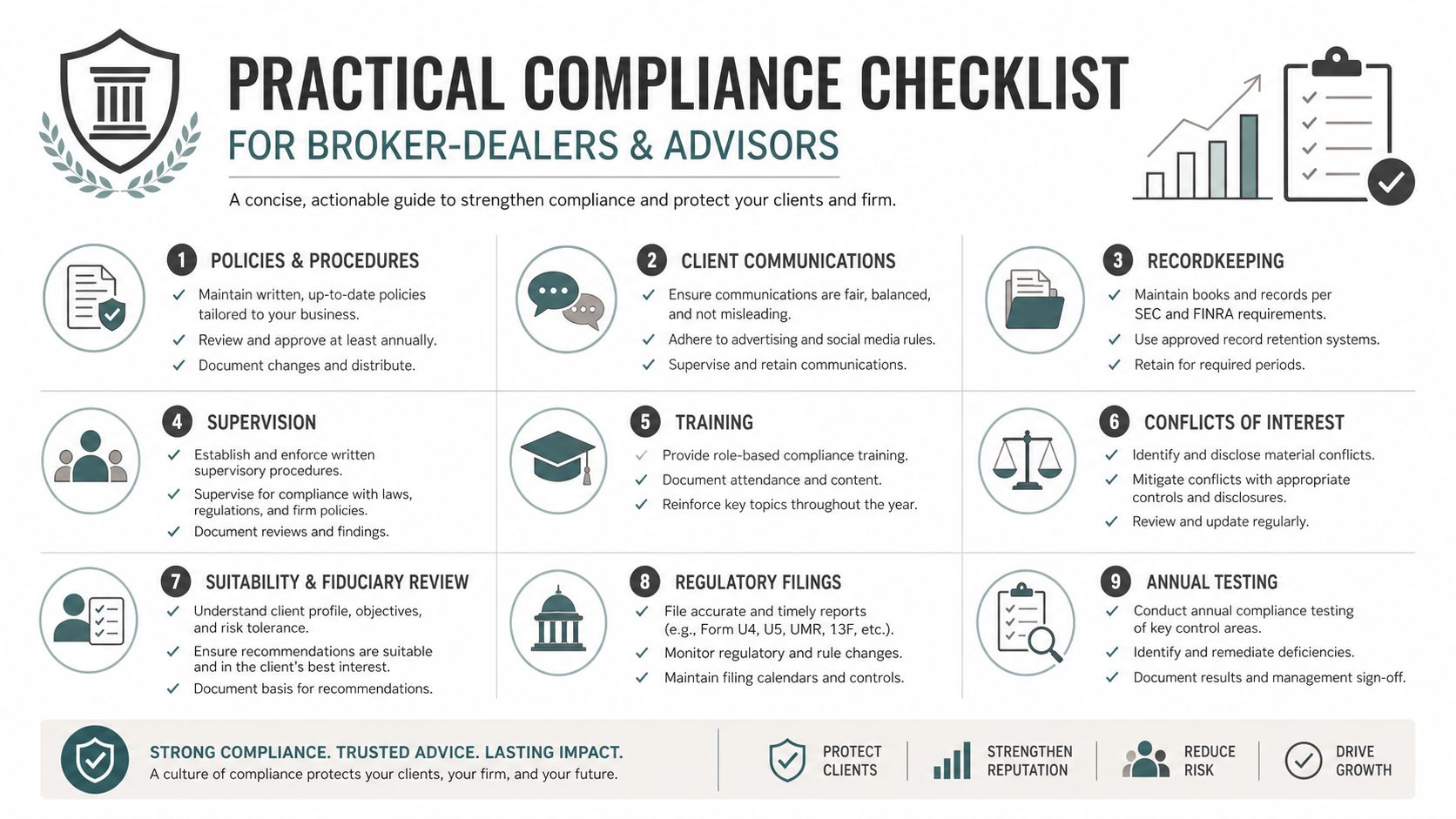
Practical Compliance Checklist for Broker-Dealers and Advisors
Broker-dealers and advisors need a process they can use, not a theory memo that gets filed and forgotten. A good Rule 504 workflow separates the deal into three phases and assigns responsibility before anyone starts talking about closing dates.
Pre-deal
- Verify issuer eligibility. Confirm that the issuer is not an Exchange Act reporting company, investment company, or blank-check-style entity without a specific business plan.
- Run bad-actor screening. Check the company, its control persons, and anyone whose background could disqualify the deal.
- Confirm the offering structure. Make sure the planned solicitation, investor profile, and amount raised fit Rule 504 before documents go out.
During the deal
- Prepare Form D early. Draft the notice before the first sale so the filing can go out on time.
- Track the first sale date. The 15-day filing clock starts there, not at marketing kickoff.
- Maintain a clean record file. Keep subscription documents, investor communications, and state notices together so the file tells one story.
Post-deal
- File amendments when facts change. If the issuer, offering terms, or reported details change materially, update the filing.
- Review resale language. Make sure investors understand the transfer restrictions that still apply.
- Recheck the record before the next round. A later raise can trigger integration questions, so don't assume the earlier close is irrelevant.
Practical rule: If the broker-dealer can't reconstruct the offer from the file six months later, the file wasn't good enough.
Even exempt offerings sit under federal anti-fraud rules, so a sloppy process can create more than a filing issue. It can become a disclosure and supervision problem for the firm as well.
When Rule 504 Is the Wrong Tool and Next Steps
Rule 504 is useful, but it is not automatically the cleanest answer. If the issuer wants broad public marketing, Rule 506(c) may fit better. If the raise is larger and the company can live within a private-placement framework, Rule 506(b) may be more practical. If the issuer wants to reach retail investors in a state-specific way, a state crowdfunding or similar exemption may be a better fit than forcing a small federal exemption to do too much work.
A simple decision filter
The right path usually depends on four things. How much money is needed, who the investors are, whether the company plans to market publicly, and whether the current raise is just the first of several. If the company is likely to grow into a larger round quickly, counsel should think about the next transaction before the current one is papered.
Rule 504 also stops making sense when the state-law overlay becomes too expensive for the size of the raise. A deal can be federally small and still operationally annoying if each state filing creates delay, fee friction, or document changes that the company can't absorb. In those cases, a different exemption or a registered path can be cleaner even if the upfront paperwork feels heavier.
What experienced counsel does differently
Outside counsel should not just bless a term sheet. The lawyer should map issuer eligibility, disclosure, filing deadlines, state notices, and resale expectations into one deal calendar. That is the workflow issue most textbooks skip, and it's the one that determines whether the raise closes cleanly or gets patched later.
Kons Law handles that kind of corporate and securities work for companies, investors, and financial professionals who need the transaction framed correctly from the start. For a business law matter tied to a Rule 504 raise or a cleanup after an unfiled deal, they can review the structure, identify the filing gaps, and help decide whether Rule 504 is still the right path.
If you want to discuss your business law matter, contact Kons Law at (860) 920-5181. The firm advises on securities, corporate, and commercial issues that come up in Rule 504 offerings, including filing cleanup, exemption analysis, and state-law coordination. Visit Kons Law to start the conversation.
